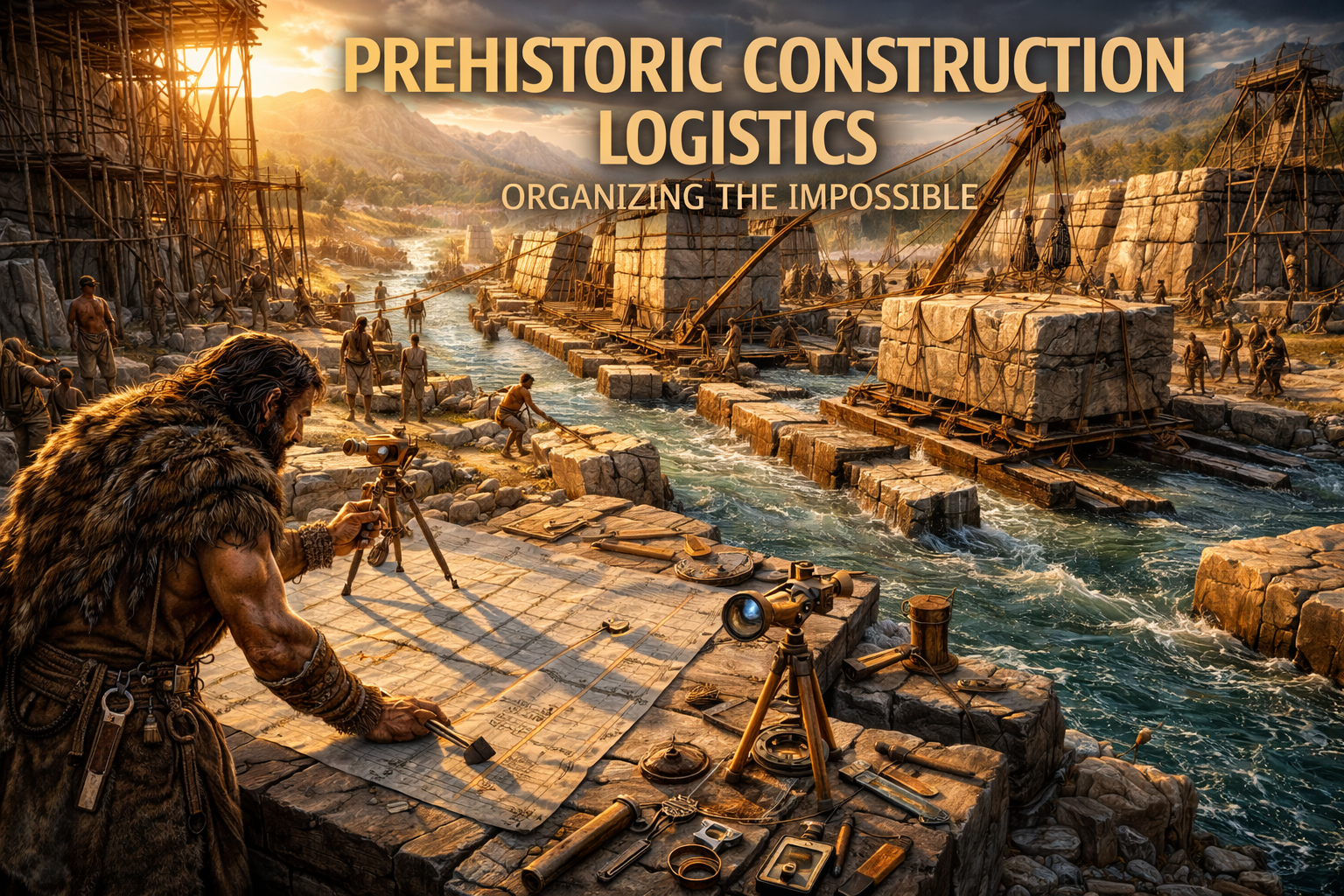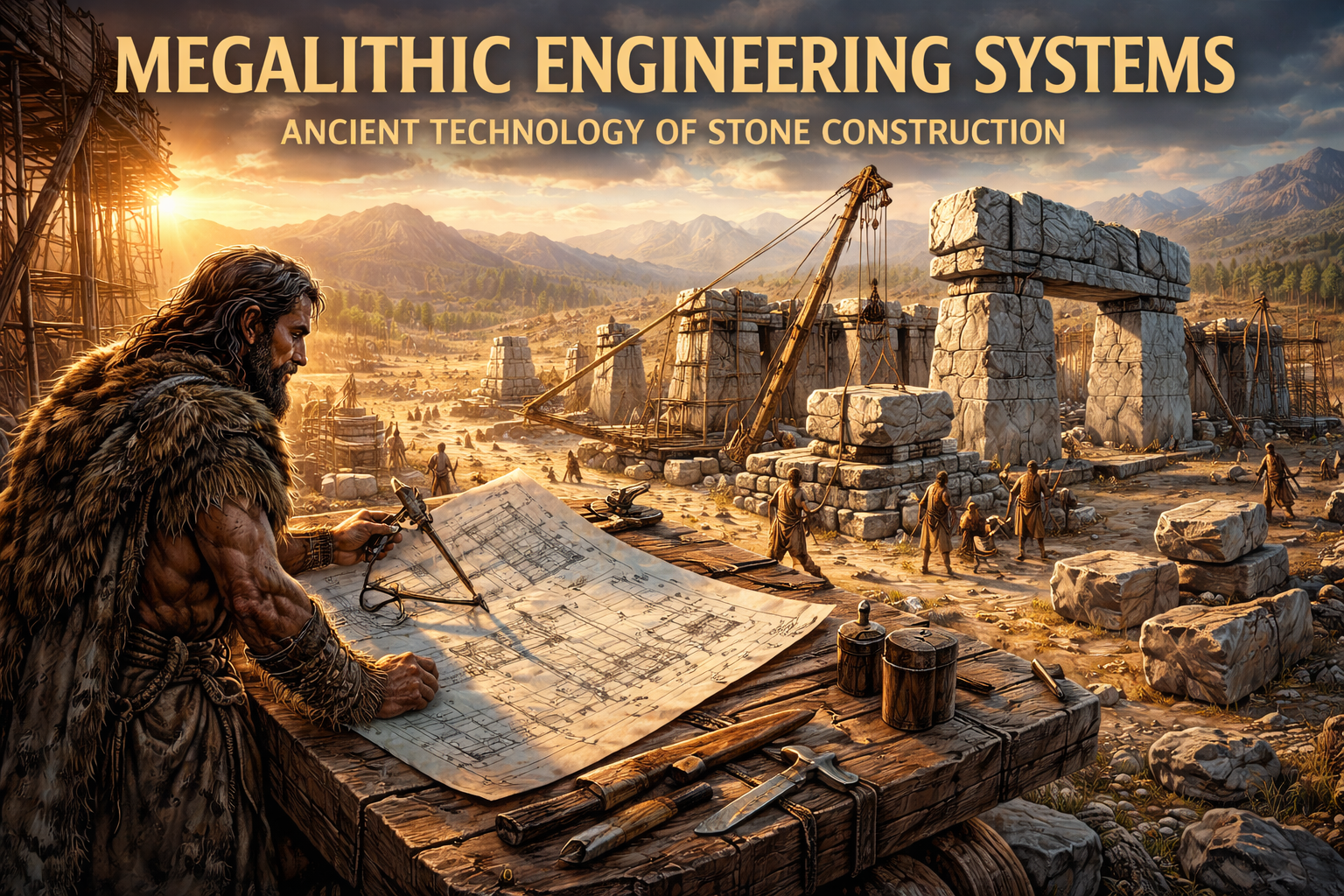
Forgotten Engineers: The Builders Beyond Time
The story of the forgotten engineers begins where the stars meet the stones. For millennia, monuments have stood as enduring mysteries—temples, pyramids, and walls that challenge everything we thought we knew about human capability. These ancient builders were not primitive — they were masters of stone, geometry, and forces we scarcely grasp today.
As our exploration transitions from the celestial realm into the realm of material mastery, we ask: could the same civilizations that mapped the heavens also have engineered wonders we can barely replicate? This article marks the start of our deep dive into the world of the forgotten engineers — those whose legacy blends cosmic vision and earthly craft.
Precision That Defies Explanation
In Egypt, the Great Pyramid’s casing stones are fitted so tightly that not even a razor blade slips between them. In Peru, the fortress of Sacsayhuamán uses interlocking stones carved with twenty or more faces. In Bolivia’s Puma Punku, H-shaped blocks appear machine-cut — smooth, symmetrical, uniform. Modern tools cannot easily account for these feats.
Were the forgotten engineers using technologies beyond our standard history? Perhaps sound, vibration, magnetism, or advanced chemistry were involved in moving and shaping massive stones without steel tools or heavy machinery.
The Ancient Toolkit: Stone, Sound, and Science
Across many cultures, myths speak of rocks moved by sound, chants, horns, and unseen force fields. In Tibet monks reportedly lifted heavy stones using acoustic techniques. Egyptian texts speak of “voices that raised the stones.” Recent experiments show resonant frequencies influence material weight or cause levitation in small scale. Could the builders have harnessed harmonics and materials science millennia ago?
Research by Dr. Joseph Davidovits suggests some pyramid blocks were cast, not quarried — early mastery of geopolymers. This doesn’t diminish achievement; it elevates our understanding of ancient material science and environmental engineering.
A Global Pattern of Knowledge
The fingerprints of these engineers span continents — not isolated but pervasive:
-
Stonehenge aligns with solstices and lunar cycles while using perfect circular geometry.
-
Ba’albek’s Trilithon stones each weigh up to 1,200 tons and are placed with astonishing precision.
-
Nan Madol in Micronesia uses transported columnar basalt across water.
This suggests a shared principle — knowledge of geometry, energy, and resonance that transcended regional cultures. Researchers like Christopher Dunn have even proposed that some sites functioned as energy generators — ancient power-plants rather than tombs.
Cataclysms and the Great Forgetting
What if this ancient engineering knowledge was erased in events such as the Younger Dryas (~12,800 years ago)? A sudden global freeze triggered by a cometary impact could have collapsed ecosystems, sea-levels rose, coastlines vanished, and human memory reset. Plato’s dialogues reference civilizations destroyed by fire and flood — perhaps echoes of these cataclysms.
Erosion on the Sphinx (John Anthony West & Robert Schoch) suggests construction during a wetter period perhaps predating 9,000 BCE, hinting at an earlier age of builders whose science we are only rediscovering.

Symbols of Knowledge, Machines of Stone
Look closer at any great ancient monument and you’ll see design, not randomness: every angle, ratio, and alignment seems purposeful. The Great Pyramid encodes φ and π; Tiwanaku’s Gateway of the Sun aligns to solar cycles; Machu Picchu’s Intihuatana appears tuned to Earth’s rotation.
These were more than temples — they were machines of meaning. The forgotten engineers embedded knowledge in stone: instruction manuals for those who knew how to read them.

Rediscovering Ancient Innovation
Modern tools are now catching up:
-
3-D scans of Andean walls show standardized tool-marks.
-
Core samples from Giza show reconstituted limestone.
-
Satellite imagery detects geometric city-plans aligned to magnetic grid lines.
In short, the legacy of the forgotten engineers is being revealed not just by archaeologists, but by engineers and applied scientists.
Echoes for the Future
We’re only beginning to piece together the lost continuum of ancient science — a worldview where physics, geometry, and spirituality were unified. To the forgotten engineers, creating a monument meant harmonizing human life with cosmic order. Their work wasn’t just for the divine — it was a bridge between heaven and earth, erected in stone to survive millennia.
Additional readings