Will ‘Apophis’ Hit Earth in 2029? We’ll Know in 2027, Scientist Says
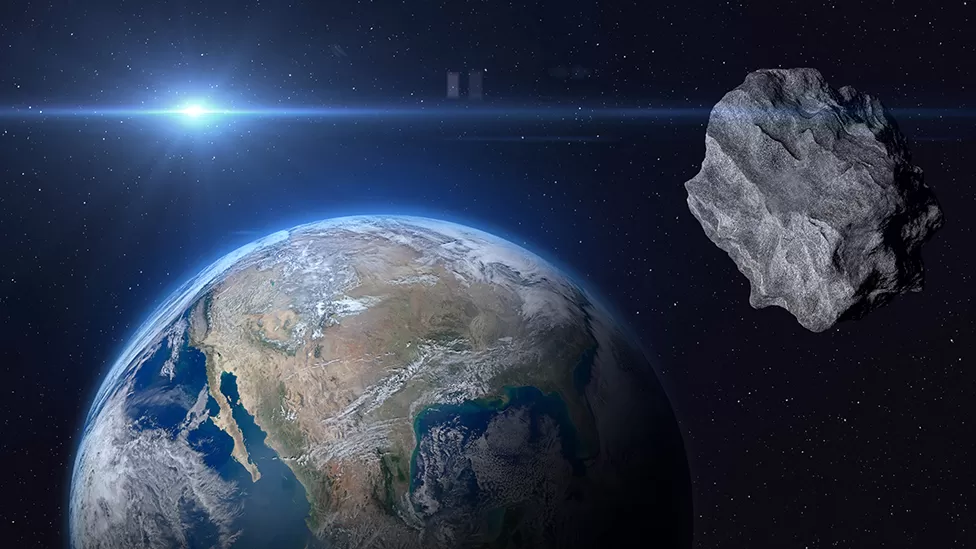
A massive asteroid the size of the Empire State Building is set to make an extremely close pass by Earth in 2029—and though the likelihood of an impact is minuscule, scientists are not ruling it out entirely just yet.
Asteroid 99942 Apophis, measuring about 1,200 feet (370 meters) across, was discovered in 2004 and initially sparked concern due to a 2.7% chance of hitting Earth in 2029, 2036, or 2068. Named after the Egyptian god of chaos, Apophis orbits the Sun every 324 days and swings close to our planet roughly once a decade.
NASA officially ruled out a collision in 2021 based on updated orbital calculations. However, a new paper by astronomer Paul Wiegert of the University of Western Ontario explores a remote but fascinating possibility: that Apophis could be nudged off course by a collision with a smaller asteroid.
A Trajectory Worth Watching
On April 13, 2029, Apophis is expected to pass just 19,400 miles (31,200 kilometers) from Earth—closer than our geostationary satellites. It will be the closest approach ever recorded for an asteroid of this size.
While this pass is expected to be safe, Wiegert’s simulations reveal a one-in-a-million chance that an undetected asteroid could hit Apophis beforehand, potentially altering its trajectory in a dangerous way.
Observing the Unobservable
One of the main challenges is that Apophis will be hidden in the daytime sky and effectively unobservable from 2021 to 2027. That means astronomers will have no updates on its exact position or possible deflections until it reappears.
“A single observation in 2027 will be crucial,” said Wiegert. “It would be enough to determine whether Apophis poses a threat to Earth.”
Fortunately, even the worst-case scenario is extremely unlikely. Wiegert puts the odds of a dangerous deflection at 1 in a billion.
Opportunity for Science
Apophis’ close pass offers a rare scientific opportunity. NASA has repurposed its OSIRIS-REx mission—which recently returned with samples from asteroid Bennu—as the OSIRIS-Apophis Explorer (OSIRIS-APEX). The spacecraft is expected to rendezvous with Apophis just after the flyby in 2029 and orbit it for 18 months.
In parallel, the European Space Agency is planning its own mission, RAMSES, to study the asteroid in greater detail.
Conclusion: Chaos, Under Control
Although Apophis was once considered a potential “city killer,” both updated calculations and continued monitoring suggest we can breathe easy—for now. Still, the close approach in 2029 will give humanity a front-row seat to a cosmic near-miss and provide an unprecedented chance to study the dynamics of asteroids up close.
With asteroids and meteors flyby, and the hypothetical scenarios, but the next crucial update comes in 2027. Until then, the skies remain quiet—but astronomers will be watching.
Wishing you clear skies and wide eyes.
— ProStudio360