Lost Civilizations Beneath the Sands: What Lies Hidden Below?
For centuries, deserts have stirred the human imagination. Beneath their silent dunes, many believe the bones of forgotten civilizations still lie hidden — waiting to be rediscovered. Could these sands conceal evidence of advanced societies that thrived before cataclysm and climate buried their memory?
The Green Sahara: When Deserts Were Gardens
Long before the Sahara became the vast desert we know today, it was a fertile expanse of lakes, grasslands, and rivers teeming with life. Archaeological and satellite evidence reveal that between 10,000 and 6,000 BCE, this “Green Sahara” supported thriving human communities.
Cave paintings in Tassili n’Ajjer (Algeria) depict cattle herding, wildlife, and ritual scenes — images that tell of an abundant world long vanished.
Then, something changed. Around 6,000 BCE, Earth’s climate shifted dramatically. Monsoon rains retreated southward, rivers dried, and grasslands turned to sand. Entire populations were forced to migrate — many moving east toward the Nile Valley, possibly contributing to the rise of Predynastic Egyptian culture.
Could Egypt’s sudden emergence as a sophisticated civilization be the echo of an older, forgotten people displaced by desertification?
Hidden Kingdoms of Arabia
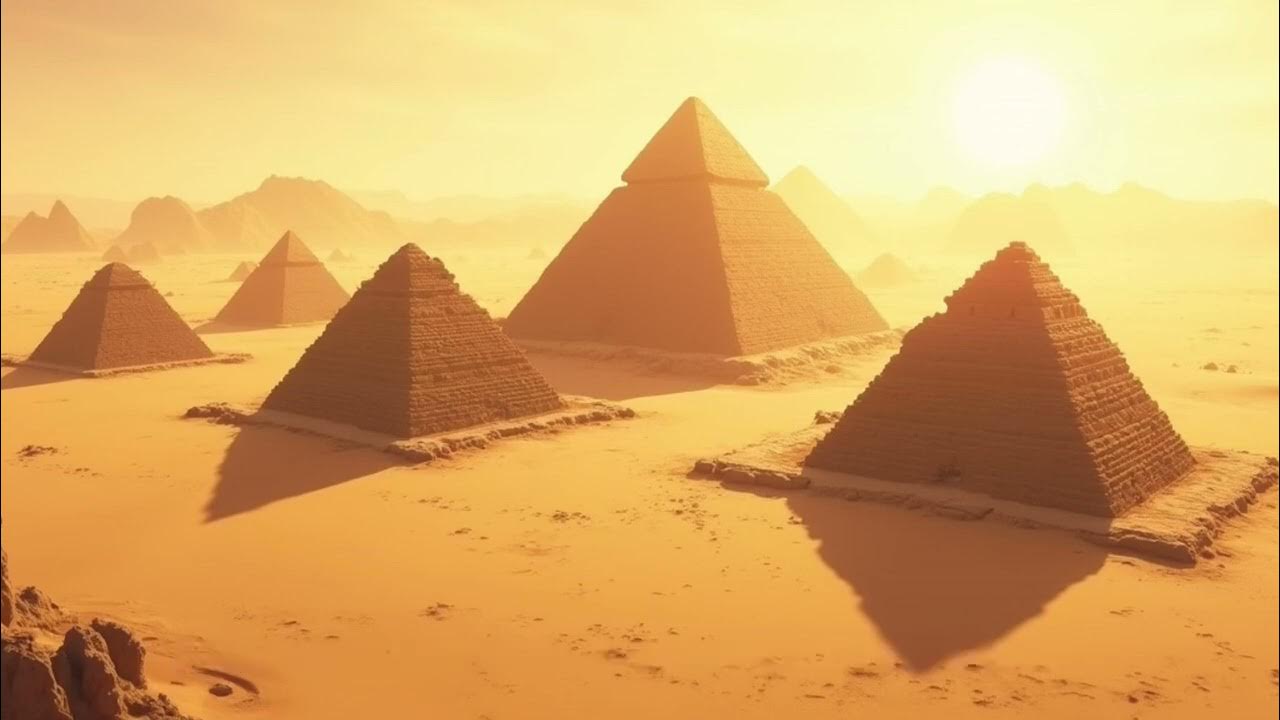
The Arabian Peninsula, too, hides ancient secrets. Once covered with rivers and fertile plains, it now conceals lost cities such as Ubar, the “Atlantis of the Sands,” mentioned in the Quran as Iram of the Pillars.
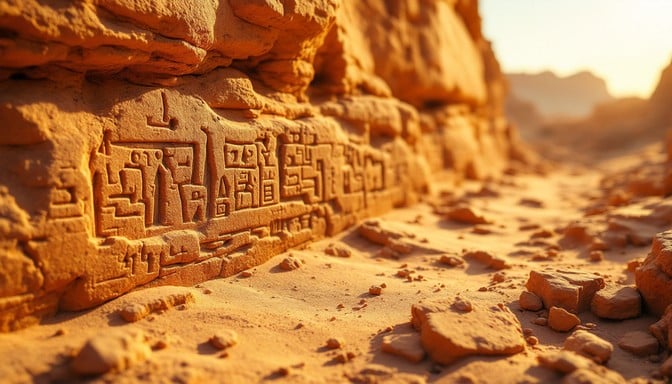
Satellite scans and LiDAR have revealed ancient trade routes beneath the dunes — roads connecting Arabia with Mesopotamia and the Indus Valley. Excavations in AlUla and Mada’in Saleh have exposed monumental tombs carved from sandstone, evidence of sophisticated societies that flourished long before the Nabataeans.
Could other undiscovered cities still sleep beneath Arabia’s sands — remnants of cultures wiped out by drought, shifting winds, or cosmic catastrophe?
The Lost Rivers Beneath Our Feet
Recent remote-sensing studies have uncovered networks of buried river systems stretching beneath the Sahara and Arabia — channels that once fed lush valleys. These findings suggest the deserts we see today are relatively recent, geologically speaking.
If entire river systems disappeared within a few millennia, could the civilizations that depended on them have been erased just as quickly?
The Memory of Cataclysms
Many ancient texts — from Plato’s Timaeus to Mesopotamian flood epics — describe civilizations destroyed by water, fire, or shifting earth. Plato himself wrote that humanity is “periodically destroyed” by natural cataclysms, forcing civilization to begin anew.
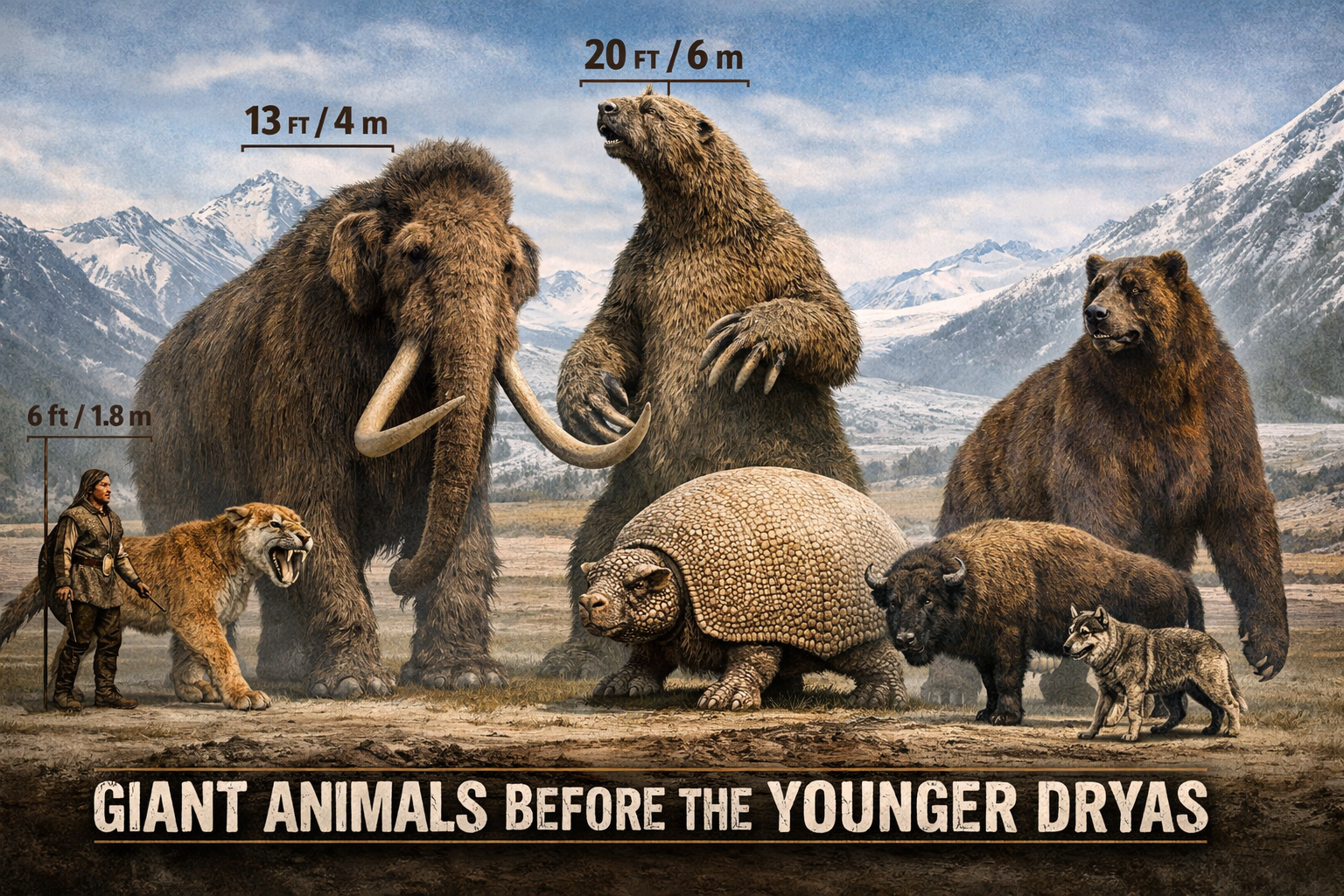
Modern research supports this cyclical view. Studies of the Younger Dryas event (12,800 years ago) suggest a sudden cooling — possibly triggered by a comet impact — that caused mass extinctions and sea-level rise.
If true, the survivors of these cataclysms might have carried fragments of forgotten knowledge — the seeds of later civilizations.
What the Scholars Say
Thinkers such as John Anthony West and Dr. Robert Schoch proposed that erosion patterns on the Sphinx point to heavy rainfall thousands of years before Egypt’s dynastic period — implying it may have been carved during the Sahara’s fertile age.
Robert Bauval observed that the alignment of the Giza Pyramids mirrors Orion’s Belt as it appeared around 10,500 BCE, far earlier than conventional chronology suggests.
These controversial theories — often dismissed by orthodox Egyptology — raise an unsettling possibility: what if the monuments of Egypt are not the beginning of civilization, but its rediscovery?
Key Concepts
-
The Sahara and Arabia were once fertile, inhabited regions with thriving ecosystems.
-
Climate change and desertification erased or buried early civilizations.
-
LiDAR and satellite imagery are revealing buried structures, roads, and rivers.
-
Ancient myths and oral traditions may preserve memories of real cataclysms.
-
Some ancient monuments (Sphinx, Giza Pyramids) may be far older than recorded history.
Why It Matters
Understanding what lies beneath the sands could completely rewrite human history. If advanced societies existed before known civilizations, their loss — whether through climate, cosmic impact, or time — explains why humanity’s story feels fragmented.
How many cycles of rise and collapse have we forgotten? How many times has knowledge been lost to cataclysm and the relentless wind of the desert?
Additional readings
- Lost Civilizations After Ancient Cataclysms
-
National Geographic – “Sahara’s Hidden Rivers Reveal Green Past”
-
Nature – “LiDAR Scanning Exposes Lost Cities in Arabia”
-
Science News Today – “The Vanished Kingdoms of the Desert”
-
Robert Schoch (BU) – “Water Weathering and the Age of the Sphinx”
-
Graham Hancock – “Fingerprints of the Gods”