Introduction: A Forgotten Chapter of Human Intelligence
The concept of lost knowledge of the Ice Age does not emerge from a single discovery or isolated anomaly but rather from the convergence of multiple lines of evidence that, when considered together, begin to challenge the simplicity of the conventional historical timeline, suggesting that the intellectual and cultural capacities of prehistoric humans may have been far more developed than traditionally acknowledged, and that what we perceive as the dawn of civilization may instead represent a phase of recovery following a profound disruption rather than a true beginning (Lost Worlds Before the Floods – link). Archaeological discoveries, geological data, ancient myths, and emerging technological analyses collectively point toward a possibility that remains difficult to fully prove yet increasingly difficult to dismiss—that advanced knowledge systems, possibly including early forms of astronomy, navigation, engineering, and symbolic communication, may have existed during the Ice Age and were partially or largely erased by cataclysmic events such as those associated with the Younger Dryas, leaving behind only fragmented traces that have been misinterpreted or overlooked within a framework that assumes a linear progression of human development (Science Before the Younger Dryas – link).
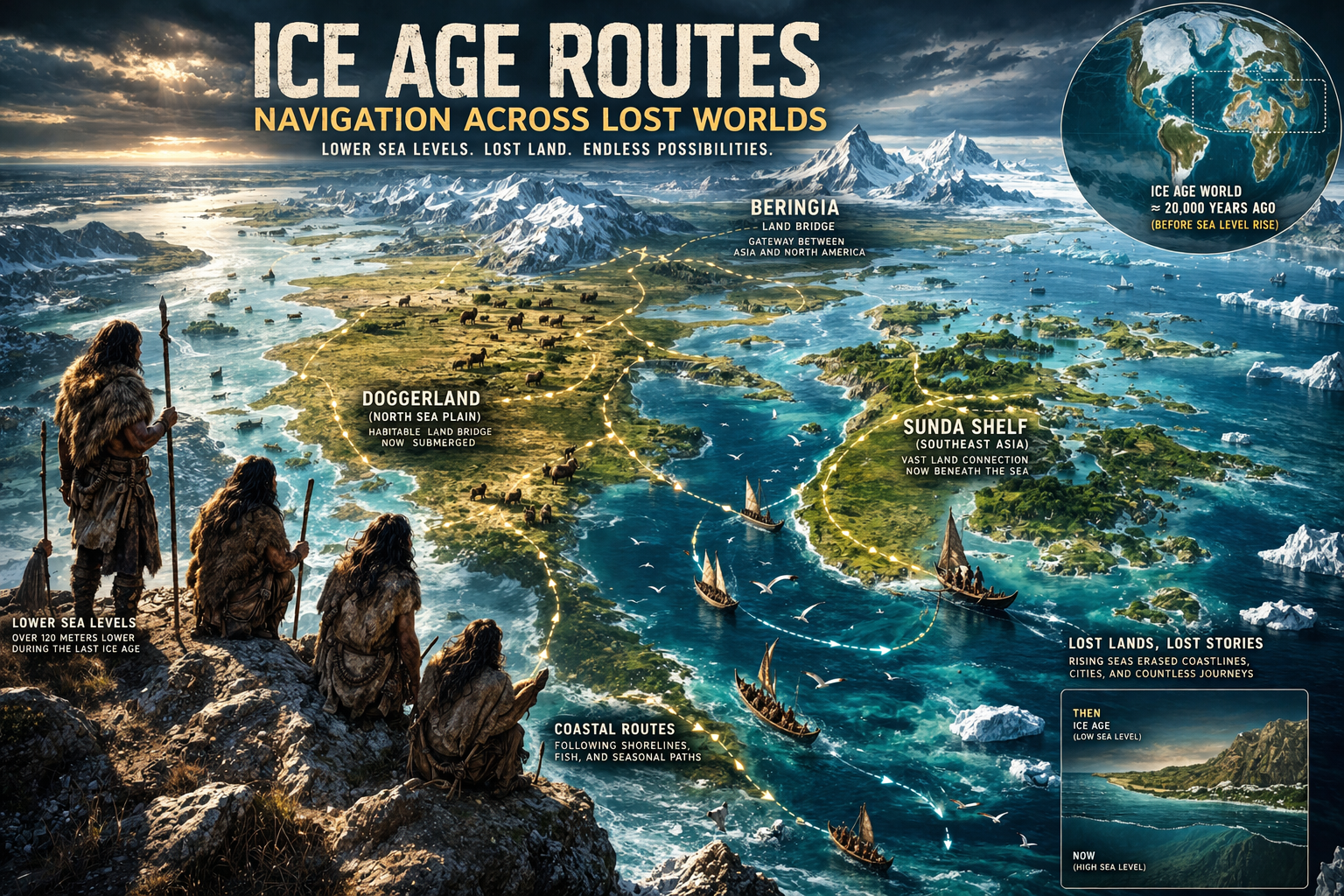
This perspective requires a shift in how evidence is evaluated, because rather than expecting continuous and abundant proof, the investigation must account for the likelihood of discontinuity, destruction, and preservation bias, particularly considering that large portions of Ice Age human habitation zones now lie beneath oceans due to the dramatic rise in sea levels that occurred between approximately 12,000 and 8,000 years ago, effectively submerging coastal regions that would have been among the most favorable locations for early complex societies. When viewed through this lens, the absence of extensive evidence becomes less a confirmation of non-existence and more an indication of how much of the prehistoric world remains inaccessible, hidden beneath layers of sediment, water, and time, awaiting discovery through increasingly sophisticated methods of exploration (Lost Knowledge Before Recorded History – link).
The Younger Dryas: A Turning Point in Human History
The Younger Dryas period represents one of the most abrupt climatic reversals in Earth’s recent history, characterized by a sudden return to glacial conditions after a phase of warming, and its implications extend far beyond environmental change into the realm of human survival, adaptation, and potential cultural disruption, because such rapid shifts in temperature, precipitation, and ecological stability would have placed immense pressure on human populations, particularly those reliant on coastal and riverine environments that were simultaneously undergoing transformation due to melting ice sheets and rising sea levels. The hypothesis that this period may have been triggered or intensified by extraterrestrial impacts, while still debated within the scientific community, introduces an additional layer of potential devastation, including widespread fires, atmospheric disturbances, and regional or global ecological collapse (Mapping the Skies Before Civilizations – link).
If human societies during the late Ice Age had reached levels of organization and knowledge that are not fully represented in the current archaeological record, then the Younger Dryas could have acted as a bottleneck event, fragmenting populations, disrupting knowledge transmission, and effectively resetting cultural development in many regions, leaving only isolated pockets of knowledge that would later re-emerge in early civilizations such as those of Mesopotamia and Egypt. This raises a critical question that underpins much of the investigation into lost knowledge: are the earliest known civilizations truly the origin points of complex human thought, or are they inheritors of much older traditions that survived in diminished or transformed forms?
Submerged Worlds: The Archaeology Beneath the Oceans
One of the most compelling avenues for exploring the lost knowledge of the Ice Age lies beneath the oceans (Lost Knowledge of Survey Methods link), where vast tracts of land that were once exposed during periods of lower sea levels now remain submerged, effectively preserving—or concealing—evidence of human activity that predates the end of the last glacial period, and while underwater archaeology is still a developing field, discoveries in regions such as Doggerland, the Sunda Shelf, and various coastal zones around the world have begun to reveal that these submerged landscapes were not empty but were inhabited by human populations that likely possessed complex adaptations to their environments. The challenge lies in the fact that underwater sites are inherently difficult to locate, access, and interpret, requiring advanced technologies such as sonar mapping, submersibles, and remote sensing, all of which are only now becoming sufficiently refined to allow systematic exploration. And was the ancient world phisically different? (link)
The potential significance of these submerged regions cannot be overstated, because if early complex societies were indeed concentrated along coastlines—as is the case with many later civilizations—then a substantial portion of the archaeological record may currently be hidden beneath the sea, creating a gap in our understanding that could fundamentally alter the narrative of human history once filled. This possibility aligns with the persistence of flood myths across cultures, which may represent cultural memories of real events experienced by populations witnessing the gradual or sudden inundation of their environments, events that would not only reshape landscapes but also disrupt cultural continuity and erase physical evidence of prior development.
Göbekli Tepe and the Rewriting of Prehistory
The discovery of Göbekli Tepe (The World’s First Gathering Place? link) has already begun to challenge the conventional model of human development by demonstrating that large-scale, organized construction projects involving complex symbolic systems were possible before the advent of agriculture, suggesting that the relationship between social complexity and subsistence strategies may be more flexible than previously assumed, and raising the possibility that similar or even more advanced knowledge systems could have existed earlier but remain undiscovered or unrecognized. The site’s massive stone pillars, intricate carvings, and apparent alignment with celestial phenomena indicate a level of planning, cooperation, and conceptual thinking that implies the presence of structured knowledge systems, potentially including early forms of astronomy or cosmology.
What makes Göbekli Tepe particularly significant in the context of Ice Age knowledge is not only its age but its apparent isolation, as it appears suddenly in the archaeological record without clear precursors, leading some researchers to speculate that it may represent the culmination of earlier traditions rather than their origin, traditions that could have developed over millennia and been transmitted through cultural memory even after the societies that created them had declined or disappeared. This interpretation aligns with the broader hypothesis that knowledge can persist independently of the structures or institutions that originally generated it, surviving in symbolic, ritual, or oral forms until conditions allow for its re-expression.
Ancient Astronomy: Mapping the Sky Before History
The development of astronomy is often attributed to early civilizations with written records, yet evidence suggests that the roots of celestial observation extend far deeper into prehistory, where early humans may have systematically observed the movements of the Sun, Moon, and stars, developing an understanding of cycles and patterns that would form the basis of later scientific inquiry, and while the absence of written records from this period makes definitive conclusions difficult, the presence of aligned structures, symbolic representations, and recurring motifs in cave art suggests that the sky played a central role in prehistoric knowledge systems (Earth Scaling and Cosmic Code – link).
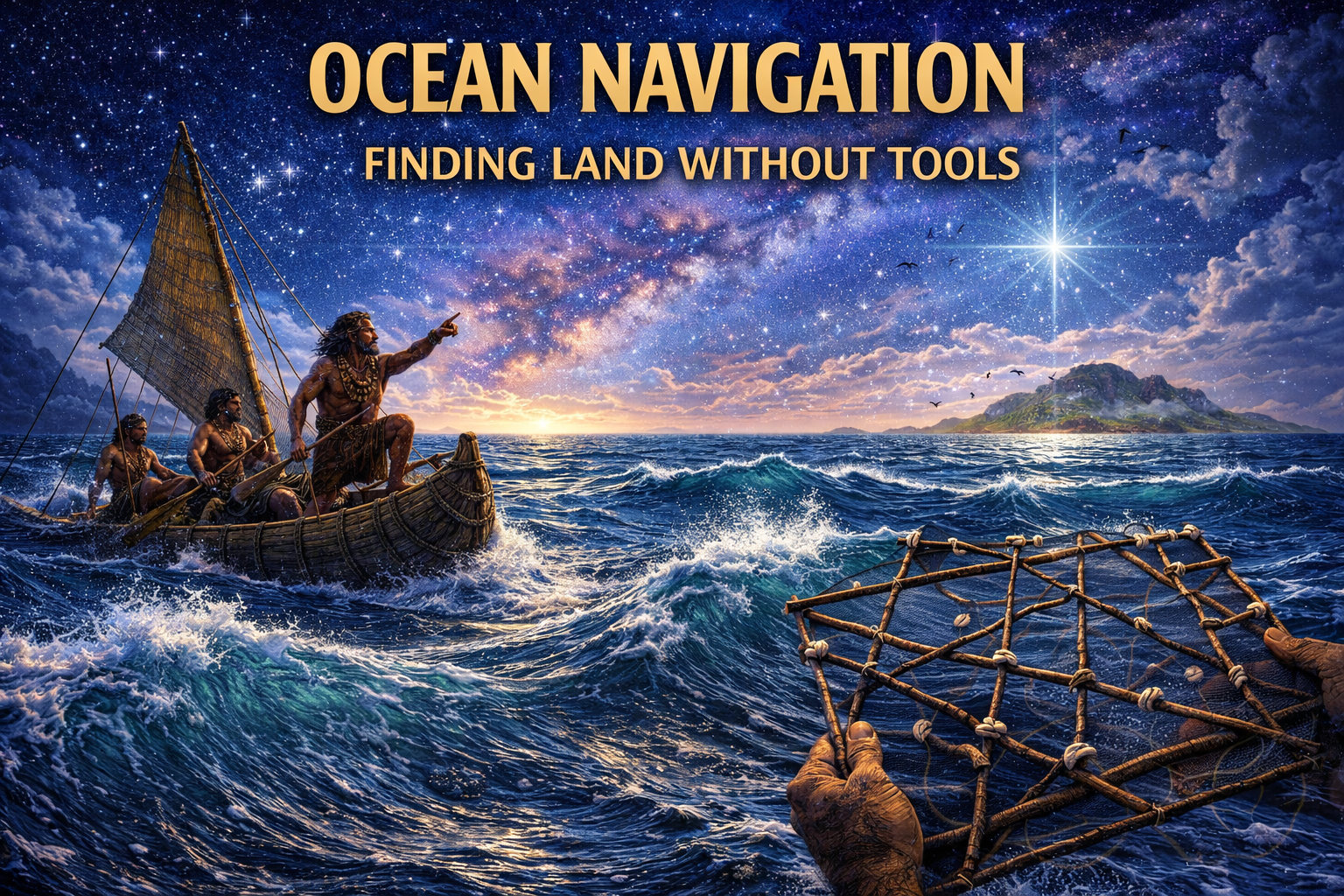
The ability to track celestial cycles would have provided significant practical advantages, including the ability to predict seasonal changes, navigate across landscapes, and coordinate social activities, but it may also have contributed to the development of more abstract concepts related to time, cosmology, and the relationship between Earth and the broader universe, concepts that would later be formalized in the astronomical traditions of ancient civilizations (Orion Blueprint of the Gods – link). If such knowledge existed during the Ice Age, then it is possible that later developments in astronomy represent not the beginning of the discipline but a continuation of much older observational traditions that survived through periods of disruption and transformation.
Megalithic Geometry and the Language of Stone
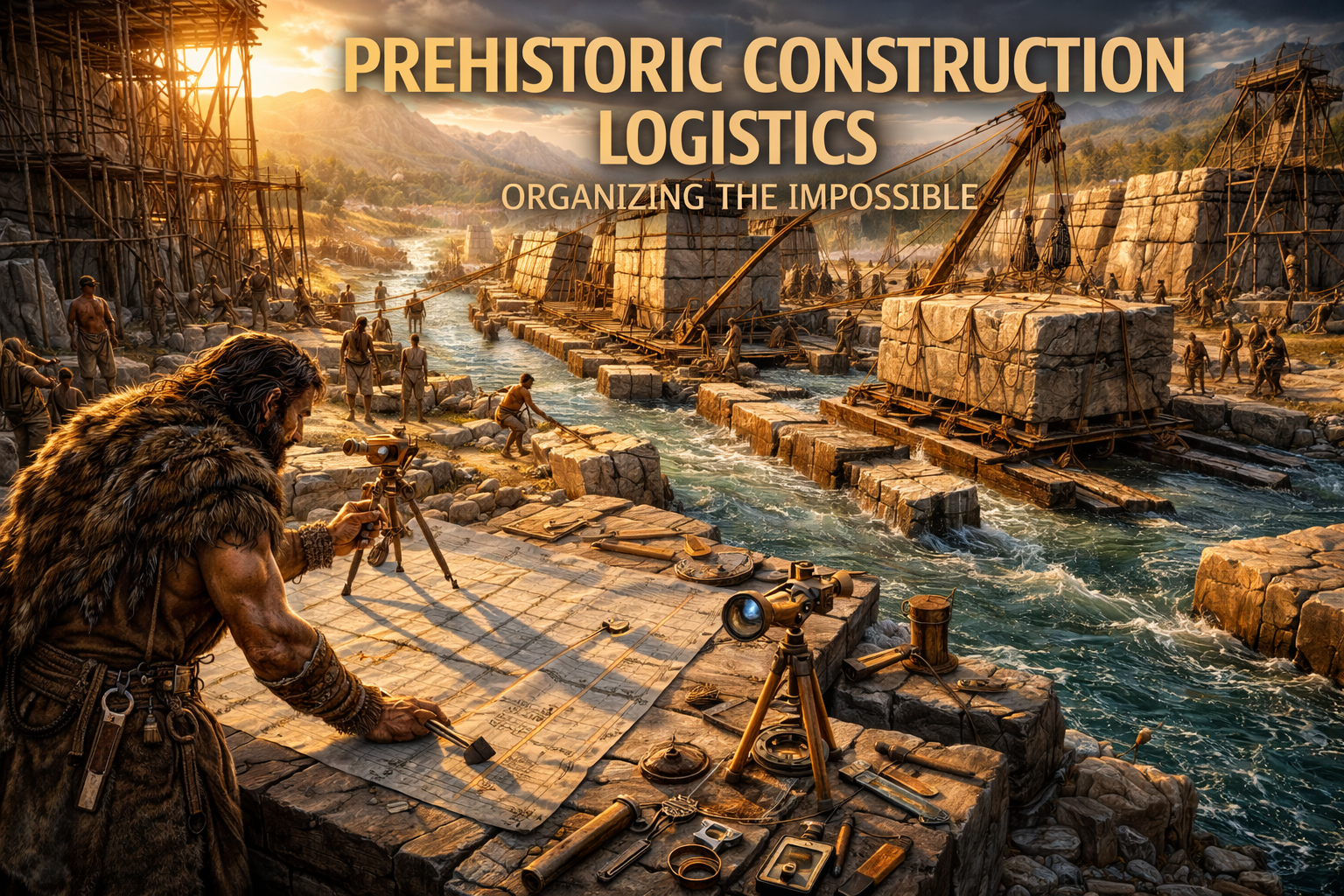
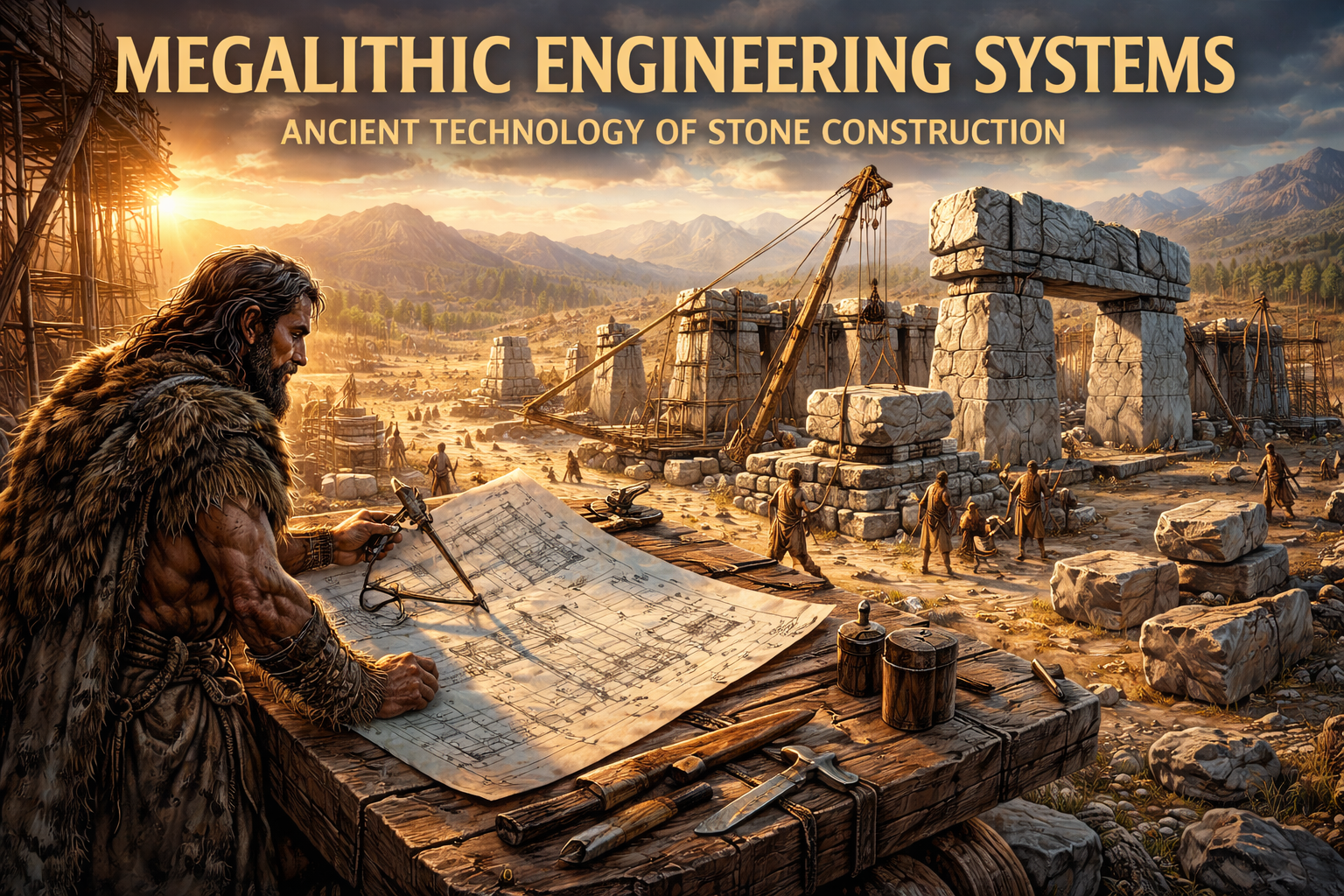
The precision and consistency observed in megalithic structures around the world suggest an understanding of geometry, measurement, and spatial relationships that may have roots extending back into the Ice Age, because the ability to construct aligned monuments requires not only practical skills but also conceptual frameworks that allow for the translation of abstract ideas into physical form, and while most surviving megalithic structures date to the Neolithic period, the knowledge required to create them may have developed earlier, potentially within cultures that left fewer durable traces.
The recurring presence of specific ratios, alignments, and orientations in these structures has led some researchers to propose that they functioned as part of a broader system of knowledge, possibly related to astronomy, surveying, or even geodetic measurement, and while such interpretations remain debated, they highlight the possibility that prehistoric humans engaged with their environment in ways that were both technically sophisticated and conceptually complex, integrating practical and symbolic knowledge into cohesive systems that could be transmitted across generations.
Global Parallels: Independent Development or Shared Knowledge?
One of the most intriguing aspects of the investigation into lost Ice Age knowledge is the presence of similar architectural, astronomical, and symbolic features across geographically distant cultures, raising the question of whether these similarities represent independent development driven by common human experiences or the remnants of a shared knowledge network that existed before the fragmentation of populations at the end of the Ice Age. The alignment of structures with celestial events, the use of similar geometric principles, and the recurrence of mythological themes related to creation, destruction, and renewal all suggest a level of convergence that may be difficult to explain solely through coincidence.
If a form of knowledge transmission existed across regions during the Ice Age, whether through direct contact or parallel development influenced by similar environmental conditions, then the study of these parallels could provide valuable insights into the intellectual capabilities of prehistoric humans and the extent to which knowledge was shared, adapted, and preserved over time, even in the face of environmental and cultural disruption.
Myths as Memory: Encoding Catastrophe and Knowledge
The persistence of myths related to floods, lost lands, and vanished civilizations across cultures suggests that these narratives may serve as repositories of historical memory, encoding information about events that were significant enough to be preserved and transmitted over generations, even if their original context has been altered or obscured, and while myths are often dismissed as purely symbolic or fictional, they may contain elements of truth that, when combined with archaeological and geological evidence, provide a more complete picture of the past (Oxygen Hypothesis Before the Younger Dryas – link).
The story of Atlantis, for example, while often interpreted as allegory, shares characteristics with other flood narratives and may reflect a broader pattern of cultural memory related to environmental change, and when considered alongside evidence of submerged landscapes and rapid sea-level rise, such stories take on a new dimension, suggesting that they may represent attempts to preserve knowledge of events that had a profound impact on human societies.
Knowledge Lost, Knowledge Preserved
The concept of lost knowledge does not imply total disappearance but rather transformation, because knowledge can survive in various forms even when the societies that created it are no longer present, and this survival may take the form of oral traditions, symbolic systems, architectural practices, or even subconscious patterns embedded within cultural practices, allowing fragments of earlier knowledge to persist and eventually re-emerge under new conditions.
This process of loss and recovery may explain why early civilizations appear to possess advanced knowledge systems without clear developmental stages, as they may have inherited and adapted knowledge that originated in earlier periods, creating the impression of sudden emergence when in fact they are part of a longer continuum of human intellectual development.
Modern Technologies and the Rediscovery of the Past
Advances in technology are transforming the study of prehistoric knowledge, enabling researchers to explore previously inaccessible environments, analyze materials with greater precision, and reconstruct past conditions with increasing accuracy, and tools such as satellite imaging, LiDAR, and underwater exploration are beginning to reveal patterns and structures that were previously hidden, offering new opportunities to test hypotheses about the existence and nature of Ice Age civilizations.
As these technologies continue to develop, the potential for discovering evidence that challenges current paradigms increases, suggesting that our understanding of human history is far from complete and may undergo significant revision in the coming decades.
Conclusion: A History Yet to Be Written
The hypothesis of lost knowledge of the Ice Age does not claim certainty but instead opens a door—one that encourages deeper investigation and a willingness to question long-standing assumptions about the trajectory of human development. Discoveries like Göbekli Tepe and submerged prehistoric landscapes hint that the archaeological record may be far from complete, especially considering how much of the prehistoric world now lies beneath oceans that rose dramatically after the last glacial period. When viewed alongside global flood myths, lost civilization narratives such as Atlantis, and the unexplained sophistication of early knowledge systems, a pattern begins to emerge that invites curiosity rather than dismissal. Is it possible that human history is not a simple upward climb from primitive beginnings, but a more complex story of rise, loss, and rediscovery shaped by cycles of environmental upheaval? Advances in technologies such as underwater archaeology, satellite imaging, and paleoclimatology are beginning to reveal landscapes and timelines that were previously inaccessible, suggesting that future discoveries may challenge current paradigms even further. The question is no longer whether prehistoric humans were capable of complexity—evidence increasingly suggests they were—but how much of that complexity has been lost to time, and whether traces of it still linger in unexpected places, waiting to be recognized.
References and Further Reading
NASA — Climate and Earth History (link)
JSTOR — Prehistoric and Archaeological Studies
The Serapeum — Maps of the Ancient Sea Kings
Ancient360.eu — Cosmology and Cartography Studies (link)
ResearchGate — Younger Dryas Research (link)