Sacred Geometry and the Blueprint of Civilization
Throughout the ancient world, from the pyramids of Egypt to the temples of Angkor and the cities of Mesoamerica, a mysterious and universal pattern emerges: geometry.
The builders of antiquity appeared to possess a profound understanding of sacred geometry—the interplay between mathematics, form, and the laws of nature.
Today, this knowledge seems fragmented or symbolic, often dismissed as mystical. But what if sacred geometry was not superstition at all, but the scientific language of ancient civilizations?
The Geometry of Creation
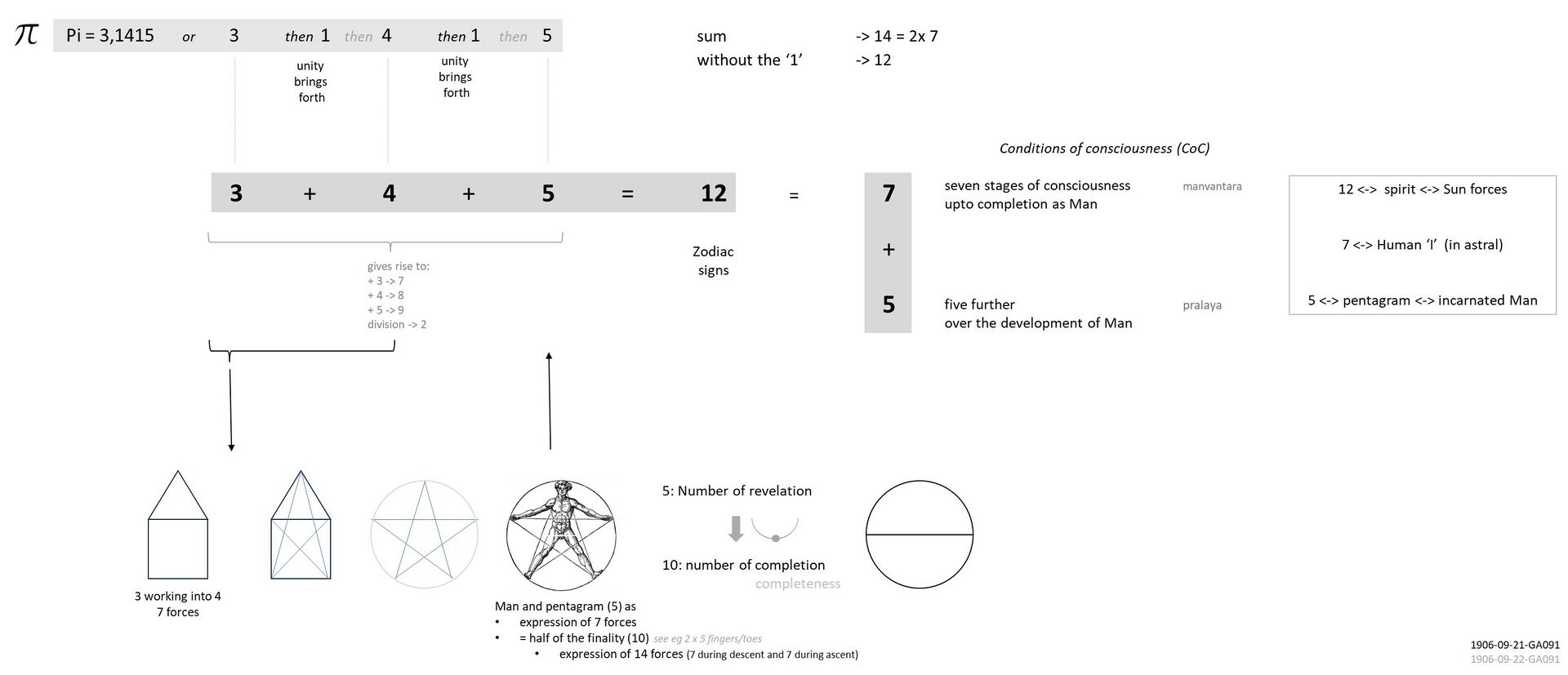
Sacred geometry is the study of patterns that underpin life and the cosmos—circles, spirals, triangles, and ratios such as the Golden Ratio (φ) and Pi (π). These constants appear everywhere: in the spiral of galaxies, the symmetry of flowers, and even the proportions of the human body.
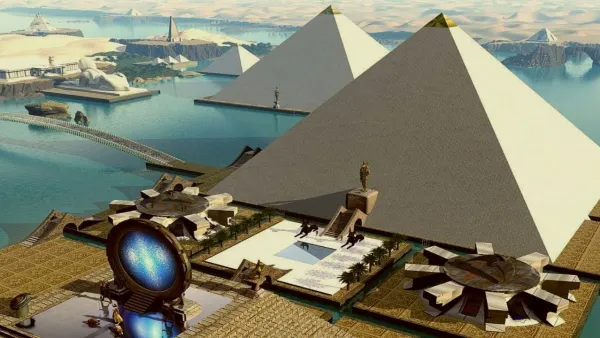
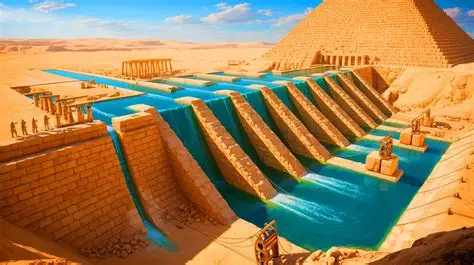
Ancient architects used these mathematical truths to encode balance, harmony, and cosmic order into their monuments. The Great Pyramid of Giza, for instance, embodies π and φ within its base-to-height ratio, while Mayan temples mirror celestial cycles with remarkable precision.
Such sophistication invites a provocative question:
How did civilizations separated by oceans and millennia arrive at the same mathematical principles—and apply them so perfectly?
Geometry Across the Ancient World
Egypt and the Golden Ratio
The ancient Egyptians saw geometry as a divine language. The Temple of Luxor and the Great Pyramid both exhibit dimensions aligned with φ and the cardinal directions. To them, geometry wasn’t mere engineering—it was cosmology made visible.
Robert Bauval’s Orion Correlation Theory proposes that the pyramids’ placement reflects the stars of Orion’s Belt, suggesting the builders wove heaven and Earth into one design.
Greece and Harmonic Proportion
The Greeks inherited and refined this wisdom. Pythagoras taught that “all is number,” and Plato described geometry as the foundation of the universe. The Parthenon’s proportions and the layout of Greek theaters reflect an attempt to mirror cosmic harmony in human design.
India and the Cosmic Mandala
In India, sacred geometry took the form of the mandala—a symbolic representation of the cosmos. Temples like Khajuraho and Angkor Wat were constructed following mathematical grids aligning microcosm (human experience) with macrocosm (divine structure).
Mesoamerica and Astronomical Precision
The Mayans and Aztecs embedded geometry into their calendar systems and architecture. The Temple of Kukulcán at Chichén Itzá is a solar clock: during the equinox, the shadow of a serpent undulates down the stairs—a precise fusion of geometry, astronomy, and myth.
Encoded Knowledge or Coincidence?
Modern researchers such as Graham Hancock, John Anthony West, and Dr. Robert Schoch argue that this consistency across cultures suggests a shared legacy of ancient knowledge, possibly inherited from a forgotten civilization before the Younger Dryas cataclysms.
This would explain why geometric and astronomical precision appear suddenly—fully developed—in early human societies, rather than gradually evolving.
If true, it could mean our ancestors didn’t just worship the cosmos—they understood it, perhaps using knowledge far older than recorded history.
Numbers as the Language of the Universe
Certain numbers recur mysteriously across ancient sites:
-
432 – Found in Hindu cosmology, Norse mythology, and even the Great Pyramid (base perimeter in royal cubits).
-
72 – Represents precessional motion of Earth; found in myths about rebirth and cycles.
-
108 – Sacred in Hindu, Buddhist, and even Mesoamerican traditions.
-
3, 6, 9 – Echoing Tesla’s assertion that they hold the “key to the universe.”
Were these coincidences—or clues left by ancient mathematicians encoding the very fabric of cosmic mechanics?
A Lost Global Language?
Geometry may have been humanity’s first universal language—one that transcended words, nations, and even time.
Through shape and proportion, ancient architects communicated fundamental truths about existence, vibration, and the structure of reality.
The same geometric relationships that govern atoms, planets, and galaxies appear carved into temples and stone circles.
It’s as if the builders sought to remind future generations that we, too, are patterns in the grand design.
Key Concepts and Theories
-
Geometry as universal truth – Ancient builders viewed mathematics as divine, linking heaven and Earth.
-
Encoded astronomical data – Many temples double as star maps, calendars, or energy harmonics.
-
Interconnected civilizations – Similar geometric systems suggest ancient global knowledge exchange.
-
Loss through cataclysm – Much of this mathematical heritage may have been erased by floods, fires, and the collapse of early societies.
-
Reawakening of memory – Modern rediscovery of sacred geometry may represent humanity “remembering” its deeper origins.
A Call to Rediscover
If sacred geometry is indeed the lost blueprint of civilization, then its rediscovery could reshape how we view both history and science.
Modern physics, fractal geometry, and quantum field theory increasingly echo ancient principles once deemed mystical. The boundary between “spiritual” and “scientific” knowledge grows thinner by the decade.
Perhaps the ancients weren’t primitive at all—they were perceiving reality through a different, but equally valid, mathematical lens.
The question now is: can we learn to read their code again?
Additional readings