
Ancient Hyper-Forests and Giant Trees
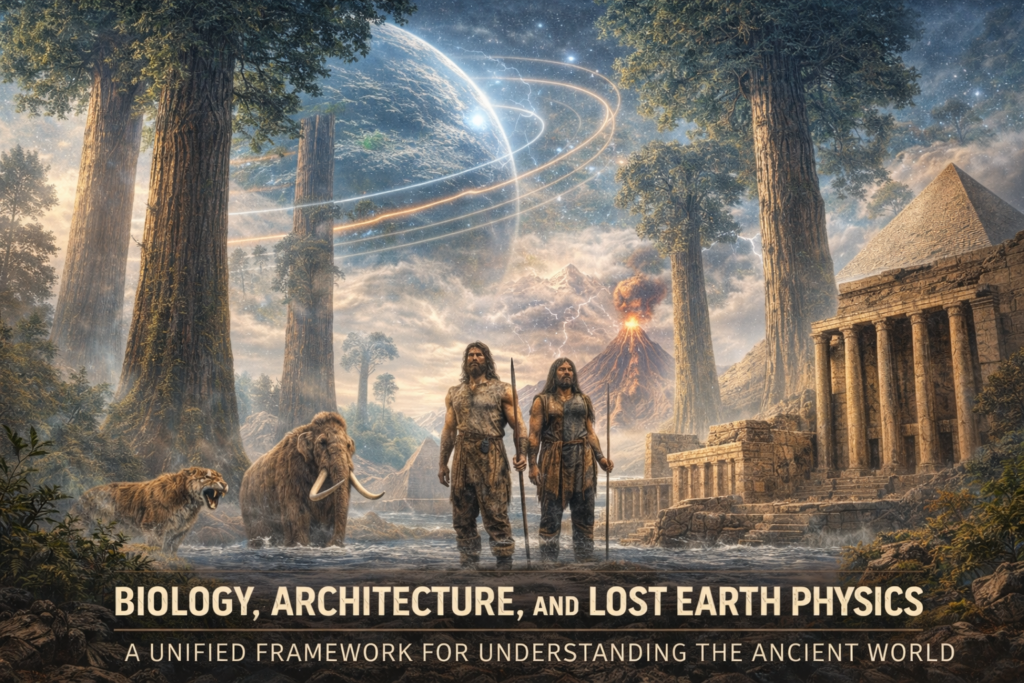
The Biological Scale of a Different Planet The hypothesis of ancient hyper-forests proposes that Earth once sustained ecological systems operating at physical scales far beyond those observable today, where trees may have reached heights measured not merely in hundreds of meters (hundreds of feet) but potentially approaching several kilometers (thousands of feet), supported by atmospheric […]
Pre-Flood Civilizations and Environmental Collapse

Pre-Flood Civilizations and Environmental Collapse When Earth Changed Faster Than Civilization Could Adapt Civilizations do not emerge in isolation; they are expressions of the environmental ceiling within which humans operate. If pre-flood Earth supported greater biological scale, higher energy throughput, and longer ecological stability, then pre-flood civilizations must be evaluated within that context rather than […]
Was the Ancient World Physically Different?

Gravity, Atmosphere, and Lost Earth Physics. Was the Ancient World Physically Different? The existence of giant animals before the Younger Dryas, unusually robust humans, and monumental stone structures presents a deeper question than biology alone can answer. If Earth once supported life at extreme scale, then the planet itself—its gravity, atmosphere, and electromagnetic environment—may have […]
Giant Humans Before the Younger Dryas

Giants Before the Younger Dryas. Environment, Oxygen, and the Forgotten Scale of Humanity The existence of giant animals before the Younger Dryas forces an uncomfortable reassessment of Earth’s late Ice Age environment. Mammoths, giant sloths, armored glyptodons, and oversized predators did not merely survive—they thrived. Their size was not marginal or pathological; it was systemic. […]
Oxygen Hypothesis Before the Younger Dryas

Giant Animals and the Oxygen Hypothesis – Rethinking Biology Before the Younger Dryas The existence of giant animals before the Younger Dryas presents one of the most persistent challenges to mainstream explanations of Earth’s recent past. Mammoths towering over modern elephants, saber-toothed cats larger than today’s lions, giant ground sloths exceeding the mass of rhinoceroses, and […]
Giant Animals Before the Younger Dryas
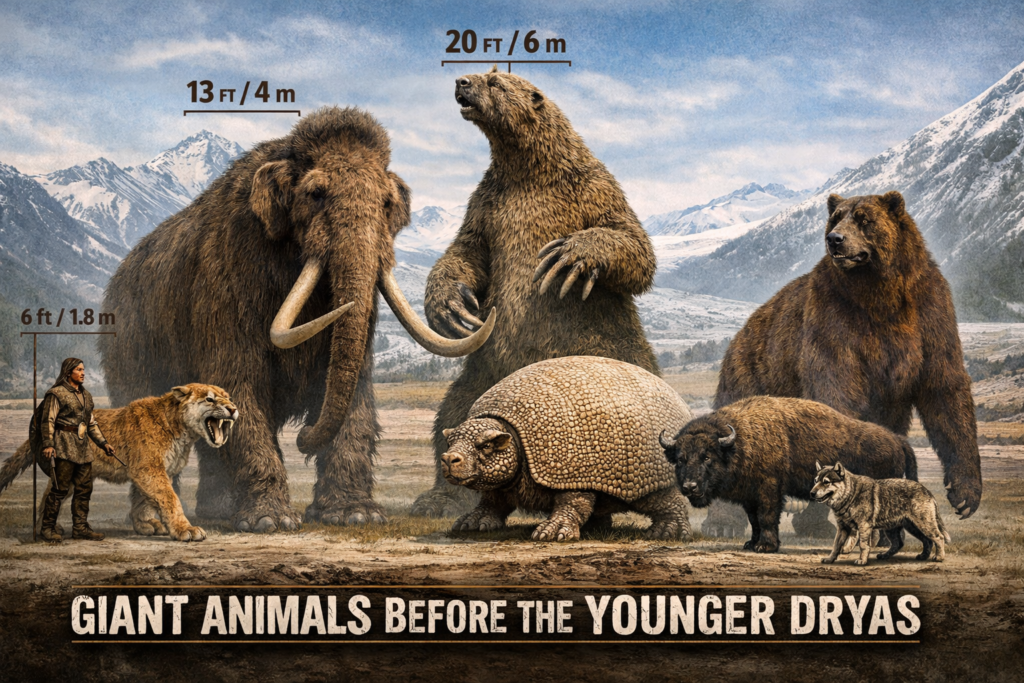
Giant Animals Before the Younger Dryas The existence of giant animals before the Younger Dryas is not speculative, mythical, or fringe—it is established fact. Mammoths, saber-toothed cats, giant armadillos, massive ground sloths, short-faced bears, and oversized birds dominated ecosystems across multiple continents until roughly 12,900 years ago. What remains unresolved is why these animals reached […]
Great Pyramid True Purpose

Great Pyramid True Purpose: New Evidence from Science, Engineering, and Chemistry For over two centuries, mainstream archaeology has asserted that the Great Pyramid of Giza was built as a royal tomb. Yet this explanation collapses when confronted with measurable physical evidence, chemical residues, engineering design, and global technological parallels. The Great Pyramid true purpose emerges […]
Pyramids as Machines: Planetary Technology (Part 3)

Pyramids as Planetary Technology: Energy, Weather, and a Lost Global System (Part 3 of 3) The hypothesis of pyramids as planetary technology represents the unavoidable conclusion of the evidence presented across this three-part investigation. If the pyramids were not tombs, and if they functioned as engineered systems, then Part 3 confronts the final implication: these […]
Pyramids As Machines: What Were They? (Part 2)
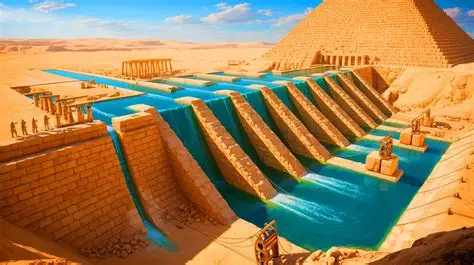
Pyramids as Machines: Function, Stone Circles, and a Shared Origin (Part 2 of 3) The idea of pyramids as machines emerges naturally once the burial narrative is set aside. In Part 1, we established why the pyramids of Egypt fail as tombs when evaluated through material, geometric, and economic logic. In Part 2, the investigation […]
Pyramids Not Tombs: What Were They? (Part 1)
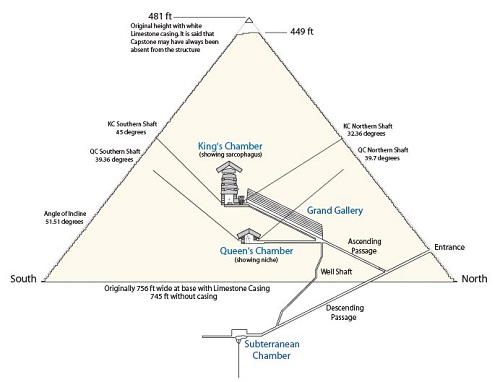
If They Weren’t Tombs, What Were the Pyramids? (Part 1 of 3) The question at the heart of the pyramids not tombs debate is no longer speculative—it is structural, mathematical, and engineering-based. In Part 1 of this three-part investigative series, we resume the conversation presented by Geoffrey Drumm and Matt Beall by confronting a foundational […]