
Ancient Maps and Star Charts: Lost Knowledge Traditions

Mapping the Cosmos and the Earth The history of civilization is inseparable from the history of mapping. From the earliest symbolic engravings to sophisticated world charts, ancient maps and star charts represent humanity’s attempt to understand space, time, and cosmic order. Ancient maps, star and constellation charts, lost knowledge of an advanced civilization. These artifacts […]
Ancient Navigation Technology: Evidence of Lost Survey Methods
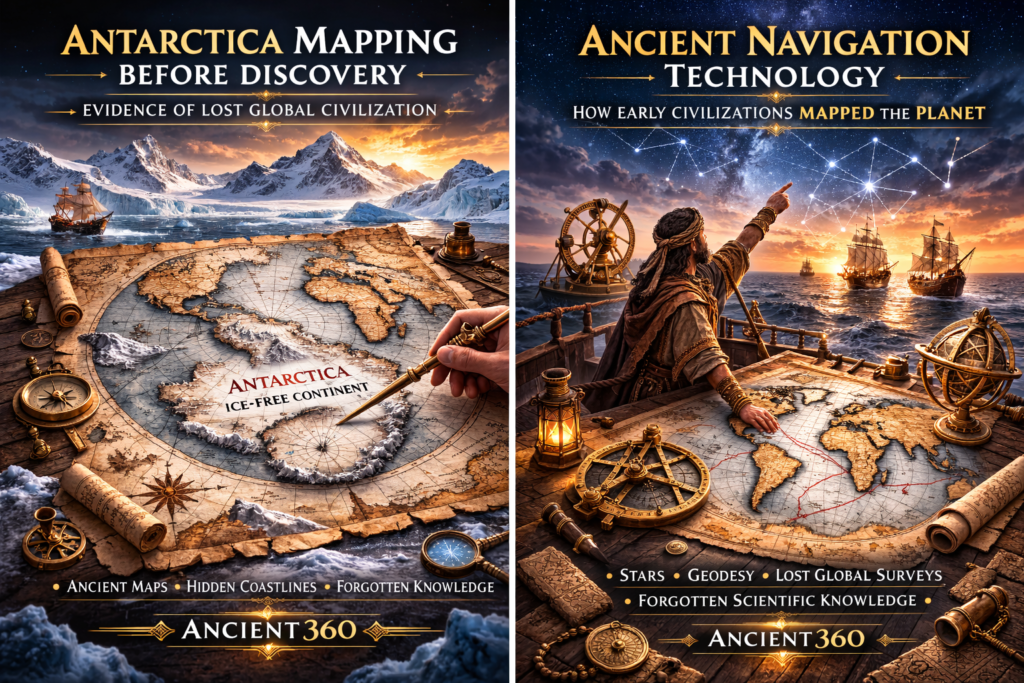
The Mystery of Ancient Navigation The study of ancient navigation reveals one of the most profound and underexplored questions in historical science, because the extraordinary geographic accuracy preserved in several early maps implies that ancient civilizations may have possessed sophisticated systems for global travel, planetary measurement, and spatial orientation long before the appearance of modern […]
Antarctica Mapping Before Discovery
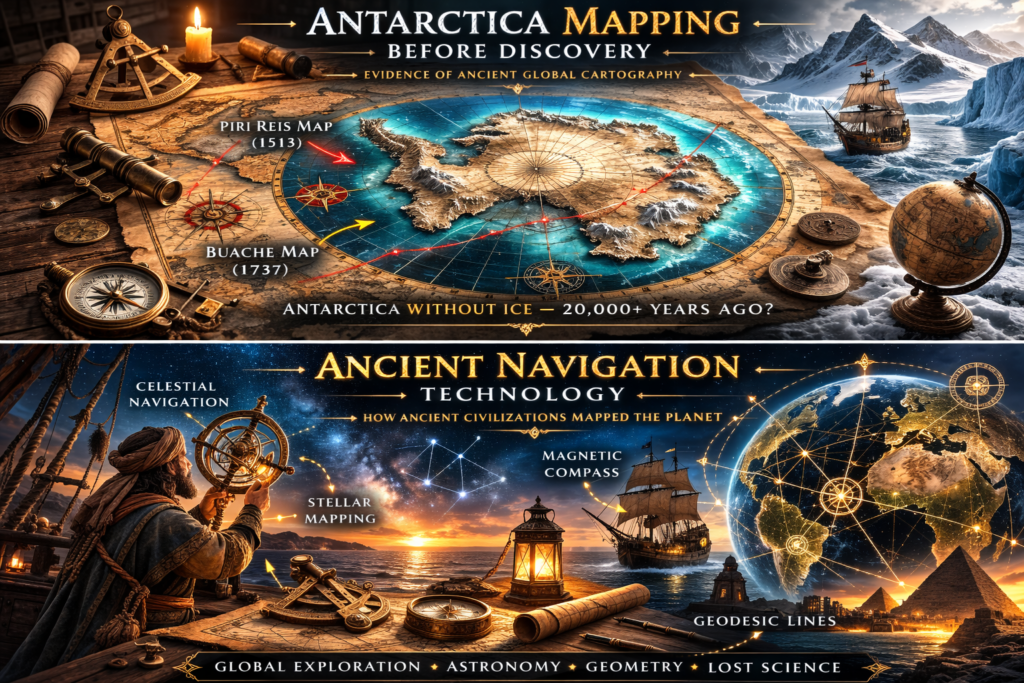
The Antarctica Mapping Enigma The mystery of Antarctica mapping in ancient cartographic documents raises profound questions about humanity’s forgotten past, because several early maps appear to depict Antarctic landforms centuries before the continent’s official discovery in 1820, showing coastlines, mountains, and geographic details that imply either lost exploration records or inherited knowledge from unknown earlier […]
Ancient Maps Anomaly: Evidence of a Lost Global Civilization
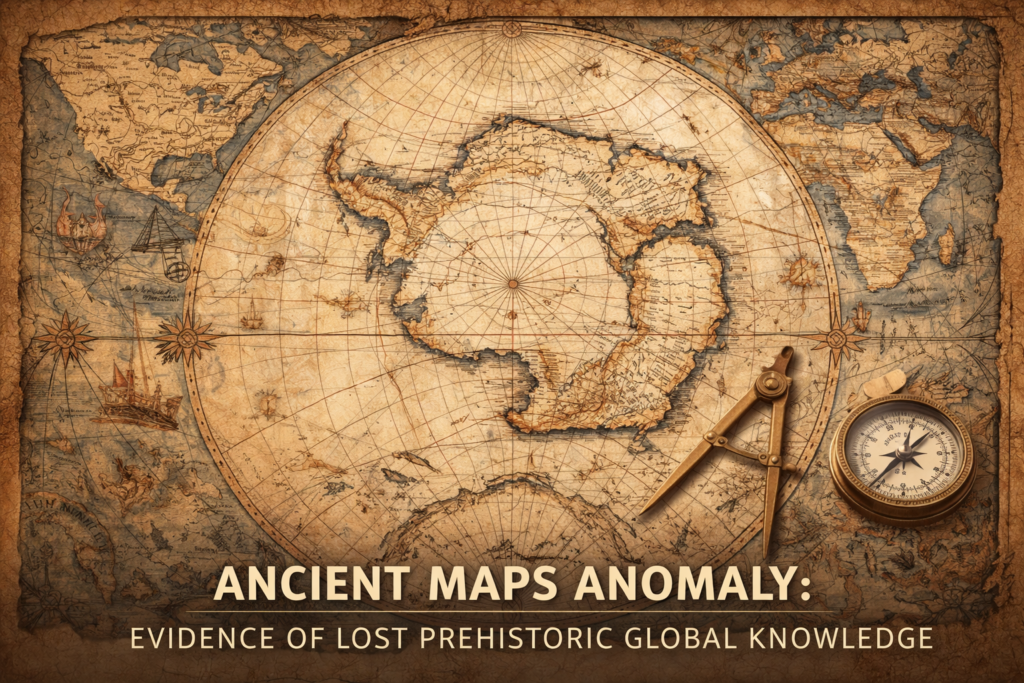
The ancient maps anomaly represents one of the most controversial and intellectually disruptive fields of historical investigation, because several medieval and early modern maps appear to preserve geographic knowledge that should not have existed according to the conventional timeline of exploration, raising profound questions about the possibility of a forgotten global civilization possessing advanced cartographic […]
Civilizations Lost Beneath Ice and Fire
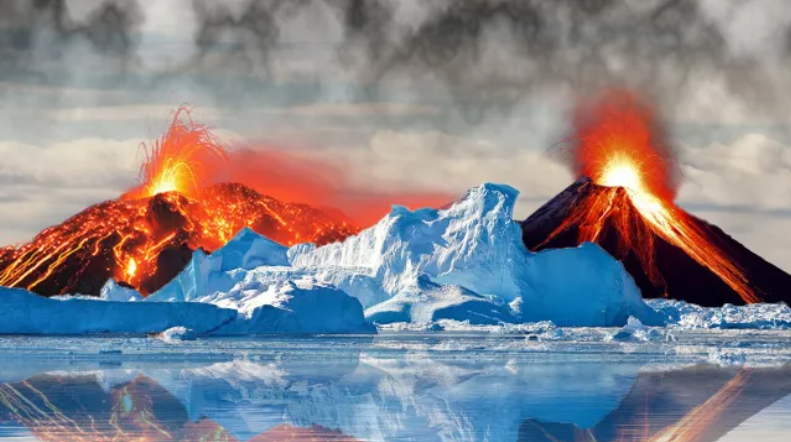
Ice and Fire — Civilizations Lost Beneath the Ice Sheets and Volcanoes Throughout human memory — and perhaps long before it — fire and ice have sculpted the fate of civilizations. Glaciers advancing and retreating, volcanoes erupting with unimaginable power, and the planet’s own cycles of renewal have erased entire chapters of history.But could beneath […]
Buache Map: Ancient Knowledge of Antarctica?

The Buache Map: Evidence of Ancient Knowledge of Antarctica? Among the most intriguing enigmas of historical cartography is the Buache Map, an 18th-century chart that has sparked debates about whether ancient civilizations possessed advanced geographical knowledge long before the modern era. Some researchers claim that the map accurately depicts Antarctica before it was buried by […]
Buache Map: Ice-Free Antarctica or Ancient Cartography?

The Buache Map: Antarctica Before Ice? Exploring Ancient Knowledge Few artifacts of cartographic history are as provocative and mysterious as the Buache Map, a chart drawn in Paris in 1737 by the French geographer Philippe Buache de la Neuville. The map’s depiction of Antarctica as two separate landmasses—a feature not scientifically confirmed until the 1958 […]
The Oronteus Finaeus Controversy

The Orontius Finaeus Map: Did Ancient Cartographers Know Antarctica? Oronce Finé — also known as Oronteus Fineus or Orontius Finaeus — was a French mathematician, cartographer, and Royal Astronomer who left behind some of the most enigmatic maps of the Renaissance. Among them, his 1531 heart-shaped projection map has fueled centuries of debate. Could Finé’s […]
Oronce Finé Map: Antarctica in the 16th Century?

Oronce Finé and the Heart-Shaped Map: Antarctica in the 16th Century? In the annals of cartographic history, few figures are as fascinating as Oronce Finé (also referred to as Oronteus Fineus, Oronteus Finaeuss, or Orontius Finaeus). A French mathematician, cartographer, editor, and book illustrator, Finé combined scientific rigor with artistic ingenuity, leaving behind a legacy […]
The Piri Reis Map Controversy

The Piri Reis Map Controversy What is the Piri Reis Map? The Piri Reis map has stirred commotion since the moment of its discovery. Compiled in 1513, it is one of the oldest post-Columbian world maps in existence. Drawn on gazelle skin by Ottoman admiral and cartographer Piri Reis, the map blends remarkable detail with […]