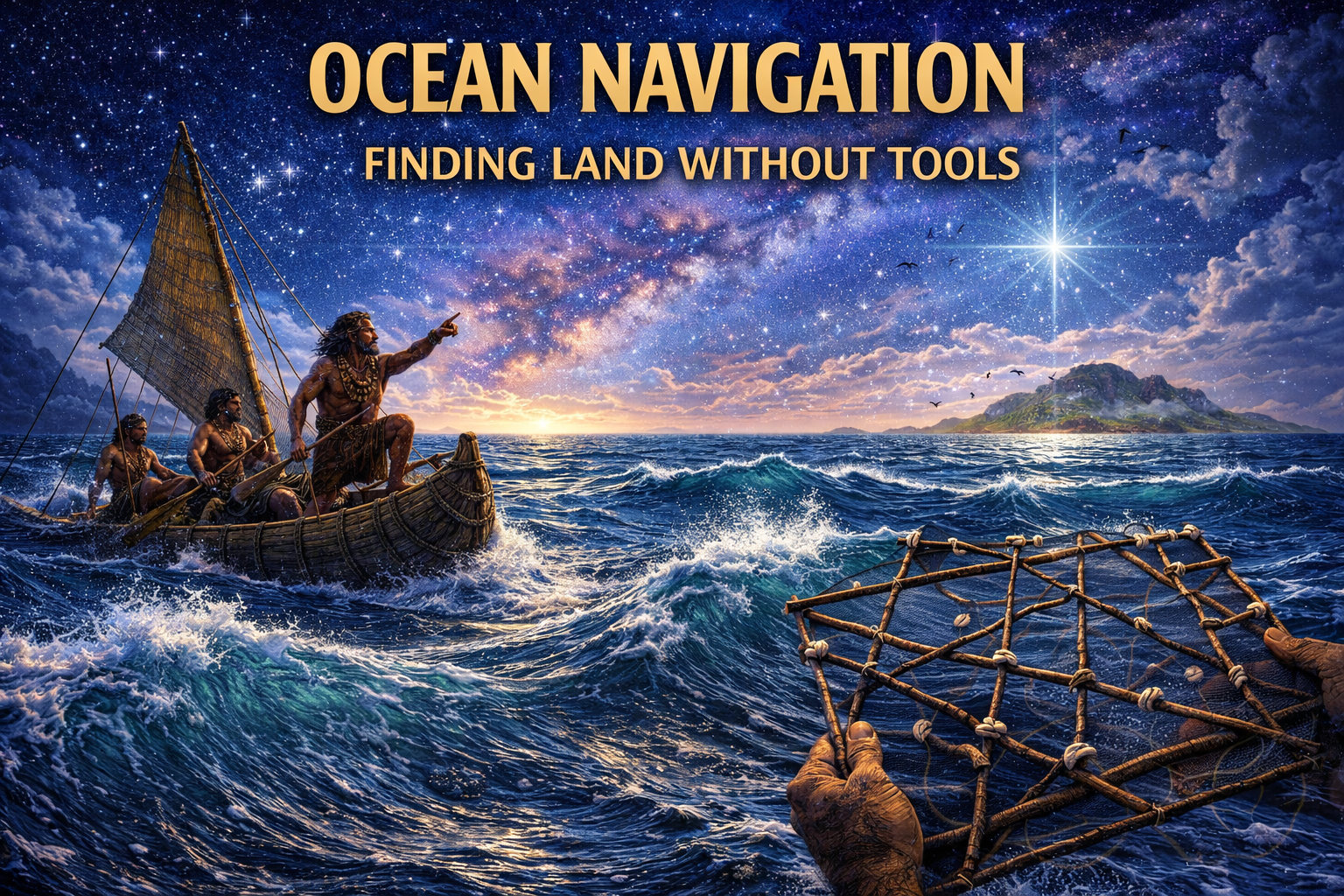
Introduction: Civilization Before Civilization
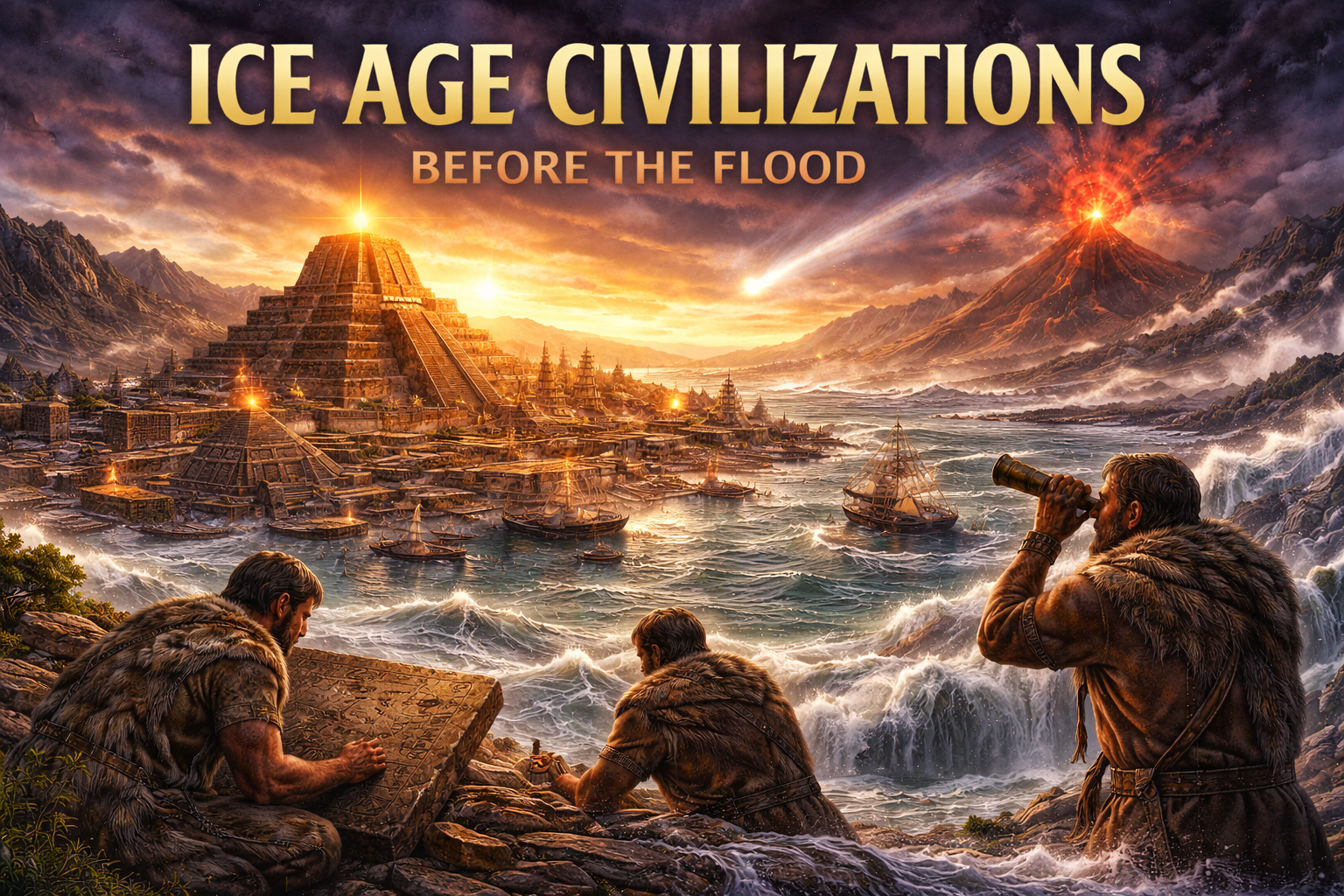
The idea of ice age civilizations occupies a controversial yet increasingly discussed space at the intersection of archaeology, geology, and alternative historical inquiry, because while traditional academic frameworks maintain that complex civilizations emerged only after the end of the last Ice Age, a growing body of indirect evidence suggests that this timeline may be incomplete, or at the very least, oversimplified. The conventional model proposes a linear progression from nomadic hunter-gatherer groups to agricultural societies and eventually urban civilizations, yet this narrative is increasingly challenged by discoveries that indicate unexpected levels of sophistication in prehistoric contexts, raising the possibility that complex societies may have existed earlier than currently acknowledged (First Astronomers Before Civilization – link).
This does not necessarily imply the existence of technologically advanced civilizations comparable to modern societies, but rather opens the door to the idea that organized, knowledge-rich, and socially complex cultures may have developed during the Ice Age and subsequently disappeared due to environmental upheaval, leaving behind only fragmented traces in the archaeological record. When examined alongside the dramatic climatic events associated with the Younger Dryas (Ice Age Knowledge Before the Younger Dryas – link), including rapid temperature shifts, rising sea levels, and ecological disruption, the hypothesis of lost Ice Age civilizations becomes less speculative and more a question of how much evidence has yet to be discovered—or has already been lost… Lost knowledge before written history (link)
The persistence of global flood myths, the existence of submerged archaeological sites, and the sudden appearance of advanced knowledge in early post-Ice Age civilizations all contribute to a growing sense that the story of human development may include chapters that remain hidden beneath layers of geological and historical transformation (Cycles of Time, Civilizations and Recurrence – link).
The Problem with the Standard Timeline
The dominant archaeological timeline places the emergence of civilization around 10,000 to 5,000 BCE, following the advent of agriculture and the establishment of permanent settlements. According to this model, complexity arises gradually as surplus resources allow for specialization, governance, and technological innovation. However, this framework assumes continuity in the archaeological record and does not fully account for the possibility of disruption or loss.
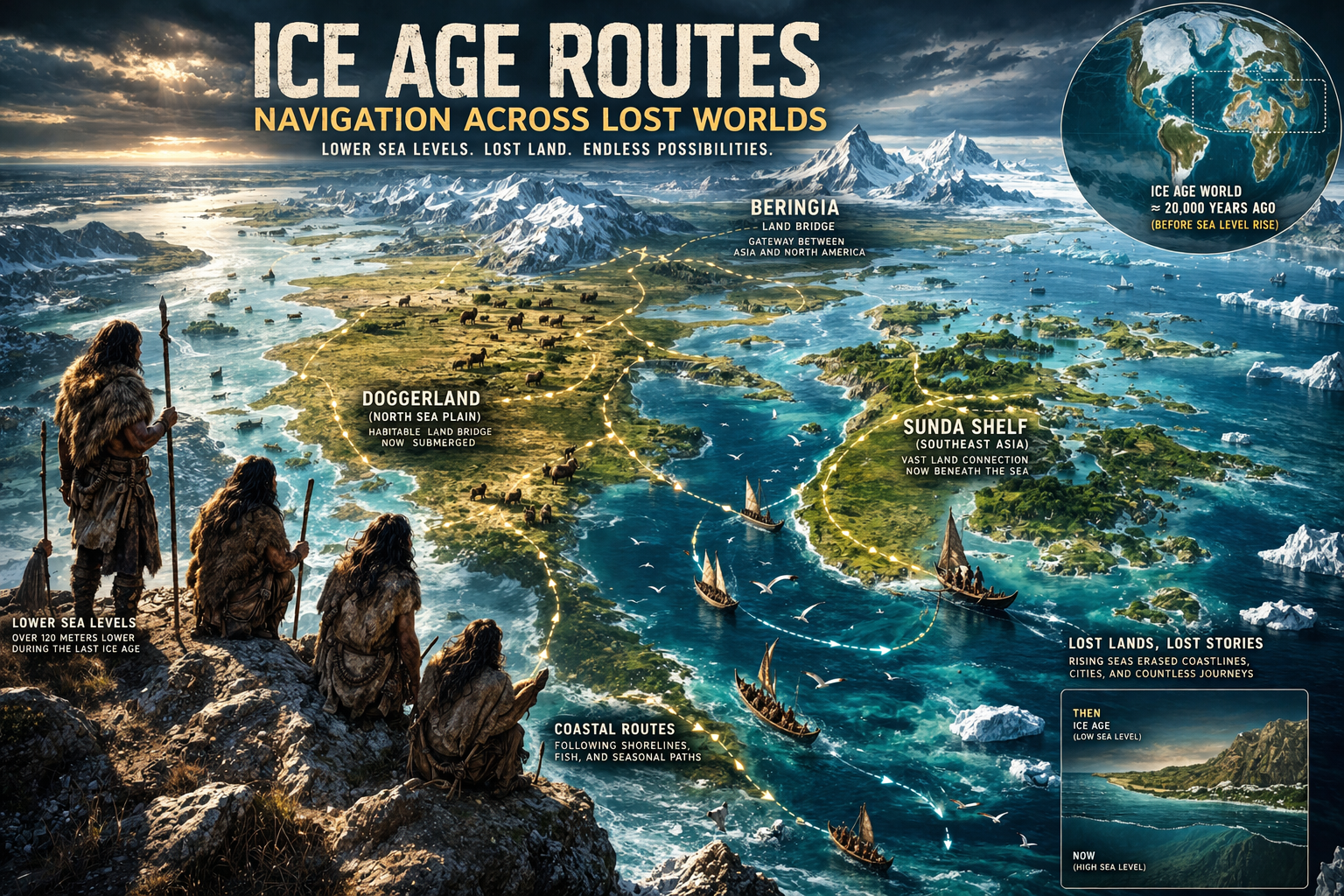
One of the central challenges in identifying ice age civilizations is the nature of preservation itself. Coastal regions, which are among the most favorable environments for early settlement due to access to water, food, and transportation routes, were dramatically affected by rising sea levels at the end of the last Ice Age. It is estimated that global sea levels rose by more than 100 meters, inundating vast areas of what would have been habitable land.
If early civilizations were concentrated along these now-submerged coastlines, much of the physical evidence of their existence may lie underwater, inaccessible or yet to be explored. This raises a critical question: is the absence of evidence truly evidence of absence, or is it a reflection of the limitations of current archaeological exploration?
Submerged Landscapes — The Hidden Archive
The continental shelves of the world’s oceans represent one of the largest unexplored archaeological frontiers. Regions such as Doggerland in the North Sea, the Sunda Shelf in Southeast Asia, and submerged areas of the Mediterranean and Caribbean were once vast landmasses that supported human populations during the Ice Age.
Recent underwater discoveries have begun to reveal structures, tools, and settlement patterns that suggest these regions were more than transient habitation zones. In some cases, evidence points to organized communities with established patterns of living, challenging the notion that prehistoric humans were exclusively nomadic.
The difficulty lies in the technical challenges of underwater archaeology, which require specialized equipment and are often limited by visibility, depth, and preservation conditions. As technology advances, however, the potential for discovering submerged evidence of early civilizations continues to grow.
Göbekli Tepe — A Disruptive Discovery
Few discoveries have challenged conventional timelines as dramatically as Göbekli Tepe, a site in modern-day Turkey dated to approximately 11,600 years ago. Comprising massive stone pillars arranged in circular formations and adorned with intricate carvings, Göbekli Tepe predates agriculture and yet demonstrates a level of organization and symbolic complexity previously thought impossible for hunter-gatherer societies.
The existence of such a site raises profound questions about the knowledge systems and social structures that made its construction possible. It suggests that the capacity for large-scale cooperation, symbolic expression, and possibly even ritual or scientific organization existed prior to the development of farming.
Some researchers have proposed that Göbekli Tepe represents a cultural memory or continuation of earlier traditions, potentially rooted in Ice Age societies that possessed advanced knowledge systems now largely lost.
Global Flood Myths: Cultural Memory of Catastrophe?
One of the most intriguing aspects of the ice age civilizations hypothesis is the widespread presence of flood myths across diverse cultures, from the Mesopotamian Epic of Gilgamesh to the biblical story of Noah, as well as the Greek tale of Deucalion, the Hindu story of Manu, the Chinese account of Yu the Great controlling the floods, and numerous Indigenous traditions in the Americas and Oceania. These narratives often describe divine warnings, chosen survivors, boats or elevated refuges, and the preservation of animals, seeds, or sacred knowledge, suggesting a shared narrative structure that raises questions about coincidence versus collective memory. Alternative researchers and some geomythologists argue that these stories may encode real post-glacial events, particularly the rapid sea-level rise between roughly 12,000 and 7,000 years ago, when melting ice sheets inundated vast coastal plains where early human populations likely concentrated. Evidence such as submerged landscapes in places like Doggerland in the North Sea and the Sunda Shelf in Southeast Asia supports the idea that large inhabited regions were lost to rising oceans, potentially giving rise to enduring oral traditions. If survivors carried fragments of scientific, agricultural, or astronomical knowledge from these drowned lands, it could explain why early civilizations appear to emerge with surprisingly sophisticated systems rather than purely gradual development. Rather than viewing these myths as mere allegory, an inquisitive approach asks whether they are distorted historical records—echoes of a forgotten chapter in human history that modern archaeology has only begun to uncover… Submerged Caribbean City 6,000 Years Old Underwater Discovery – link.
Atlantis: Myth, Memory, or Misinterpretation?
The legend of Atlantis, first recorded by Plato in the dialogues Timaeus and Critias, has long been dismissed as philosophical allegory, yet it continues to provoke debate because of its striking alignment with themes of advanced societies destroyed by sudden catastrophe. Plato described Atlantis as a technologically and politically sophisticated maritime power that vanished “in a single day and night of misfortune,” a phrasing that some interpret as a cultural memory of seismic or oceanic disasters such as tsunamis or rapid flooding events. Alternative archaeologists and writers like Graham Hancock suggest that Atlantis may not refer to a single location but rather a symbolic retelling of multiple lost coastal civilizations erased at the end of the last Ice Age. Intriguingly, ancient structures like Göbekli Tepe in modern Turkey—far older than previously expected for monumental architecture—challenge conventional timelines and raise the possibility that complex knowledge systems existed earlier than assumed. The persistence of Atlantis-like narratives across different cultures invites the question: are these independent inventions, or fragments of a shared ancestral memory filtered through time and myth? While definitive proof remains elusive, the convergence of geological evidence, ancient texts, and anomalous archaeological findings continues to fuel the idea that humanity’s past may be far more complex—and far older in its sophistication—than traditionally believed.
Mu: The Lost Continent of the Pacific?
Alongside Atlantis, the concept of the lost continent of Mu adds another layer to the hypothesis of advanced prehistory, with its origins largely attributed to 19th-century interpretations by writers like Augustus Le Plongeon and later expanded by James Churchward. Mu was proposed to have existed in the Pacific Ocean, serving as the cradle of a highly advanced civilization whose knowledge spread to regions such as Mesoamerica, Egypt, and Asia before being destroyed by catastrophic geological upheaval. While mainstream geology rejects the existence of a sunken continent in the Pacific due to plate tectonics, proponents argue that similarities in mythological motifs, pyramid-building cultures, and symbolic systems hint at a shared origin or lost knowledge network. Some alternative researchers point to Polynesian navigation expertise, megalithic sites like Nan Madol, and unexplained architectural precision in ancient cultures as possible remnants of a forgotten global tradition. The idea of Mu often intersects with flood myths and cyclical destruction narratives, reinforcing the notion that ancient peoples may have preserved memories of earlier high civilizations through symbolic storytelling rather than written records. Whether Mu represents a literal landmass, a misinterpreted cultural diffusion pattern, or a mythologized memory of lost coastal societies, its enduring presence in alternative history invites deeper questioning about how much of humanity’s earliest achievements may have been lost beneath the oceans.
Ancient Knowledge Appearing Suddenly
One of the more puzzling aspects of early civilizations is the apparent sudden emergence of advanced knowledge systems, including mathematics, astronomy, and engineering, particularly in regions such as Mesopotamia and Ancient Egypt, where writing, urban planning, and precise calendrical systems appear in surprisingly mature forms. The astronomical alignments of monuments, the mathematical precision seen in structures like the Great Pyramid of Giza (Pyramids and Earth Scaling – link), and early star catalogues raise questions about how such knowledge developed so quickly within the archaeological record. Some alternative researchers argue that sites like Göbekli Tepe—dating back over 11,000 years—suggest symbolic and possibly astronomical understanding long before the rise of classical civilizations, challenging the idea of a simple linear progression. Could it be that what appears as a “sudden” is actually the re-emergence of knowledge preserved and transmitted after earlier disruptions, perhaps through oral traditions, sacred priesthoods, or encoded myth? Figures like Graham Hancock and Randall Carlson propose that catastrophic events at the end of the last Ice Age may have reset human societies, leaving only fragments of prior intellectual achievements to seed later cultures. If this perspective holds any truth, then early civilizations may not represent the beginning of knowledge, but rather a visible resurgence of something far older and partially forgotten (Great Pyramid Erosion Evidence to be 20,000 Years Old – link).
The Younger Dryas Catastrophe
The Younger Dryas event, characterized by rapid cooling and environmental disruption, represents a plausible mechanism for the loss of early civilizations (YDIH Explained link). Whether caused by extraterrestrial impact, volcanic activity, or oceanic circulation changes, the effects would have been profound, altering ecosystems and forcing human populations to adapt or relocate.
In such a scenario, complex societies could fragment, with survivors carrying only portions of their cultural and intellectual heritage into new environments (Younger Dryas Impact Hypothesis Critical Review – link).
Technological Simplicity vs Intellectual Complexity
A key distinction in this discussion is the difference between technological advancement and intellectual sophistication, a nuance often overlooked when evaluating ancient societies through a modern lens. Ice age civilizations, if they existed, may not have possessed industrial machinery or widespread metallurgy, yet they could still have developed complex cosmologies, advanced observational astronomy, and refined systems of measurement rooted in long-term environmental awareness (Sacred Numbers Measurement Systems – link). Archaeological sites featuring megalithic construction, precise alignments, and symbolic carvings suggest intentionality and planning that imply organized knowledge systems, even in the absence of what we would classify as “high technology.” This raises an intriguing question: is it possible for a society to be intellectually advanced while remaining materially simple, especially if its knowledge prioritized harmony with natural cycles rather than technological expansion? Some researchers point to Indigenous knowledge systems and ancient oral traditions as examples of highly sophisticated ecological and astronomical understanding that do not rely on written records or complex tools. If earlier civilizations operated within such frameworks, their material footprint might be minimal, easily erased by rising seas, glaciation shifts, or erosion over thousands of years. This possibility challenges the assumption that absence of evidence equals absence of complexity, inviting a broader definition of what constitutes an “advanced” civilization (Sacred Geometry – link).
Reconstructing a Lost World
Reconstructing the possibility of ice age civilizations requires an interdisciplinary approach, combining data from archaeology, geology, climatology, and anthropology. It involves piecing together fragmented evidence and considering scenarios that extend beyond conventional models while remaining grounded in empirical data.
Conclusion: A Question Still Open
The hypothesis of ice age civilizations does not claim certainty but instead opens a door—one that encourages deeper investigation and a willingness to question long-standing assumptions about the trajectory of human development. Discoveries like Göbekli Tepe and the submerged ruins near Yonaguni Monument hint that the archaeological record may be far from complete, especially considering how much of the prehistoric world now lies beneath oceans that rose dramatically after the last glacial period. When viewed alongside global flood myths, lost civilization narratives such as Atlantis and Mu, and the unexplained sophistication of early knowledge systems, a pattern begins to emerge that invites curiosity rather than dismissal. Is it possible that human history is not a simple upward climb from primitive beginnings, but a more complex story of rise, loss, and rediscovery shaped by cycles of environmental upheaval? Advances in technologies such as underwater archaeology, satellite imaging, and paleoclimatology are beginning to reveal landscapes and timelines that were previously inaccessible, suggesting that future discoveries may challenge current paradigms even further. The question is no longer whether prehistoric humans were capable of complexity—evidence increasingly suggests they were—but how much of that complexity has been lost to time, and whether traces of it still linger in unexpected places, waiting to be recognized.
References and Further Reading
Graham Hancock — Magicians of the Gods
Klaus Schmidt — Göbekli Tepe Research Papers
National Geographic — Underwater archaeology (link)
NASA — Climate and Earth history (link)
NOAA — Younger Dryas Period (link)
Journal of Archaeological Science — Paleolithic Research
Nature — Climate Change and Sea Level Rise Studies