Sacred Geometry as a Universal Language in Nature and Cosmos
The concept of Sacred Geometry as a Universal Language (link) emerges naturally once we move beyond architecture and begin observing the broader patterns that define reality itself. In previous explorations, the Geometry of Ancient Structures (link) revealed consistent ratios, alignments, and numerical relationships embedded within monumental constructions across civilizations. But a deeper question now arises:
Are these geometric principles exclusive to human design, or are they reflections of patterns that already exist in nature?
When we examine biological systems, natural formations, and cosmic structures, we begin to observe the same recurring geometries—spirals, ratios, symmetries, and proportional harmonies. These patterns appear independently of human intervention, suggesting that geometry may not be an invention, but a discovery of an underlying order with the underlying tone that Sacred Numbers are the Mathmatical Blueprint of the Cosmos (link).
If this is the case, then sacred geometry is not merely symbolic. It may represent a universal language, one that operates across scales—from the microscopic structure of life to the vast architecture of the cosmos… As Above So Below. Geometry as the Architecture of Cosmos (link).
Sacred Geometry as a Universal Language in Nature — Patterns That Repeat
The Fibonacci sequence, often associated with the golden ratio (approximately 1.618), is one of the most recognizable examples. It appears in:
- The arrangement of sunflower seeds
- The spiral of a nautilus shell
- The pattern of pinecones
- The structure of hurricanes
These patterns are not decorative. They are functional. Spiral growth allows for efficient packing, optimal exposure to sunlight, and balanced expansion. In this sense, geometry becomes a solution to physical constraints.
This raises an important question:
Did ancient civilizations observe these natural patterns and integrate them into their architecture, or were they intuitively aligned with the same principles?
Sacred Geometry as a Universal Language in Biology — The Structure of Life
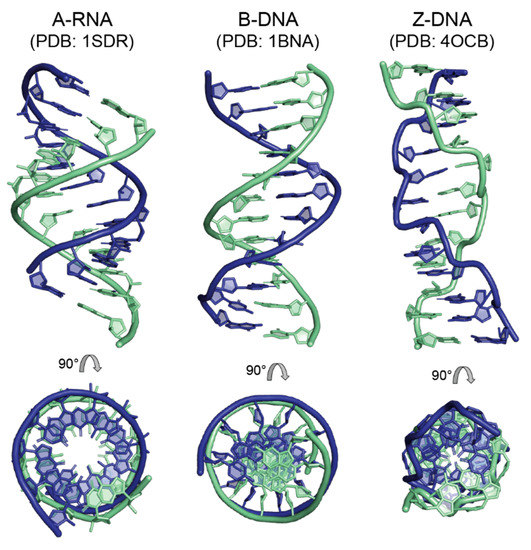
At the microscopic level, geometry continues to play a defining role:
- DNA forms a double helix, a spiral structure
- Cells divide following symmetrical patterns
- Leaf veins branch in fractal-like networks
These patterns are not imposed—they emerge naturally from biological processes. Geometry, in this context, becomes a framework for life itself.
Sacred Geometry as a Universal Language in Chemistry — Order Within Matter
At the level of matter, the idea of Sacred Geometry as a Universal Language continues to hold.
Crystals form through highly ordered geometric arrangements. Snowflakes, for example, consistently exhibit hexagonal symmetry due to the molecular structure of water. Other examples include:
- Carbon atoms forming hexagonal lattices (graphene)
- Molecular structures organizing into predictable geometric shapes
- Crystalline formations reflecting internal symmetry
These patterns arise from physical laws, yet they mirror the same geometric principles observed in nature and architecture. This suggests that geometry operates not only at visible scales, but also at the fundamental level of matter.
Sacred Geometry as a Universal Language in the Cosmos — Large-Scale Patterns
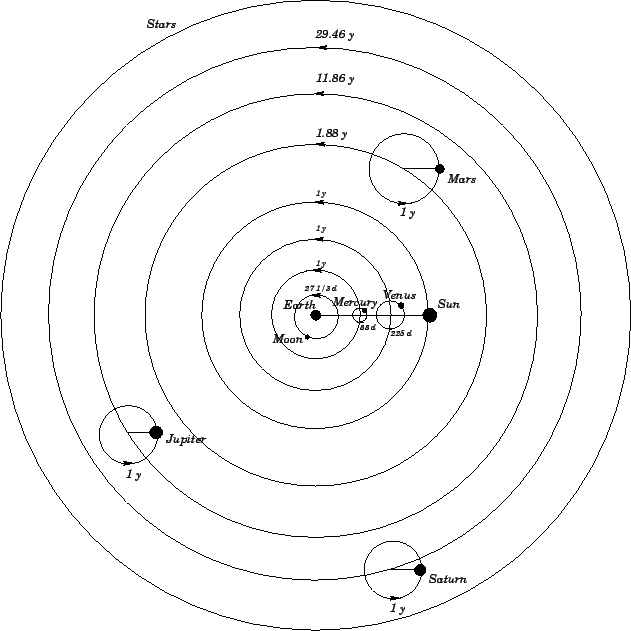
Galaxies often take the form of spirals, echoing the same patterns seen in shells and storms. Planetary orbits follow elliptical paths, governed by gravitational relationships that can be expressed mathematically.
Even at the largest scales, the distribution of galaxies forms a network often referred to as the cosmic web—a structure that exhibits patterns of clustering and connectivity.
These observations reinforce a key idea:
Geometry is not confined to Earth. It appears to be embedded in the structure of the universe itself.
Connecting Ancient Structures to Universal Geometry
With this broader perspective, the Geometry of Ancient Structures takes on new meaning. If the same geometric principles appear in:
- Nature
- Biology
- Chemistry
- The cosmos
Then it becomes plausible that ancient civilizations were not inventing these patterns, but recognizing and applying them. This shifts the interpretation of ancient architecture:
- From symbolic or ritualistic
- To observational and integrative
Ancient builders may have been encoding the same principles that govern life and the universe.
Geometry, Efficiency, and Intelligence
One consistent characteristic of geometric patterns is efficiency.
- Spirals optimize growth
- Hexagons maximize space with minimal material
- Symmetry ensures balance and stability
These are not arbitrary choices—they are optimal solutions. This leads to an important consideration:
Is geometry simply the most efficient way for systems to organize, or does it reflect a deeper underlying order?
Sacred Geometry as a Universal Language — A Framework of Understanding
When viewed collectively, the evidence suggests that Sacred Geometry as a Universal Language may function as a unifying framework. It connects:
- Structure and function
- Micro and macro scales
- Natural and human-made systems
In this framework, geometry is not merely descriptive—it is foundational.
Final Thoughts — Expanding the Inquiry
As this perspective develops, the questions become broader and more fundamental.
- Did ancient civilizations consciously recognize these universal patterns, or were they working within an inherited system of knowledge?
- Did they interpret geometry as a reflection of the natural world, or as a tool to interact with it?
Is the recurrence of these patterns evidence of a shared understanding across cultures, or the result of independent observation?
And ultimately:
Is geometry the underlying language of reality itself, or simply the most effective way we have found to describe it?
Additional Reading & Links
Sacred Numbers and Ancient Measurement Systems (link)
Sacred Numbers 72 (link)
Sacred Number 360 (link)
Magli, Giulio — Architecture, Astronomy and Sacred Landscape (link)
Neugebauer, Otto — The Exact Sciences in Antiquity (link)
Aveni, Anthony — Ancient Astronomy in Practice
Magli, Giulio — Architecture, Astronomy and Sacred Landscape (link)
Santillana & von Dechend — Hamlet’s Mill (link)