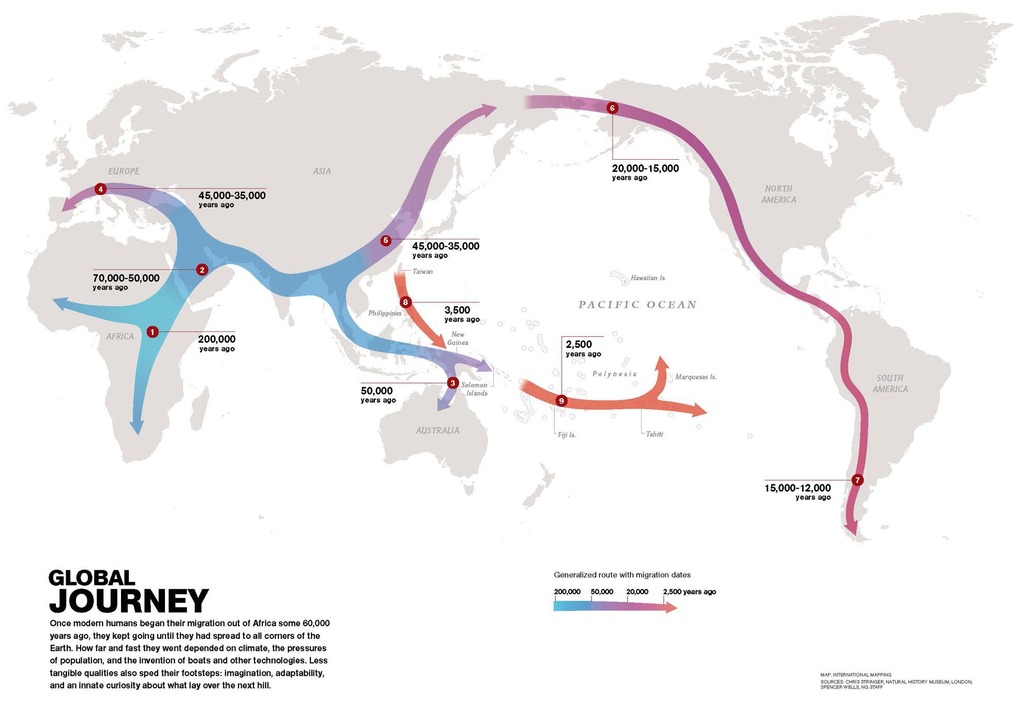
For decades, the dominant theory of early human migration to the Americas was simple and tidy: the Clovis-first model. According to this view, the first people crossed the Bering Land Bridge from Siberia into Alaska during the last Ice Age, around 13,000 years ago. From there, they spread southward through an ice-free corridor, leaving behind distinctive Clovis spear points as evidence of their presence.
But archaeology rarely stays tidy for long. Over the last few decades, a growing body of evidence has begun to challenge this once-stable timeline, suggesting that humans may have been living in the Americas thousands of years earlier than previously believed. Each discovery raises more questions than answers — and pushes the story of human migration deeper into the past.
White Sands Footprints: Evidence from 23,000 Years Ago
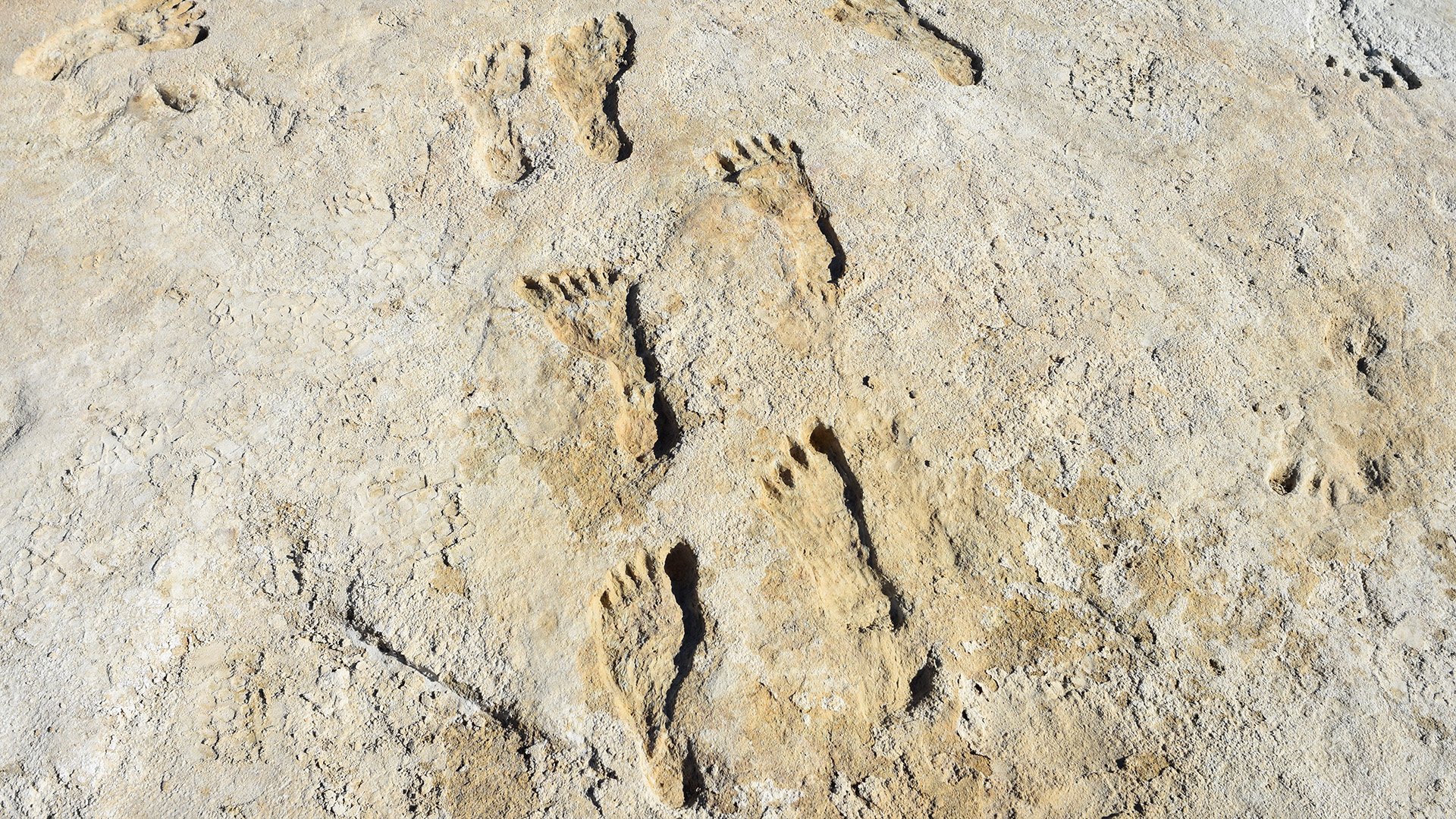
One of the most striking pieces of evidence comes from White Sands National Park in New Mexico. In 2009, researchers discovered a series of fossilized human footprints preserved in ancient lakebed sediments. Radiocarbon dating of the surrounding seeds indicated that the footprints were between 21,000 and 23,000 years old, making them the oldest direct evidence of humans in the Americas.
This finding predates the Clovis culture by at least 8,000 years. If correct, it implies that people were already established in North America during the Last Glacial Maximum, when much of the continent was still under massive ice sheets.
Science – White Sands Footprints Study
Pre-Clovis Sites Across the Americas
White Sands isn’t alone. Several archaeological sites across both North and South America point to human activity well before the Clovis horizon:
-
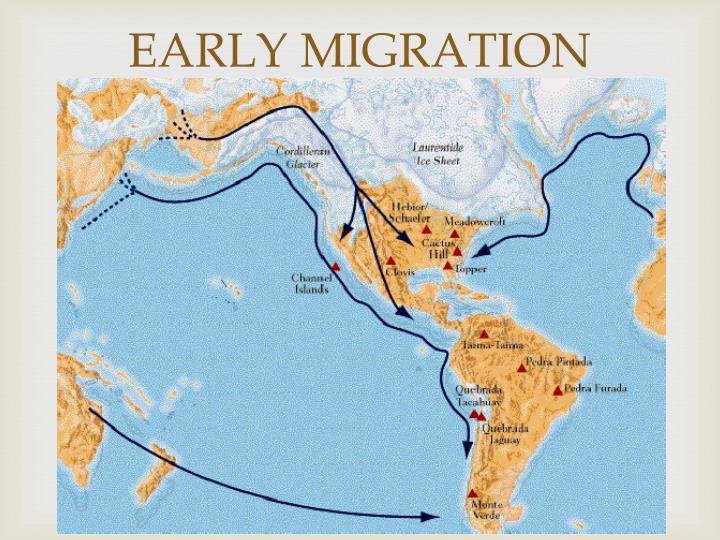
Monte Verde (Chile): Evidence of habitation dating to ~14,500 years ago. This site includes preserved wooden structures and plant remains, suggesting a well-established settlement.
-
Topper Site (South Carolina): Possible human tools dating as far back as 16,000–20,000 years, though interpretations are debated.
-
Bluefish Caves (Yukon): Butchered animal bones dated to 24,000 years ago, hinting at a long human presence in the far north.
Science– Monte Verde and the Pleistocene People of the Americas
These sites collectively undermine the neatness of the Clovis-first narrative and point to a much more complex migration story.
Alternate Routes: Coastlines and Ice-Free Corridors
If people were in the Americas thousands of years before the ice sheets melted, how did they get there?
Two leading theories have emerged:
-
Coastal Migration Route – Early groups may have followed the Pacific coastline, traveling in boats or walking along the shores. The now-submerged coastlines could have hosted “stepping-stone” settlements all the way from Asia into the Americas.
-
Interior Ice-Free Corridor – The traditional model suggests migration through a corridor between the Laurentide and Cordilleran ice sheets. But geological evidence suggests this corridor may not have been habitable at the time humans first arrived.
The coastal route is gaining traction, especially given the growing evidence of maritime capabilities among early peoples and new underwater archaeology.
The Genetic Puzzle: Denisovans and Ancient DNA
Ancient DNA has added another layer of intrigue. While most Native American ancestry traces back to a single founding population from northeast Asia, genetic studies also reveal Denisovan DNA traces, suggesting complex interactions before migration.
Some genetic models propose multiple migration waves, while others indicate a prolonged period of isolation in Beringia, followed by rapid dispersal. As new genomes are sequenced, the map of early human migration to the Americas grows more intricate.
Nature – Ancient DNA and Migration
Rethinking the Timeline of Human Expansion
Taken together, these discoveries paint a picture of early human migration to the Americas that is far older, more diverse, and more dynamic than previously assumed. Instead of a single, linear migration around 13,000 years ago, we may be looking at multiple groups arriving via different routes over thousands of years — some as early as 23,000 years ago or more.
Questions That Push Us Further
Every time a new site is excavated or footprints are unearthed, our understanding shifts. How far back will future discoveries push the timeline? How many cultures and societies flourished during these millennia — cultures we may never fully recover due to the burning of libraries, the ravages of time, or catastrophic events like the Younger Dryas?
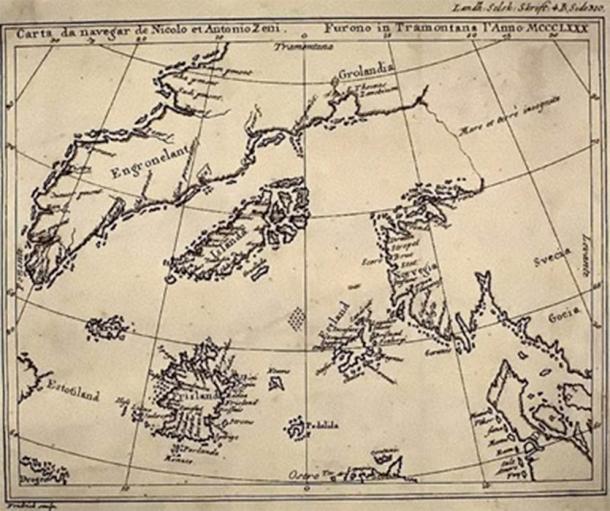
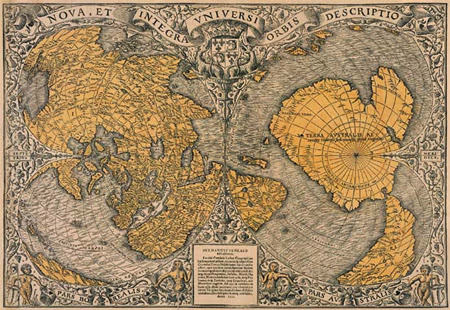
Could advanced, organized societies have risen and fallen long before the Clovis culture, their traces buried beneath layers of geological upheaval or submerged coastlines?
The story of early human migration to the Americas is still being written. The next footprint, bone fragment, or DNA sample might rewrite everything we think we know.
Additional Reading
- Younger Dryas Impact Hypothesis Research
- How Old are Modern Humans?
- Tracing Our Global Journey
- Tracing the First Humans