Early Human Migrations: Tracing Our Global Journey
The story of early human migrations is one of movement, adaptation, and survival. Modern humans (Homo sapiens) did not remain in a single region; instead, they spread across continents over tens of thousands of years, shaping the world we inhabit today. Studying these migrations allows us to understand not only where humans originated but also how societies, technologies, and cultures developed in different parts of the globe.
Origins in Africa
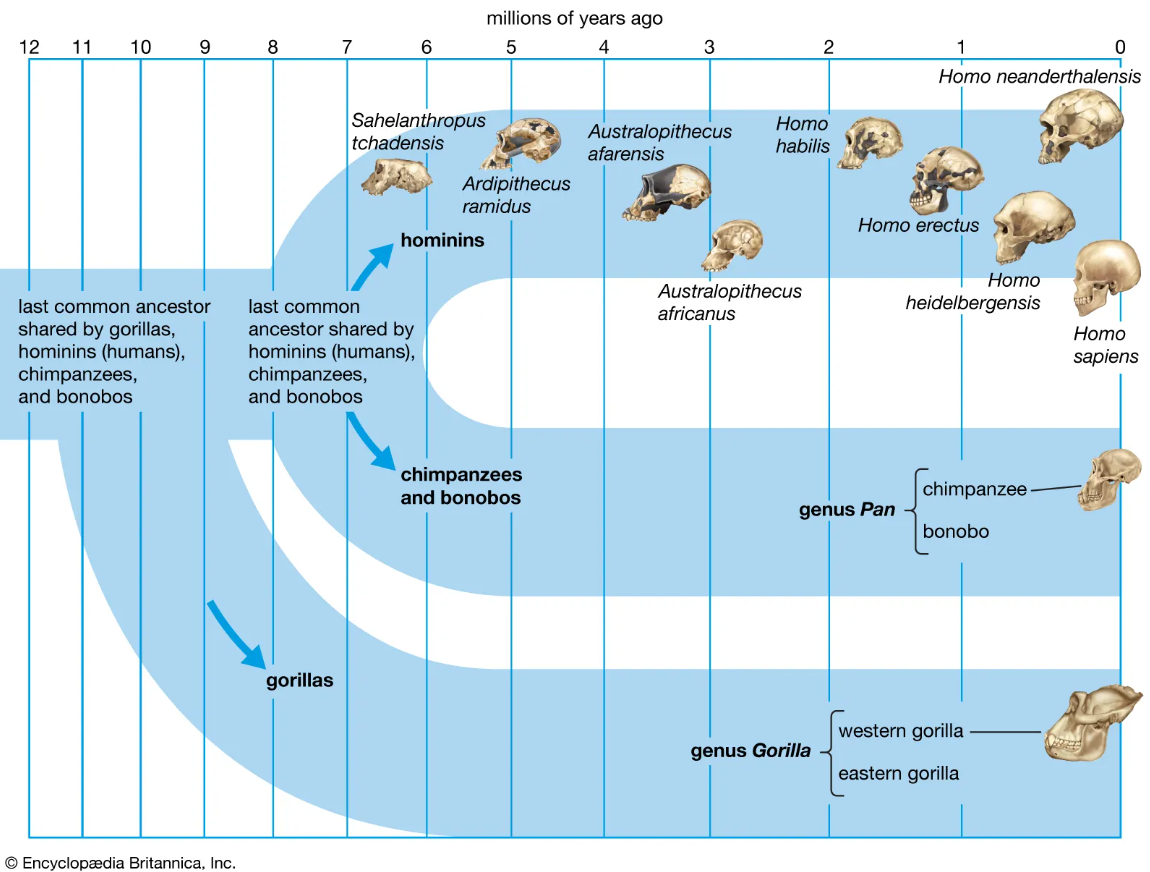
Current evidence shows that Homo sapiens emerged in Africa at least 300,000 years ago. Fossil discoveries, including remains from Jebel Irhoud in Morocco and Omo Kibish in Ethiopia, provide compelling evidence of our species’ African roots. Genetic studies suggest that all modern humans outside Africa descend from these early populations, highlighting the continent as the cradle of humanity.
Into the Middle East and Asia
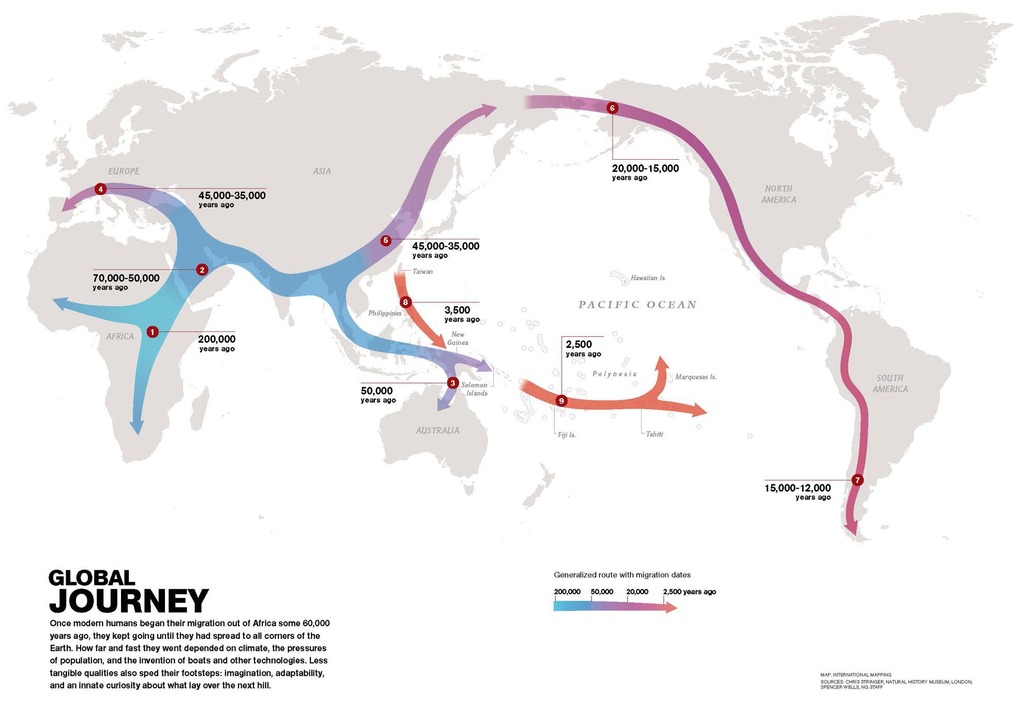
From Africa, early humans gradually migrated into the Middle East and Asia. Fossil finds in Israel, China, and Southeast Asia suggest that Homo sapiens were present in these regions between 100,000 and 70,000 years ago. Along the way, they encountered other hominins, such as Neanderthals and Denisovans, occasionally interbreeding and exchanging genetic material. These interactions enriched the genetic diversity of modern populations.
Europe: The Meeting of Species
Europe was colonized later, around 45,000–40,000 years ago. Early humans brought advanced tools, symbolic artifacts, and art, marking a significant cultural shift. Cave paintings, sculptures, and burial practices suggest cognitive sophistication far beyond mere survival instincts.
Arrival in the Americas
The Americas represent one of the most fascinating chapters of human migration. Evidence of early human presence, including the White Sands footprints in New Mexico, shows that humans were in North America at least 23,000–21,000 years ago. This challenges earlier models that assumed migration occurred around 13,000 years ago via the Bering Land Bridge. The footprints, preserved in ancient lakebeds, offer a tangible glimpse into the lives of these early inhabitants.
Questioning the Timeline
New discoveries continue to push back timelines and reveal unexpected patterns. From African fossils to Asian remains and American footprints, the evidence suggests that human migration was complex, with possible back-and-forth movements, temporary extinctions, and isolated populations. Cataclysms, lost records, and incomplete fossil discoveries mean our understanding of early human migrations remains incomplete. The story is far from linear, and every new find has the potential to reshape it.
Conclusion
The global spread of Homo sapiens reflects ingenuity, resilience, and adaptability. From Africa to the Americas, humans traversed vast landscapes, confronted environmental challenges, and laid the foundations of culture and society. The White Sands footprints and other archaeological discoveries remind us that the history of mankind is still being written—and much of it may have been lost or obscured over millennia. Future findings will continue to shed light on our extraordinary journey.
Additional reading: