
Tracing the First Humans
The story of early human migrations is far from complete. Fossil discoveries and archaeological findings continue to challenge our understanding of when and how modern humans spread across the globe. From the earliest skeletal remains in Africa to the footprints preserved in New Mexico, each piece of evidence hints at sophisticated movements, social networks, and survival strategies of our ancestors. While textbooks often present a linear timeline, the reality is far more complex—cataclysms, environmental shifts, and lost knowledge could mean the full story has yet to be uncovered.
1. Out of Africa: The Beginning
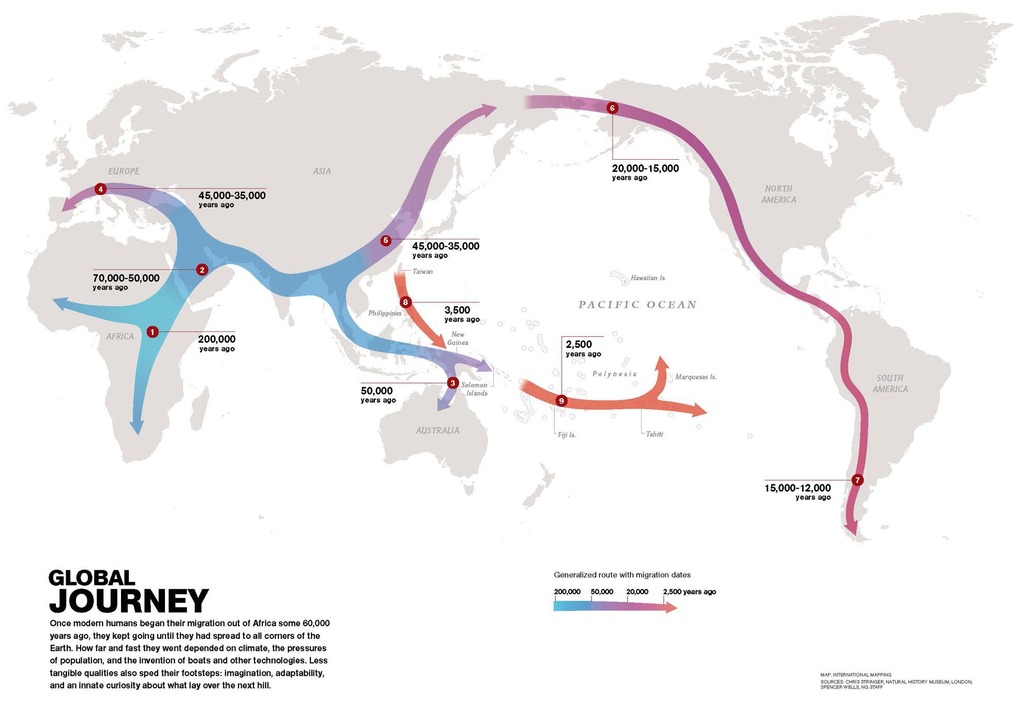
Most scientists agree that Homo sapiens originated in Africa roughly 300,000 years ago. Fossil evidence from sites like Jebel Irhoud in Morocco and Omo Kibish in Ethiopia demonstrates early humans with anatomically modern features. These populations gradually began to expand beyond Africa, though the timing and routes remain subjects of debate. Some researchers suggest multiple waves of migration, while others argue for a more continuous dispersal.

2. Into the Middle East and Asia
From Africa, early humans moved into the Middle East and eventually across Asia. Sites like Skhul and Qafzeh in Israel indicate early migrations around 120,000 years ago. These humans likely adapted to diverse environments, from deserts to forests, developing tools and strategies to survive. In Asia, discoveries such as the Liujiang skulls in China hint at an early human presence much earlier than previously assumed, raising questions about the speed and routes of these migrations.
3. The First Americans and the Clovis Debate
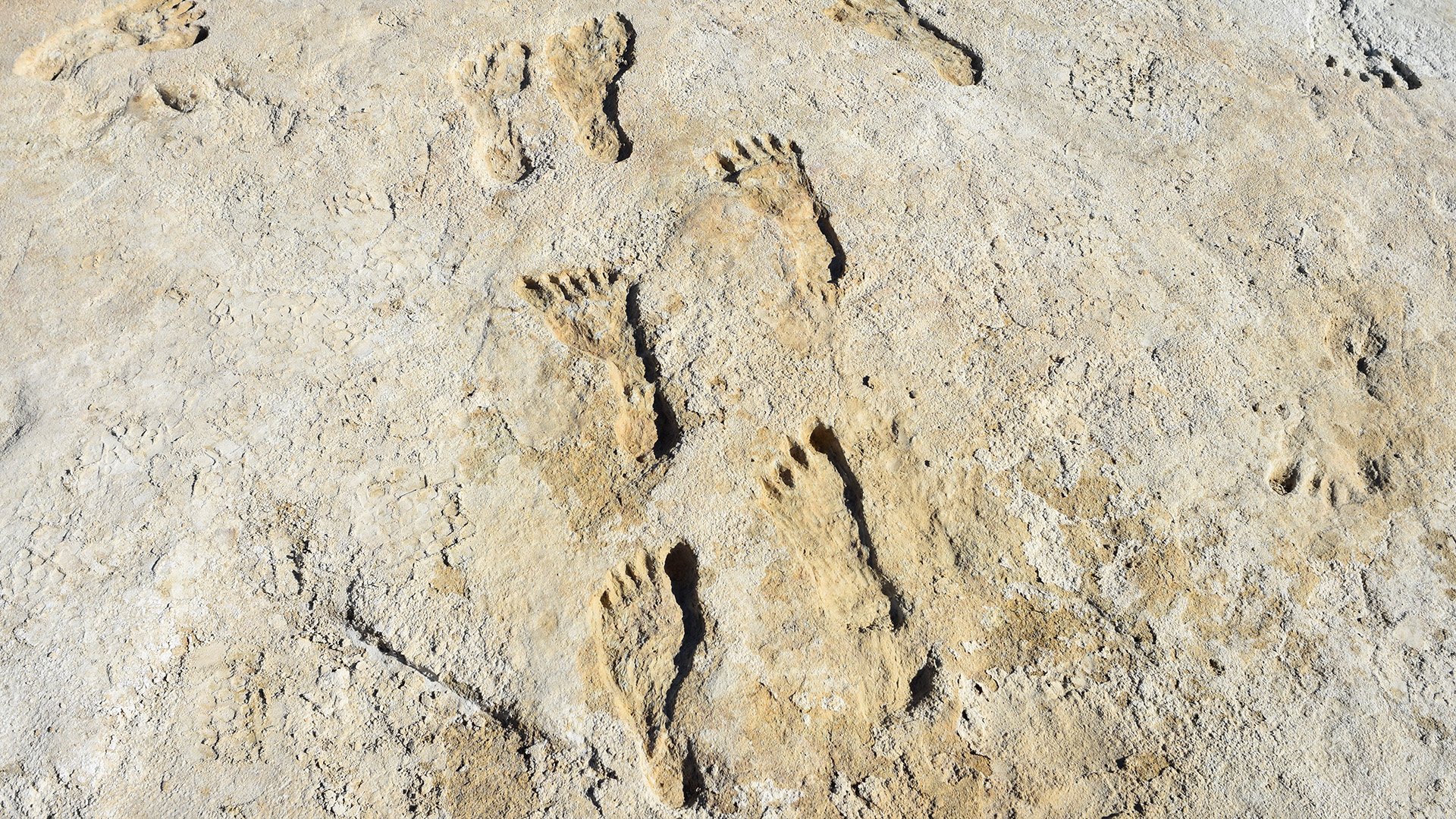
For decades, the “Clovis-first” model dominated archaeology, suggesting humans first arrived in the Americas around 13,000 years ago, associated with the distinctive Clovis points (stone tools). However, new evidence challenges this timeline. The White Sands footprints in New Mexico, dated to around 23,000 years ago, indicate a much earlier human presence. Other pre-Clovis sites, such as Monte Verde in Chile, support the idea that humans reached the Americas long before the Clovis culture emerged. These findings suggest multiple migration waves, perhaps along coastal routes or inland paths, and raise questions about how these early populations survived during the last Ice Age.
4. Islands, Coastal Routes, and Denisovans
Some populations migrated along coasts, using rafts or boats to reach islands and archipelagos. Sites in Southeast Asia, Indonesia, and Australia show early humans capable of open-water crossings. Meanwhile, the discovery of Denisovan DNA in modern humans from Melanesia and Southeast Asia highlights the complexity of these migrations. Denisovans, a mysterious hominin group identified primarily from Siberian fossils, interbred with modern humans, leaving traces of adaptation to high altitudes, immunity, and other traits. This interbreeding further complicates the story of early human migrations, revealing that movement, adaptation, and interaction with other hominins were part of a highly sophisticated network of prehistoric populations.
5. The Mystery of Interactions and Lost Knowledge
As early humans spread, they interacted with other hominins like Neanderthals and Denisovans, exchanging genes, ideas, and survival strategies. This web of interactions, combined with environmental shifts, cataclysms, and lost cultural knowledge (from burned libraries or erosion of sites), reminds us that our understanding of migrations is provisional. Each fossil, footprint, or artifact is a fragment of a story that may be much older and more complex than previously thought.
Conclusion
The study of early human migrations is evolving rapidly. From African fossil sites to ancient footprints in the Americas, evidence shows humans were remarkably adaptable, intelligent, and resourceful. The challenges to the Clovis-first model and discoveries of Denisovan interbreeding highlight the fluidity of our understanding. As new finds emerge, the timeline of human history may be pushed further back, inviting us to reconsider assumptions and remain humble before the vast, still-unwritten story of our species.
Additional reading:
- Tracing Our Global Journey
- Sacred Geometry in Megaliths
- Nova – Human Tracks Earliest Evidence of People in North America