Rethinking the Origins of Engineering
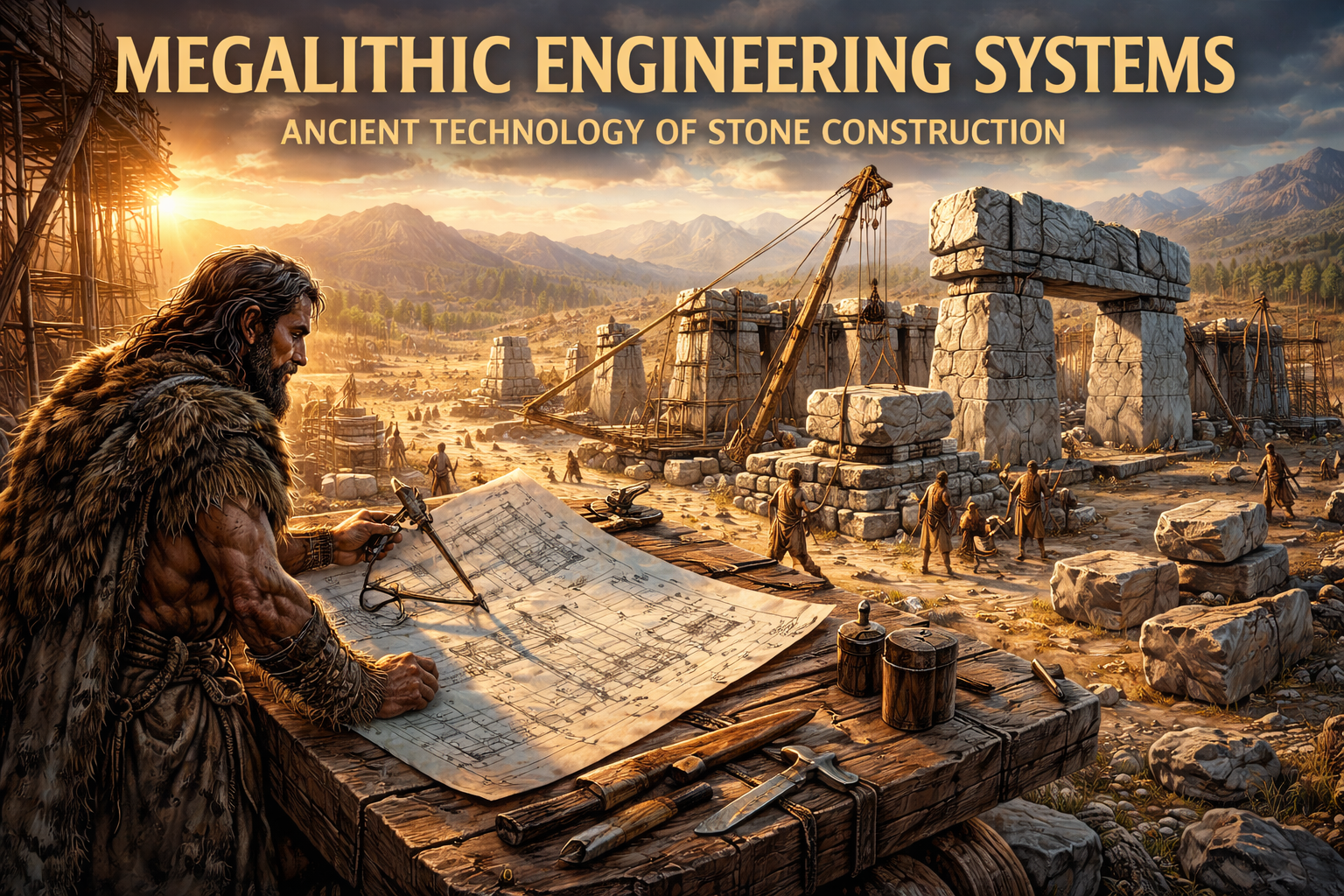
Rather than asking only how ancient people moved large stones, a more technically relevant question begins to take shape: what kind of systems architecture—in terms of knowledge, labor, logistics, and design—enabled such consistency and precision? The scale and durability of these constructions imply more than brute force; they point toward methodologies that integrated environmental awareness, material properties, and long-term planning. In this sense, prehistoric construction may be better understood not as primitive experimentation, but as an early form of engineering discipline—one that remains only partially visible through the archaeological record (Lost Words Before the Floods – link).
Beyond the Myth of Primitive Builders
The enduring image of prehistoric builders as disorganized laborers obscures the level of coordination required to execute megalithic projects (Science Before the Younger Dryas – link). Even relatively modest structures demand a sequence of interdependent operations: quarrying, shaping, transporting, positioning, and stabilizing. Each phase introduces constraints—material limitations, terrain challenges, seasonal conditions—that must be managed coherently to avoid systemic failure. The repetition of similar construction outcomes across distant regions suggests that these processes were not reinvented from scratch each time, but instead followed transferable frameworks, whether through cultural diffusion or parallel innovation (Lost Knowledge Before Written History – link).
At sites like Göbekli Tepe, dated to around 9600 BCE, massive T-shaped pillars were quarried, carved with intricate reliefs, and erected in carefully arranged circular enclosures. The consistency of pillar dimensions and spatial organization indicates planning at a level that exceeds ad hoc construction. Similarly, the polygonal masonry of the Andes—where stones are cut to interlock with extraordinary precision without mortar—demonstrates not only craftsmanship but also an understanding of stress distribution and seismic resilience. These examples suggest that prehistoric construction systems incorporated both empirical knowledge and iterative refinement, allowing techniques to improve over generations (Decoding Giza Pyramids – Part1 – Part2 – Part3).
Quarrying as a Systematic Process
The selection of quarry sites also reflects logistical foresight. Proximity to construction locations reduces transport costs, but this must be balanced against the quality and size of available stone. In many cases, ancient builders appear to have optimized this trade-off, choosing sources that provided both structural integrity and manageable transport distances. The presence of partially extracted or abandoned stones—such as the unfinished obelisk in Egypt—offers insight into the decision-making process, revealing that construction systems included mechanisms for evaluating risk and adapting to unforeseen complications (Geometry of the Pyramids – Earth Scaling – link).
Transport and Logistics of Megalithic Materials
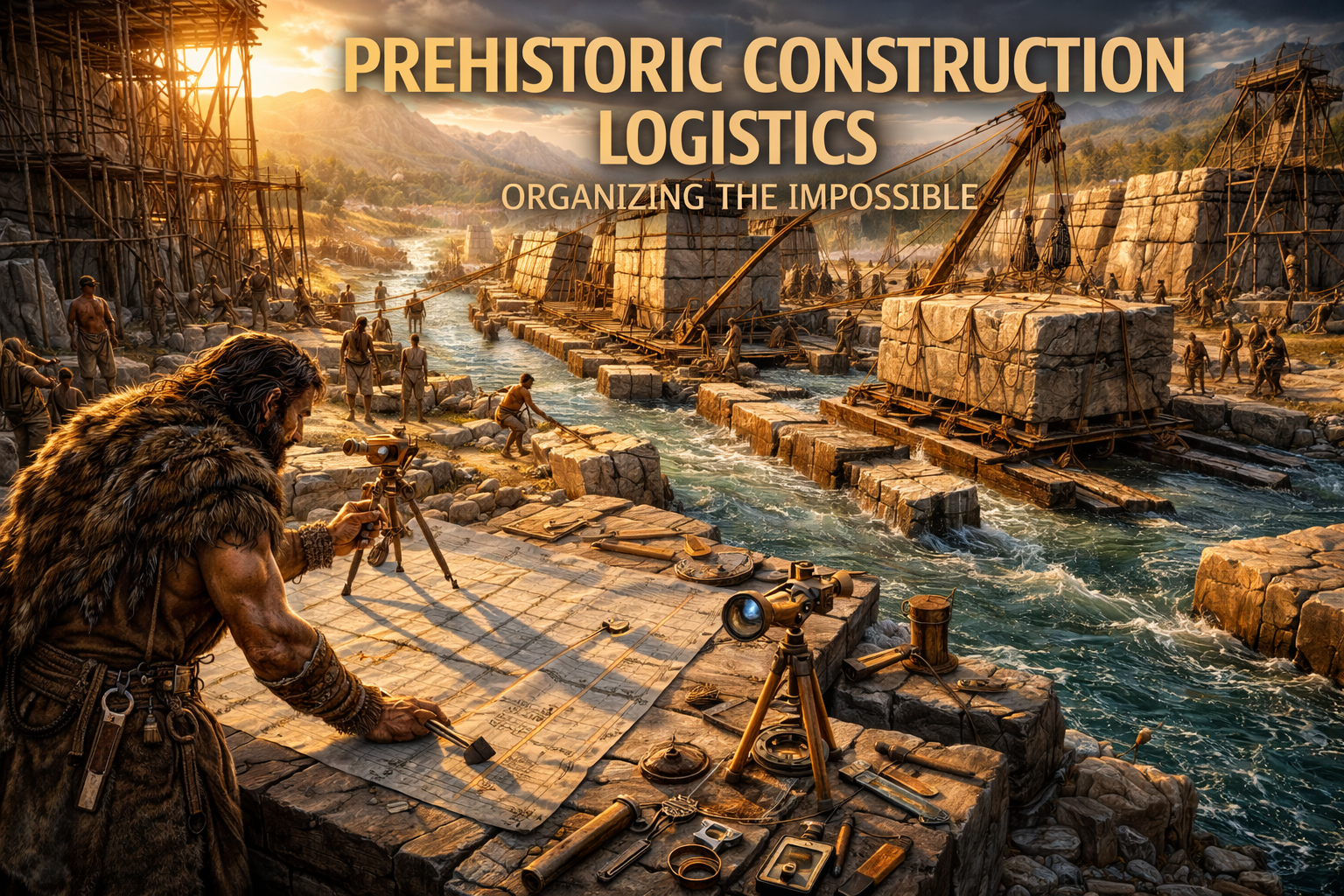
Transporting massive stone blocks across varied terrain represents one of the most technically demanding aspects of prehistoric construction systems. Experimental archaeology has demonstrated that relatively simple tools—sledges, rollers, ropes—can be used effectively when combined with coordinated labor and environmental leverage. For example, wetting sand to reduce friction or utilizing seasonal flooding to move stones along waterways significantly enhances efficiency (Sacred Numbers Measurement Systems – link).
However, these methods require more than physical execution; they demand logistical orchestration. Coordinating dozens or even hundreds of workers, synchronizing their efforts, and maintaining consistent progress over extended periods implies the existence of leadership structures and procedural knowledge. At Stonehenge, the transportation of bluestones from Wales—over 200 kilometers away—suggests a level of planning that extends beyond immediate necessity, incorporating long-distance resource acquisition into the construction system.
The question then becomes not whether such transport was possible, but how it was systematically organized. The repeated success of these operations across cultures indicates that prehistoric societies developed logistical frameworks capable of managing complex supply chains, even in the absence of written records (Cylces of Time Civilizations and Recurrence – link).
Precision and Assembly: The Art of Stone Fitting
The absence of mortar in many of these structures further increases the importance of precision, as stability depends entirely on the geometry of the stones themselves. This suggests that prehistoric builders possessed an intuitive understanding of load distribution and structural integrity, allowing them to create constructions that have withstood earthquakes and environmental degradation for centuries.
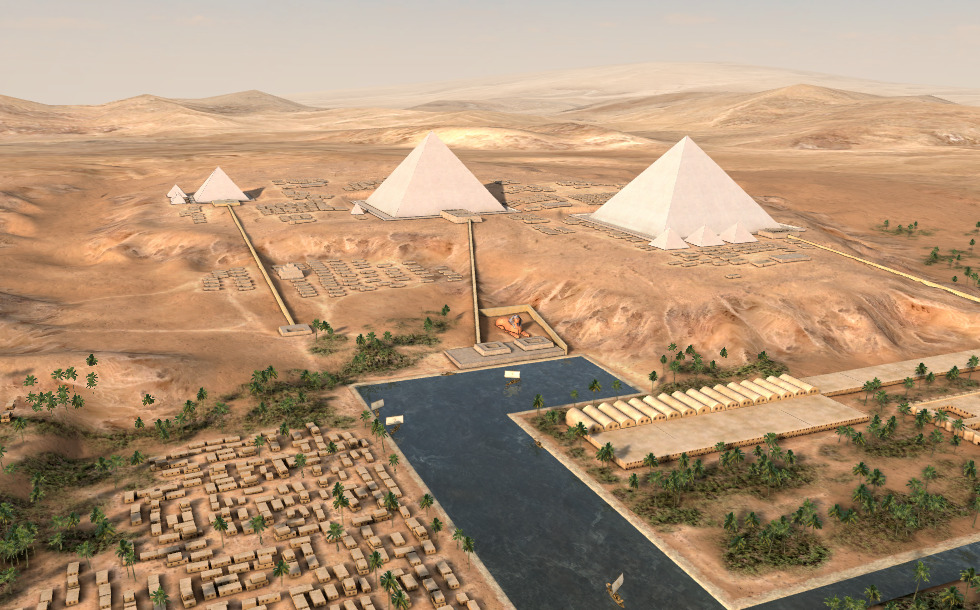
In Egypt, the alignment of the Great Pyramid to the cardinal points with remarkable accuracy raises additional questions about the integration of astronomical observation into construction planning. Whether achieved through stellar alignment or solar tracking, such precision indicates that construction systems were not isolated from other domains of knowledge, but rather interconnected with broader intellectual frameworks.
Systems Thinking in Prehistoric Construction
When viewed collectively, the stages of quarrying, transport, and assembly reveal a pattern that aligns closely with modern concepts of systems engineering. Each component of the construction process must function both independently and as part of an integrated whole. Failures in one phase—such as flawed stone extraction or inefficient transport—would cascade into subsequent stages, compromising the entire project.
This interdependence suggests that prehistoric construction systems incorporated feedback mechanisms, allowing builders to refine their methods over time. Knowledge may have been transmitted through apprenticeship, oral tradition, or direct observation, creating a continuity of practice that extended across generations. In this sense, the construction system itself becomes a repository of knowledge, embedded not in written documents but in the techniques and structures it produces.
Global Parallels and Converging Techniques
Material Science Before Formal Science
 The selection and use of materials in prehistoric construction systems demonstrate an empirical understanding of material properties that predates formal scientific frameworks. Builders chose specific types of stone based on durability, workability, and environmental compatibility. In some cases, different materials were combined within a single structure to optimize performance—for example, using harder stone for load-bearing elements and softer stone for detailed carving. This shows a clear understanding of how materials behave under stress and over time. At sites like Sacsayhuamán, stones are cut and fitted with remarkable precision. Such results suggest methods and techniques that are not fully understood today. It raises the question of whether some practical knowledge has simply been lost (Birth of Sacred Geometry – link).
Weathering patterns observed in ancient structures indicate that these choices were not arbitrary. Many megalithic constructions have endured for thousands of years with minimal degradation, suggesting that their builders anticipated long-term environmental effects. This level of foresight implies a cumulative body of knowledge, refined through observation and experience. However, we no longer have clear records of how this knowledge was passed on. If it depended on oral teaching, it could have disappeared quickly after major disruptions. This would leave behind structures without clear explanations of how they were built. In that sense, the durability of these sites may highlight how much knowledge has been lost (Sacred Numbers Blueprint of Cosmos – link).
The Question of Lost Knowledge
The hypothesis that aspects of prehistoric construction systems have been lost to time does not require invoking advanced or anachronistic technologies. Instead, it recognizes the fragility of knowledge transmission in the absence of durable records. Environmental changes, population disruptions, and cultural transformations can all contribute to the erosion of technical knowledge, leaving only the physical structures as evidence of past capabilities. If important regions were flooded or abandoned, entire knowledge systems could have disappeared with them. This suggests that gaps in the historical record may reflect loss rather than lack of ability. What we see today may be only what survived, not the full picture.
Sites such as Göbekli Tepe, which appear suddenly in the archaeological record with a high degree of sophistication, challenge linear models of technological development. They suggest that periods of advancement may have been followed by regression or loss, creating discontinuities in the historical record. This pattern hints that human progress may not have been steady or continuous. Events like those proposed in the Younger Dryas Impact Hypothesis could have caused sudden disruption. If such events occurred, they may have erased both people and knowledge. This leaves open the idea that earlier, more advanced phases of human history may have existed but are now mostly gone Lost Knowledge: Did Ancients Inherit Science? (link)
Implications for Understanding Human Capability
The study of prehistoric construction systems has broader implications for how we understand human capability and innovation. If early societies were able to develop and sustain complex construction systems, then the boundary between “primitive” and “advanced” becomes less clear. Instead of a simple progression from ignorance to knowledge, human history may reflect cycles of development, adaptation, and loss.
This perspective does not diminish the achievements of later civilizations; rather, it expands the timeline of human ingenuity, suggesting that sophisticated thinking and problem-solving have deeper roots than traditionally acknowledged. By examining the systems behind ancient constructions, we gain insight not only into how these structures were built, but also into the cognitive frameworks that made them possible.
Conclusion: Engineering Without a Written Blueprint
Prehistoric construction systems reveal a dimension of ancient human activity that extends beyond isolated feats of strength or creativity. They point toward organized, repeatable processes capable of managing complexity at scale, integrating knowledge from multiple domains, and producing structures that endure across millennia. While many details remain uncertain, the evidence suggests that early builders operated within frameworks that share fundamental characteristics with modern engineering systems.
The challenge moving forward is not simply to reconstruct the techniques used, but to understand the underlying principles that guided them. As new technologies—such as LiDAR, 3D modeling, and materials analysis—continue to expand our investigative capabilities, we may begin to uncover additional layers of this hidden knowledge. The question is not whether prehistoric construction systems existed, but how much of their sophistication has yet to be recognized—and what this reveals about the true depth of human history.
References and Further Reading
Encyclopaedia Britannica — Megalith (link)
National Geographic — Stonehenge and Ancient Engineering (link)
JSTOR — Prehistoric Architecture Studies (link)
World Atlas — History of Ancient Construction
Göbekli Tepe Research Project Publications
Archaeological Institute Reports on Andean Masonry
LiDAR Studies in Archaeology Journals (link)
Science Direct – Younger Dryas Impact Hipothesis (link)
Ancient360 – Older Dryas Climate Shift (link)