The Birth of Sacred Geometry and the Measurement of Reality
The birth of sacred geometry represents one of the most transformative intellectual developments in human history, marking the moment when early civilizations began to recognize that the universe operates according to measurable patterns, recurring cycles, and consistent proportions that link the movement of the heavens with the structure of the Earth. Long before the emergence of formal mathematics, ancient observers carefully studied the regular motions of the Sun, Moon, stars, and seasonal changes, gradually discovering that these celestial phenomena followed predictable rhythms that could be measured, recorded, and represented through numerical relationships and geometric forms.
From this prolonged observation emerged not merely practical systems for tracking time or organizing space, but an entirely new understanding of reality itself — one in which numbers, symmetry, proportion, and spatial relationships were perceived as fundamental principles governing both the cosmos and life on Earth. Sacred geometry therefore did not arise as decoration or symbolism alone; rather, it may have originated as a scientific and philosophical framework through which ancient societies sought to understand existence, structure their environments, and harmonize human activity with cosmic order.
Yet a profound question continues to surround these early discoveries. Did sacred geometry develop gradually through empirical observation and accumulated knowledge, or does it preserve fragments of understanding inherited from earlier civilizations whose achievements have largely disappeared from the historical record? As archaeology continues to reveal increasingly sophisticated prehistoric structures and astronomical alignments, the possibility remains that our current understanding of the origins of knowledge may still be incomplete.
COSMIC OBSERVATION AS THE ORIGIN OF GEOMETRY
Observing Cycles in the Sky
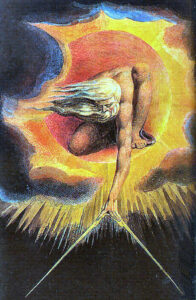
The origins of geometric thinking appear inseparable from humanity’s earliest attempts to understand the sky. For prehistoric communities whose survival depended upon seasonal cycles, the heavens provided the most reliable and consistent source of information about time, climate, and environmental change. The rising and setting of the Sun established daily rhythm, the phases of the Moon structured months, and the shifting position of stars marked the passage of seasons.
Over generations, careful observation revealed that celestial bodies followed precise and repeatable paths across the sky. These patterns encouraged early observers to measure angles, intervals, and spatial relationships, gradually producing the first geometric concepts. The apparent circular motion of celestial bodies suggested continuity and repetition, while recurring seasonal changes revealed predictable cycles that could be counted and anticipated.
Archaeological evidence indicates that this observational knowledge was neither accidental nor primitive. Numerous prehistoric sites demonstrate deliberate alignment with astronomical events, suggesting systematic study of celestial motion thousands of years before written records. These early observations required not only awareness of environmental change but also the capacity to conceptualize space, direction, and proportion — essential foundations of geometry.
Research in archaeoastronomy has shown that ancient structures across different continents display consistent patterns of astronomical alignment, reinforcing the idea that geometric knowledge emerged directly from the need to track cosmic cycles and understand the structure of time.
Key Concepts — Cosmic Observation
-
Geometry emerged from observing repeating celestial cycles.
-
Early measurement focused on solar, lunar, and seasonal motion.
-
Astronomical observation required spatial and numerical reasoning.
The Circle as the First Geometric Principle
Among the earliest and most influential geometric discoveries was the recognition of the circle, a form directly inspired by the apparent motion of the Sun and Moon across the sky. The circle represented continuity, unity, and cyclical time, embodying the perception that natural processes repeat according to ordered patterns.
The division of the circle into degrees and segments reflects early attempts to measure these cycles with increasing precision. Ancient timekeeping systems, including the division of the year and the use of numerical bases for calculation, reveal sophisticated efforts to describe cosmic motion mathematically. The enduring use of 360 degrees in angular measurement illustrates how deeply these early insights shaped later scientific traditions.
The circle therefore became both a practical tool for measurement and a symbolic representation of cosmic harmony, reflecting the belief that the universe operates according to coherent and unified principles.
Key Concepts — The Circle
-
Circular motion revealed cyclical time.
-
Angular measurement emerged from celestial observation.
-
The circle symbolized unity and cosmic order.
Prehistoric Observatories and Geometric Order
Across the world, ancient monuments demonstrate that early societies translated astronomical knowledge into architectural form. Monumental structures often exhibit precise orientation toward solstices, equinoxes, or significant celestial events, suggesting that geometry served as a bridge between observation and physical construction.
Stone circles, megalithic alignments, and early ceremonial structures reveal consistent spatial relationships, indicating intentional design rather than random arrangement. Some sites functioned as observational instruments capable of marking specific moments in the solar year, while others may have served ritual or symbolic purposes connected to cosmic cycles.
These structures reveal that geometry was not merely abstract knowledge but a practical technology used to encode astronomical information, organize space, and establish cultural identity.
Key Concepts — Early Observatories
-
Monumental structures encoded astronomical knowledge.
-
Geometry guided spatial design and orientation.
-
Architecture functioned as observational technology.
THE EMERGENCE OF SACRED NUMBERS
As observation of natural and cosmic cycles continued, ancient cultures began to recognize recurring numerical relationships embedded within the structure of reality. The repetition of specific numbers across different phenomena suggested an underlying order connecting celestial motion, seasonal change, and biological rhythms.
The number twelve, for example, reflects lunar cycles within the solar year; four corresponds to seasonal divisions and cardinal directions; seven appears in visible celestial bodies and ritual traditions; and 360 approximates the solar cycle. These numbers became foundational elements of early calendars, cosmologies, and symbolic systems.
Rather than arbitrary inventions, sacred numbers appear to have emerged from empirical observation of natural processes. Their widespread presence across independent cultures suggests that they reflect universal features of environmental experience rather than purely cultural constructs.
Modern cognitive science supports the idea that humans possess an innate capacity to detect patterns and regularities in their surroundings, which may explain the early emergence of numerical systems derived from environmental observation.
Key Concepts — Sacred Numbers
-
Numerical patterns reflect natural cycles.
-
Numbers structured calendars and rituals.
-
Pattern recognition shaped early mathematics.
GEOMETRY IN THE NATURAL WORLD
The principles discovered through celestial observation were not limited to the sky; they also appeared within the natural world. Patterns of growth, symmetry, and structure in plants, animals, and geological formations revealed similar geometric relationships, reinforcing the perception that the same principles govern both cosmic and terrestrial phenomena.
Spiral growth in plants, crystalline symmetry, wave dynamics, and biological proportion demonstrate that natural systems often follow mathematical optimization processes. These patterns appear across vastly different scales, from microscopic structures to planetary formations, suggesting a consistent structural logic underlying physical reality.
The recognition that geometric order exists throughout nature contributed to the philosophical idea that the universe operates according to universal laws that manifest in multiple forms.
Key Concepts — Geometry in Nature
-
Natural systems exhibit recurring geometric patterns.
-
Structure reflects mathematical optimization.
-
Similar forms appear across different scales.
SACRED GEOMETRY IN ANCIENT ARCHITECTURE
Ancient architecture provides some of the clearest evidence that geometric knowledge was deliberately applied in the design of monumental structures. Temples, pyramids, ceremonial centers, and urban layouts frequently demonstrate precise proportions, spatial symmetry, and alignment with celestial events.
The consistent use of geometric ratios suggests that builders sought to express cosmic order through physical form, transforming architectural space into a reflection of universal structure. Orientation toward cardinal directions and astronomical phenomena indicates that construction was guided by principles linking Earth and sky.
These architectural traditions appear across diverse cultures separated by vast distances and historical periods, raising important questions about how geometric knowledge developed and spread.
Key Concepts — Sacred Architecture
-
Geometry structured monumental design.
-
Proportion and orientation reflected cosmic order.
-
Architecture encoded knowledge.
THE EARTH AS A GEOMETRIC SYSTEM
Beyond individual structures, many ancient traditions demonstrate awareness of large-scale spatial relationships across the landscape. Orientation to cardinal directions, geographic positioning of monuments, and possible networks of aligned sites suggest an effort to understand Earth itself as an ordered system.
Although interpretations of global geometric patterns remain debated, the consistent emphasis on spatial orientation indicates that ancient societies perceived their environment as structured and measurable. Geometry therefore functioned not only as a tool for construction but also as a means of mapping the relationship between humanity and the planet.
Key Concepts — Earth Geometry
-
Orientation reveals spatial awareness.
-
Landscapes were organized through measurement.
-
Geometry structured human interaction with Earth.
GEOMETRY, PERCEPTION, AND HUMAN EXPERIENCE
The influence of geometry extends beyond physical construction into the realm of human perception. Psychological research demonstrates that humans respond strongly to symmetry, proportion, and ordered patterns, suggesting that geometric environments may influence cognition and emotional experience.
Ancient cultures may have deliberately incorporated geometric principles into ritual spaces to shape perception, enhance symbolic meaning, and create environments perceived as harmonious or sacred. This interaction between spatial structure and human experience further reinforces the idea that geometry functions as a bridge between the physical and psychological dimensions of reality.
Key Concepts — Geometry and Perception
-
Humans respond to symmetry and proportion.
-
Spatial design influences experience.
-
Geometry shapes perception of harmony.
COULD SACRED GEOMETRY PRESERVE LOST KNOWLEDGE?
Archaeological evidence reveals that human history has experienced repeated episodes of cultural loss caused by environmental change, conflict, and the destruction of knowledge repositories. The disappearance of libraries, cities, and entire civilizations raises the possibility that earlier knowledge systems may have been lost or only partially preserved.
Some researchers propose that sacred geometry may represent a surviving fragment of more advanced traditions, transmitted across generations through symbolic and architectural forms. While this hypothesis remains open to debate, the sophistication of ancient structures and the persistence of geometric symbolism across cultures invite continued investigation.
The birth of sacred geometry may therefore represent not only the origin of mathematical thought but also a window into a deeper and possibly more complex history of human knowledge.
Key Concepts — Lost Knowledge
-
Knowledge can disappear through catastrophe.
-
Geometry may preserve ancient traditions.
-
Historical records remain incomplete.
Conclusion — Geometry as the Language of the Cosmos
The birth of sacred geometry reflects humanity’s enduring effort to understand the universe through observation, measurement, and reflection. By studying the movement of the heavens and the patterns of nature, ancient civilizations discovered principles that revealed order within apparent complexity, transforming observation into knowledge and knowledge into cultural expression.
Whether sacred geometry emerged gradually or preserves fragments of earlier traditions, its presence across cultures suggests that human beings have long recognized a fundamental connection between cosmic order and earthly existence. The continued study of ancient structures, natural patterns, and historical evidence may yet reveal how deeply these insights shaped the development of civilization and how much of this knowledge still remains to be rediscovered.
Additional Reading and Sources
-
Ruggles, C. (2015). Handbook of Archaeoastronomy and Ethnoastronomy. Springer. (link)
-
Magli, G. (2013). Architecture, Astronomy and Sacred Landscape in Ancient Egypt. Cambridge University Press. (link)
-
Ball, P. (2009). Shapes: Nature’s Patterns. Oxford University Press. (link)
-
Stewart, I. (1995). Nature’s Numbers. Basic Books. (link)
-
Dehaene, S. (2011). The Number Sense. Oxford University Press. (link)
-
Ramachandran, V. & Hirstein, W. (1999). The Science of Art. Journal of Consciousness Studies.
- Archeoastronomy: https://ancient360.eu/category/archeoastronomy/ (link)
- Cosmic Alignments: https://ancient360.eu/category/cosmic-alignments/ (link)