Geoglyphs: The Sky-High Mysteries of Ancient Landscapes
Geoglyphs—vast designs etched or arranged upon the earth—remain among the most intriguing and enigmatic creations of ancient civilizations. From the deserts of Peru to the steppes of Kazakhstan, these monumental patterns, often only fully visible from the air, continue to puzzle archaeologists, historians, and travelers alike.
Defined traditionally as large-scale artworks created from durable landscape elements—stones, gravel, or earth—geoglyphs often combine practical, ritualistic, and symbolic functions. Yet the term has sometimes been applied loosely in modern times, encompassing structures that may not have been intended as art at all, such as burial mounds, ceremonial platforms, or agricultural terraces. Despite this, the visual impact and sheer scale of these creations make them stunning records of human ingenuity.
Nazca Lines: Peru’s Perennial Puzzle
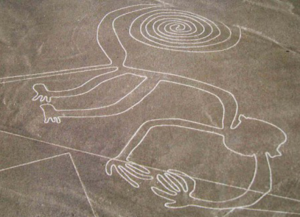
Perhaps the most famous geoglyphs are the Nazca Lines in southern Peru. Discovered in the 1920s, these vast earthworks—depicting animals, human figures, and geometric patterns—have intrigued researchers for nearly a century.
Archaeologists debate their original purpose: were they ceremonial pathways, astronomical calendars, or symbolic offerings to deities? Some patterns appear aligned with solstices and equinoxes, suggesting a sophisticated understanding of celestial cycles. Despite countless studies, the Nazca Lines continue to defy definitive explanation, leaving modern observers awed by their scale and precision.
Global Geoglyphs: From California to Kazakhstan
While the Nazca Lines attract the majority of attention, similar structures exist across the globe. In California, for example, prehistoric earthworks and large geometric patterns hint at ritual or territorial significance. Meanwhile, in Kazakhstan, researchers have identified enormous stone alignments, burial complexes, and ground markings that may date back thousands of years, reflecting complex social structures and cosmological knowledge.
Other notable examples include the Paracas geoglyphs in Peru, the Amazonian geoglyphs in Brazil, and mysterious formations in the Middle East and Siberia. What unites these diverse sites is their monumental scale and aerial visibility, raising compelling questions about the methods and motivations of their creators.
Purpose and Interpretation: More Questions Than Answers
Why did ancient societies go to such extraordinary lengths to create these earth-bound artworks? While some geoglyphs clearly served ritualistic or funerary functions, others may have been used for astronomical observation, territorial demarcation, or social cohesion.
The fact that geoglyphs are often only fully appreciated from above suggests a level of planning, coordination, and possibly aerial perspective rarely attributed to prehistoric cultures. Were these designs intended for the eyes of the gods, or for ritual participants on the ground, tracing intricate paths? Modern researchers continue to explore these questions, using tools such as drones, satellite imagery, and 3D mapping to unlock the secrets buried in plain sight.
The Enduring Allure of Geoglyphs
Geoglyphs capture the intersection of art, science, and spirituality. They reflect human beings’ enduring desire to interact with their environment, record cosmological knowledge, and leave a lasting mark on the landscape. Each line, circle, or animal form is a fragment of ancient consciousness, offering tantalizing glimpses into societies long vanished.
From the Nazca Lines to Kazakhstan’s massive earthworks, these monumental creations reveal shared impulses across cultures: the urge to communicate, commemorate, and transcend the ordinary. While there are differences between Geoglyphs, Petroglyphs, and Pictographs, many geoglyphs remain unexplained, they continue to inspire archaeological inquiry, aerial surveys, and wonder, reminding us that humanity’s relationship with the heavens and the earth has always been intertwined.