Sacred Symbols Across History
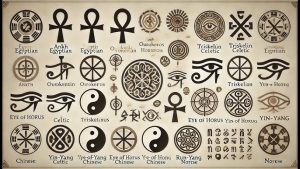
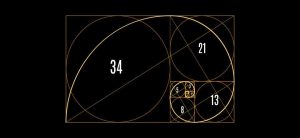
Sacred symbols have fascinated humanity for millennia. From ancient temples to spiritual texts, these geometric shapes and patterns represent the fundamental templates for life in the universe. Observed in everything from the Fibonacci spiral to the Golden Ratio, sacred symbols reveal the mathematical and spiritual language of creation that governs both the visible and invisible worlds.
The Spiritual Significance of Sacred Symbols
Many teachings describe sacred symbols as the blueprint of creation. These shapes and patterns encode the energy of the cosmos, reflecting the way creation organizes itself. Every natural form—from the spirals of a shell to the branching of trees—can be traced back to fundamental geometric forms.
Ancient civilizations believed that understanding sacred symbols was essential for spiritual growth and the education of the soul. They saw these patterns as symbolic representations of inner consciousness, higher awareness, and universal harmony. By meditating upon or incorporating these shapes into rituals, humans could align themselves with cosmic energies.
Sacred Geometry in Art, Music, and Architecture
It is said that Galileo once remarked, “Mathematics is the alphabet with which God has written the universe.” Artists, philosophers, and musicians throughout history have echoed this wisdom:
-
Leonardo da Vinci: Incorporated the Golden Ratio into his paintings, including the Vitruvian Man.
-
Mozart: Likely used the Fibonacci sequence to structure his musical compositions.
-
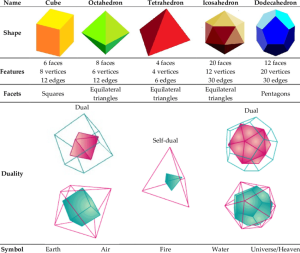
Plato and the Platonic Solids: The tetrahedron, cube, octahedron, dodecahedron, and icosahedron form the geometrical foundation for all creation, from molecular structures to monumental architecture.
Sacred spirals, such as those found in pinecones, snail shells, and human anatomy, demonstrate the recurring patterns of growth and energy flow in nature. Even the Great Pyramid of Giza aligns with cosmic principles, reflecting the ancients’ knowledge of geometry, astronomy, and spirituality.
Modern Applications and Practices
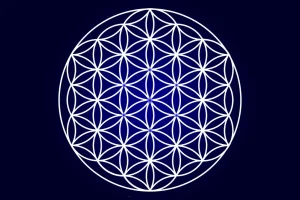
Today, sacred symbols continue to inspire meditation, energy work, and design. They are used to harmonize living spaces, support spiritual growth, and understand cosmic cycles. The Flower of Life, Metatron’s Cube, and Merkaba are prominent examples, each encapsulating universal principles that link the physical world with higher consciousness.
Internal and External Links
References
-
Lawlor, Robert. Sacred Geometry: Philosophy and Practice. Thames & Hudson, 1989.
-
Edey, Maitland. Sacred Patterns in Ancient Art. Dover Publications, 1997.
-
Kak, Subhash. The Geometry of Ancient Architecture. International Journal of Architectural Heritage, 2004.