The Megalithic Civilization Hypothesis: Ancient Standards, Forgotten Knowledge, and a Global Legacy
Introduction
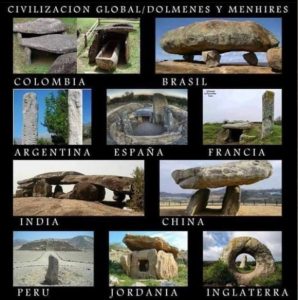
The Megalithic Civilization hypothesis proposes that monumental stone structures such as the Pyramids of Giza, Stonehenge, Göbekli Tepe, and hundreds of lesser-known megalithic sites across Europe and beyond were not isolated achievements, but the product of a shared technological and cultural tradition. According to this hypothesis, these structures were built by a highly skilled group often referred to as Megalithic Man, a term introduced by engineer and archaeoastronomer Alexander Thom in the mid-20th century.
This idea challenges conventional archaeological timelines and remains controversial within mainstream academia. Yet, the increasing precision observed in ancient stonework, astronomical alignments, and standardized measurements forces an important question: did prehistoric societies possess a level of scientific knowledge far greater than previously assumed?
The Foundations of the Megalithic Civilization Hypothesis
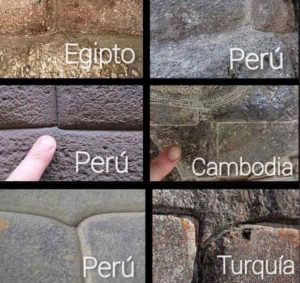
The hypothesis rests on one central observation: megalithic sites across vast geographic regions exhibit consistent measurements, geometry, and orientation. From stone circles in Britain to massive pyramidal complexes in Egypt, many of these structures display mathematical precision that appears incompatible with the traditionally accepted image of Neolithic hunter-gatherer societies.
Alexander Thom’s extensive surveys of over 600 megalithic sites across England, Scotland, Wales, and Brittany led him to propose that these builders employed standardized units of measurement. His findings suggested intentional design rather than random or purely symbolic construction, implying advanced planning and shared technical knowledge.
Megalithic Knowledge: Astronomy, Geometry, and Engineering
In 1951, Thom published a landmark paper titled The Solar Observations of Megalithic Man, arguing that stone circles functioned as astronomical observatories. His research indicated that many sites were aligned with solstices, equinoxes, and lunar cycles, suggesting long-term observation of celestial movements.
Beyond astronomy, Thom identified the use of complex geometry, including right angles and proportional relationships consistent with Pythagorean principles, long before such knowledge was formally recorded in classical civilizations. These discoveries imply a sophisticated understanding of mathematics applied consistently across multiple regions.
The Megalithic Yard: Evidence of Standardized Measurement
Central to Thom’s hypothesis is the Megalithic Yard (MY), a proposed unit of measurement measuring approximately 2.72 feet (82.96 cm). Thom identified this unit through statistical analysis of stone spacing across hundreds of sites, arguing that such consistency could not be coincidental.
He further proposed a measurement system composed of:
-
The Megalithic Rod, measuring 2.5 MY
-
The Megalithic Inch, measuring 2.073 cm
-
Forty Megalithic Inches equaling one Megalithic Yard
Thom applied the statistical lumped variance test developed by J.R. Broadbent and concluded that the results were significant enough to indicate deliberate standardization.
( 1 MY = 2.72 ft or 82.96 cm )
Academic Criticism and the Pseudoscience Debate
Despite Thom’s rigorous engineering background, his conclusions were met with skepticism. Critics such as Douglas Heggie argued that the data could reflect average pacing distances rather than a formal unit of measurement. Heggie concluded that there was “little evidence for a highly accurate unit” being in widespread use.
As a result, the Megalithic Civilization hypothesis was largely classified as pseudoscientific by mainstream archaeological institutions. However, this dismissal often stemmed less from methodological flaws and more from the disruptive implications of the findings, which challenge established models of human cultural development.
Global Comparisons and Emerging Parallels
Interestingly, Thom noted similarities between the Megalithic Yard and the Spanish vara, a pre-metric Iberian unit measuring approximately 2.7425 feet. This observation raised the possibility of a centralized origin or shared transmission of measurement standards across regions.
Further studies have identified comparable measurement units at sites outside Europe, including Teotihuacan in Mesoamerica, suggesting that standardized metrology may not have been geographically isolated. While uniformity may not be exact, the recurrence of closely matching units worldwide continues to attract renewed academic interest.
Rethinking Ancient Capabilities
Discoveries such as Göbekli Tepe have already forced archaeology to reconsider the technological and organizational capabilities of early societies. The precision and scale of megalithic structures suggest that Neolithic builders possessed advanced knowledge of mathematics, astronomy, and engineering long before the rise of written civilizations.
Whether or not a single global megalithic civilization existed, the evidence increasingly points toward shared traditions of knowledge, transmitted across generations and landscapes, leaving behind a durable stone legacy that still defies simple explanation.
Conclusion
The Megalithic Civilization hypothesis remains controversial, yet it continues to provoke critical reassessment of humanity’s ancient past. While mainstream archaeology urges caution, the consistency of measurements, alignments, and construction techniques across continents suggests that ancient societies may have been far more interconnected and scientifically capable than previously believed.
As research methods evolve and interdisciplinary studies expand, the question is no longer whether ancient builders were intelligent, but how much of their knowledge has been forgotten — and how much remains hidden in stone.
References
_____________________________________________________________________________________________
- Thom, Alexander., The megalithic unit of length, Journal of the Royal Statistical Society, A 125, 243-251, 1962.
- Alexander Thom (12 March 1964). New Scientist. Reed Business Information. pp. 690–. https://books.google.com/books?id=c2iCzjpnd4EC&pg=PA690. Retrieved 19 April 2011.
- Barbara Ann Kipfer (2000). Encyclopedic dictionary of archaeology. Springer. pp. 344–. ISBN 978-0-306-46158-3. https://books.google.com/books?id=XneTstDbcC0C&pg=PA344. Retrieved 23 April 2011.
- Archibald Stevenson Thom (1995). Walking in all of the squares: a biography of Alexander Thom : engineer, archaeoastronomer, discoverer of a prehistoric calendar, the geometry of stone rings and megalithic measurement. Argyll Pub.. ISBN 978-1-874640-66-0. https://books.google.com/books?id=o0HbAAAAMAAJ. Retrieved 19 April 2011.
- ↑Thom, Alexander., The larger units of length of megalithic man, Journal for the Royal Statistical Society, A 127, 527-533, 1964.
- Andrzej Wiercinski, MEGALITHIC YARD IN TEOTIHUACAN? https://mdc.ulpgc.es/utils/getfile/collection/almog/id/179/filename/345.pdf
- avid H. Kelley; Eugene F. Milone; Anthony F. (FRW) Aveni (28 February 2011). Exploring Ancient Skies: A Survey of Ancient and Cultural Astronomy. Springer. pp. 163–. ISBN978-1-4419-7623-9. https://books.google.com/books?id=ILBuYcGASxcC&pg=PA163. Retrieved 22 April 2011.
- Heggie, Douglas C. (1981). Megalithic Science: Ancient Mathematics and Astronomy in North-west Europe. Thames and Hudson. p. 58. ISBN 0-500-05036-8.
- Thom (1976). Megalithic sites in Britain, p. 43. Clarendon. https://books.google.com/books?id=Y6p-DwEACAAJ. Retrieved 6 April 2011.
- Keith Critchlow (1979). Time stands still: new light on megalithic science, p. 37. Gordon Fraser. https://books.google.com/books?id=jK3aAAAAMAAJ. Retrieved 23 April 2011.
- Euan Wallace MacKie (1977). The megalith builders, p. 192. Phaidon. https://books.google.com/books?id=7gOBAAAAMAAJ. Retrieved 22 April 2011.
- The Megalithic Structures – link