The Numerical Language of the Cosmos
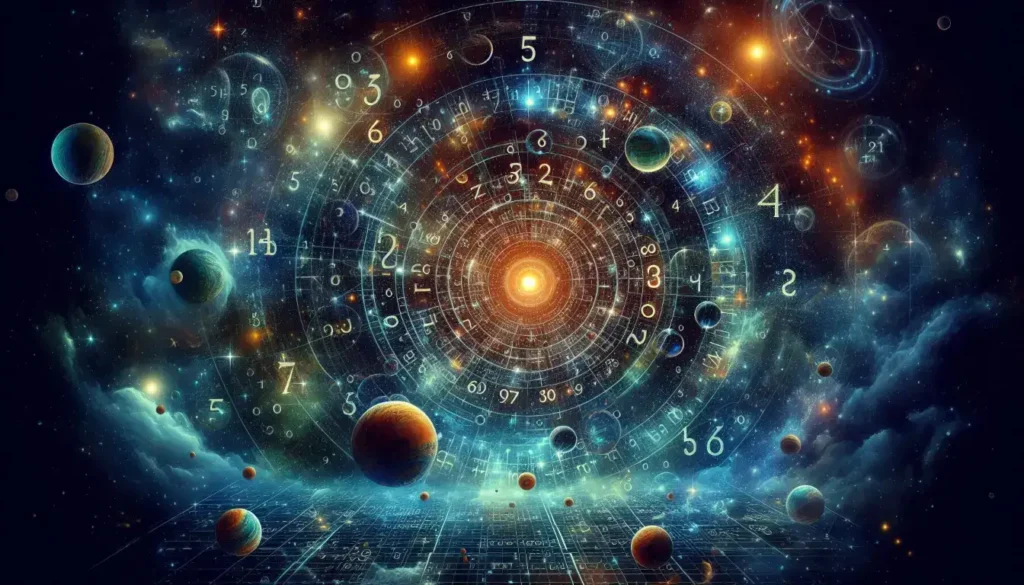
The concept of sacred numbers cosmic order describes the belief that numerical relationships structure both the universe and human existence. Across continents and civilizations separated by oceans, cultures that never directly interacted nevertheless arrived at remarkably similar numerical systems to describe the structure of reality. From monumental architecture aligned with celestial cycles to mathematical proportions embedded in sacred temples, ancient societies repeatedly expressed a profound conviction that the cosmos operates through an intelligible numerical framework. Across continents and civilizations separated by oceans, cultures that never directly interacted nevertheless arrived at remarkably similar numerical systems to describe the structure of reality. From monumental architecture aligned with celestial cycles to mathematical proportions embedded in sacred temples, ancient societies repeatedly expressed a profound conviction: the universe operates through an intelligible numerical framework.
The concept of sacred numbers cosmic order represents the belief that numerical relationships structure both physical reality and metaphysical meaning. Ancient observers did not simply count objects; they perceived numbers as fundamental principles governing motion, proportion, and cosmic balance. These numbers emerged from careful observation of planetary cycles, seasonal rhythms, harmonic ratios in sound, and recurring geometrical patterns in nature.
By studying celestial movements and terrestrial patterns, ancient scholars developed a worldview in which number was understood as the bridge between human perception and universal structure. This perspective shaped architecture, ritual systems, cosmology, and mathematical philosophy across Egypt, Mesopotamia, India, China, Mesoamerica, and the Mediterranean world.
This investigation explores how sacred numbers were identified, how they repeat throughout nature and cosmic cycles, and how ancient civilizations encoded this knowledge into enduring structures. It also examines the possibility that aspects of this numerical knowledge represent fragments of lost or misunderstood scientific traditions.
The The Philosophical Origins of Sacred Numbers Cosmic Order
This worldview strengthened the belief that sacred numbers cosmic order governs both material reality and metaphysical meaning. The idea that number underlies reality emerged early in human intellectual development, but it reached explicit formulation in the teachings of Pythagoras and later Greek mathematical philosophy. Pythagorean doctrine proposed that numbers were not merely tools of measurement but the fundamental essence of all things. According to later accounts, the Pythagoreans discovered that musical harmony depended on simple numerical ratios, suggesting that mathematical relationships governed physical phenomena.
This philosophical insight extended beyond Greece. In ancient Egypt, numerical proportions structured temple architecture and cosmological symbolism. Mesopotamian mathematical systems encoded astronomical cycles using base-60 arithmetic. In India, Vedic traditions described cosmic order through numerical relationships embedded in ritual geometry and calendrical systems.
What united these traditions was a shared recognition that numerical patterns could be derived from empirical observation. The periodic movement of the Sun and Moon, the recurrence of seasonal cycles, and the symmetry of natural forms all pointed toward an underlying mathematical order.
Ancient thinkers therefore interpreted numbers as both descriptive and generative — describing reality while simultaneously participating in its formation.
Key Insights
-
Numbers were understood as universal principles rather than abstract tools.
-
Mathematical harmony in music influenced cosmological theories.
-
Independent civilizations converged on similar numerical frameworks.
-
Observation of natural cycles inspired numerical cosmologies.
The Philosophical Origins of Sacred Numbers Cosmic Order
Through these observations, early scientists concluded that sacred numbers cosmic order was embedded within the rhythms of nature itself. Ancient civilizations did not invent sacred numbers arbitrarily. They emerged through systematic observation of recurring patterns in nature.
The human experience of time itself provided the earliest numerical framework. The day, month, and year established repeating cycles that could be counted, predicted, and symbolically interpreted. The lunar cycle of approximately 29.5 days and the solar year of roughly 365 days became foundational numerical references for early calendrical systems.
Astronomical observation further revealed complex periodicities. Planetary motion, eclipses, and stellar cycles displayed predictable mathematical relationships. These observations encouraged the belief that the cosmos functioned according to precise numerical laws.
Natural forms also reinforced this perception. Spiral growth patterns in plants, crystalline symmetries, and harmonic relationships in sound suggested that number structured both organic and inorganic phenomena.
Modern science confirms that many natural processes follow mathematical patterns. Research in biological morphogenesis demonstrates that growth patterns often reflect optimization principles governed by mathematical constraints (Ball, 2009). Similarly, studies in astrophysics show that gravitational systems produce predictable orbital ratios (Kepler, 1619; Laskar, 1990).
Ancient observers, though lacking modern theoretical frameworks, recognized these patterns empirically and encoded them into symbolic numerical systems.
Key Observational Foundations
-
Solar and lunar cycles defined temporal measurement.
-
Planetary motion revealed predictable ratios.
-
Biological growth exhibited mathematical patterns.
-
Natural symmetry reinforced belief in cosmic order.
The Sacred Number One: Unity and Origin
The study of proportion further reinforced the principle of sacred numbers cosmic order through measurable mathematical relationships. The number one represented unity, origin, and the source from which all multiplicity emerges. In cosmological traditions worldwide, the concept of a primordial unity precedes creation.
Ancient Egyptian cosmology described the emergence of the universe from a unified primordial state. Greek philosophy referred to the “Monad” as the ultimate principle underlying existence. In many traditions, unity symbolized the undivided cosmos prior to differentiation.
Mathematically, the number one represents identity and invariance. It preserves value under multiplication and establishes the basis of numerical systems. Philosophically, this property reinforced its symbolic association with permanence and origin.
Unity therefore served as the conceptual starting point for sacred numerical systems and cosmological models.
Core Symbolism
-
Origin of creation
-
Cosmic unity
-
Source of multiplicity
-
Principle of identity
Sacred Number Three: Cosmic Balance and Structure
The number three appears with striking consistency in cosmological symbolism. Many ancient cultures organized reality into triadic structures, such as heaven, earth, and underworld, or birth, life, and death.
From a geometric perspective, three points define the first stable shape: the triangle. Structural stability in architecture and engineering relies heavily on triangular forms, reinforcing the association between three and balance.
Astronomically, triadic relationships appear in the interactions between celestial bodies. Orbital resonances and gravitational systems often stabilize through three-body interactions, though these systems can also produce complex dynamics.
The symbolic significance of three therefore reflects both empirical observation and structural necessity.
Key Characteristics
-
First stable geometric form
-
Symbol of balance and harmony
-
Recurring cosmological triads
-
Structural stability in architecture
The Sacred Number Five and the Geometry of Life
The number five frequently appears in biological forms and human experience. The human body exhibits five digits on each limb, and many plants display pentagonal growth patterns.
The pentagon and pentagram encode the golden ratio, a mathematical proportion associated with aesthetic harmony and efficient growth. Research in plant morphology demonstrates that phyllotaxis patterns often follow Fibonacci sequences related to this ratio (Adler et al., 1997).
Ancient observers interpreted these recurring patterns as evidence that life itself follows mathematical laws. The number five thus became associated with vitality, growth, and natural order.
Observed Manifestations
-
Human anatomical symmetry
-
Plant growth patterns
-
Golden ratio geometry
-
Biological optimization
The Sacred Number Seven and Celestial Cycles
The number seven held profound significance in ancient astronomy. Early observers identified seven visible celestial bodies moving independently of the fixed stars: the Sun, Moon, Mercury, Venus, Mars, Jupiter, and Saturn.
This observation influenced the seven-day week, planetary symbolism, and ritual cycles across multiple civilizations. The recurrence of seven in temporal systems reinforced its association with cosmic rhythm.
Neuroscientific research also suggests that human cognitive processing favors groupings of approximately seven elements, potentially reinforcing cultural adoption of this number (Miller, 1956).
Astronomical Foundations
-
Seven visible planetary bodies
-
Weekly time cycles
-
Ritual and symbolic systems
-
Cognitive significance
The Sacred Number Twelve and Cosmic Order
The number twelve frequently appears in systems describing cosmic organization. The twelve months of the solar year, twelve zodiac constellations, and numerous cultural symbolic systems reflect its association with completeness.
Astronomically, twelve provides a convenient division of the solar cycle, approximating lunar months and seasonal transitions. Its mathematical divisibility makes it useful for measurement and calendrical design.
Ancient structures often encode twelvefold symmetry or orientation toward solar cycles, demonstrating the integration of numerical and astronomical knowledge.
Structural Applications
-
Solar calendar divisions
-
Zodiac systems
-
Architectural symmetry
-
Seasonal cycles
Sacred Numbers Cosmic Order and Harmonic Ratios of Reality
Sacred numbers rarely functioned independently; they operated within systems of proportional relationships. Ratios such as 1:2, 2:3, and 3:4 generate harmonic intervals in music, architectural proportions, and geometric constructions.
The discovery that musical harmony corresponds to numerical ratios profoundly influenced ancient cosmology. The concept of a “music of the spheres” emerged from the belief that planetary motion followed harmonic principles.
Modern physics similarly describes reality through mathematical relationships governing wave behavior and resonance. Studies in acoustics and vibrational systems demonstrate how harmonic ratios produce stable structures (Rossing, 2007).
Ancient numerical cosmology thus reflects early attempts to understand universal order through proportion and resonance.
Key Principles
-
Harmony arises from numerical ratios
-
Proportion governs structure and sound
-
Resonance produces stability
-
Mathematical relationships describe physical systems
Sacred Numbers in Monumental Architecture
Ancient builders encoded sacred numbers into architectural design, aligning structures with celestial cycles and geometric proportions. These constructions served as physical expressions of cosmic order.
The Great Pyramid demonstrates precise orientation and proportional relationships reflecting advanced mathematical knowledge. Megalithic monuments such as Stonehenge encode solar alignments and calendrical functions.
Research in archeoastronomy confirms that many ancient structures exhibit deliberate astronomical orientation (Ruggles, 2015). These findings suggest that architecture functioned as both scientific instrument and symbolic representation.
Architectural Expressions
-
Numerical proportions in construction
-
Celestial alignments
-
Geometric precision
-
Cosmological symbolism
Repetition of Sacred Numbers in Nature
The persistence of these patterns suggests that sacred numbers cosmic order represents a universal framework underlying ancient science, architecture, and cosmology. The principle “as above, so below” reflects the belief that cosmic patterns repeat at multiple scales. Ancient observers recognized numerical relationships in planetary motion, biological growth, and geological structure. The full quote from Hermetic Philosophy is… “As within, so without, as above, so below, as the universe, so the soul.“
Modern complexity science supports the existence of self-similar patterns across scales, including fractal geometry and scaling laws in natural systems (West, 2017). These discoveries parallel ancient observations of recurring numerical patterns.
The perception of universal repetition strengthened the belief that sacred numbers reveal fundamental cosmic principles.
Observed Patterns
-
Self-similar natural structures
-
Fractal geometry
-
Scaling laws in biology
-
Universal mathematical repetition
Additional Reading and Sources
Adler, I., Barabé, D., & Jean, R. (1997). A history of the study of phyllotaxis. Annals of Botany, 80(3), 231–244.
Ball, P. (2009). Shapes: Nature’s Patterns. Oxford University Press. (link)
Kepler, J. (1619). Harmonices Mundi. (link)
Laskar, J. (1990). The chaotic motion of the solar system. Nature, 338, 237–238.
Miller, G. A. (1956). The magical number seven. Psychological Review, 63(2), 81–97.
Rossing, T. (2007). Springer Handbook of Acoustics. Springer.
Ruggles, C. (2015). Handbook of Archaeoastronomy and Ethnoastronomy. Springer.
West, G. (2017). Scale: The Universal Laws of Life. Penguin. (link)
Ancient360 Archeoastronomy (link)
Ancient360 Cosmic Alignments (link)
Ancient360 Sacred Geometry (link)