Sacred Numbers: Hidden Codes of Ancient Civilizations
Sacred Numbers are numerical patterns that many ancient civilizations believed reflected the hidden structure of the universe. Throughout human history, sacred numbers appear in architecture, astronomy, mythological traditions, and early systems of timekeeping. Ancient societies often viewed numbers not simply as tools of calculation, but as expressions of deeper cosmic principles that governed both nature and human existence. Throughout human history, sacred numbers have appeared in the intellectual, spiritual, and architectural traditions of many civilizations that developed independently across different regions of the world. Ancient societies did not always treat numbers as purely practical tools for counting and calculation, because numbers were often regarded as expressions of deeper principles that revealed the structure of the cosmos and the hidden harmony of nature.
The concept of sacred numbers refers to the belief that certain numerical values possess symbolic or cosmological significance that extends beyond ordinary mathematics. In many traditions, these numbers were thought to encode relationships between celestial cycles, natural patterns, and philosophical ideas about the origin and organization of reality.
Evidence for the importance of sacred numbers appears in ancient temples, early systems of astronomy, mythological narratives, ritual calendars, and the measurement systems used by early cultures. These recurring patterns have led historians, mathematicians, and researchers to investigate whether ancient societies intentionally used numerical symbolism as a framework for understanding the universe.
In some cultures, sacred numbers were embedded directly within religious texts and mythological stories, while in others they were expressed through geometry, architectural proportions, or astronomical observations. The repeated appearance of the same numerical patterns across distant civilizations suggests that early scholars recognized certain mathematical relationships that seemed to reflect universal structures.
The study of sacred numbers therefore sits at the intersection of mathematics, astronomy, architecture, philosophy, and anthropology. By examining how ancient cultures interpreted and used numbers, modern researchers can gain insight into how early societies attempted to understand the cosmos and humanity’s place within it.
The Historical Origins of Sacred Numbers
The origins of sacred numbers likely emerged from the earliest human attempts to observe and organize patterns in the natural world. Long before the development of advanced mathematics, early cultures relied on careful observation of cycles in nature, such as the phases of the Moon, the movement of the Sun, and the changing seasons.
These natural rhythms encouraged early observers to develop counting systems that could track recurring events. Over time, certain numbers became associated with these cycles, gradually acquiring symbolic meanings that reflected their connection to the rhythms of nature.
For example, the observation of lunar phases introduced early societies to recurring cycles that lasted roughly twenty-nine days, while the solar year created a longer cycle associated with seasonal change. The need to track these patterns encouraged the development of numerical frameworks that structured early calendars.
Once numerical systems became integrated into timekeeping, agriculture, and ritual practices, numbers began to acquire cultural significance. A number associated with an important celestial cycle or seasonal event could become symbolically linked with cosmic order or divine authority.
As civilizations grew more complex, scholars, priests, and philosophers began to explore numerical relationships in greater depth. They noticed that certain numbers appeared repeatedly in natural structures, musical harmonies, and geometric shapes.
Over time these observations contributed to the development of traditions in which numbers were interpreted as fundamental principles governing the universe.
Sacred Numbers in Ancient Philosophy
Ancient philosophical traditions often treated numbers as the foundation of reality itself. One of the most influential ideas in the history of mathematics and philosophy is the belief that numerical relationships reveal the hidden structure of the cosmos.
In classical Greek philosophy, thinkers associated with the Pythagorean tradition argued that numbers formed the underlying framework of existence. According to this perspective, the harmony of music, the proportions of geometry, and the movement of celestial bodies could all be described through numerical ratios.
The Pythagorean worldview suggested that the universe itself might operate according to mathematical principles that could be expressed through sacred numbers. This idea influenced later philosophical traditions that explored the relationship between mathematics and metaphysics.
Plato expanded on these ideas by suggesting that geometric forms and numerical relationships reflected deeper realities beyond the physical world. In this framework, mathematics became a bridge between the visible universe and the abstract realm of ideal forms.
Similar ideas appeared in other cultures as well. Ancient Indian philosophical traditions explored numerical symbolism in relation to cosmology and spiritual development, while Chinese philosophical systems incorporated numerical relationships into theories about balance, harmony, and natural cycles.
Across these diverse traditions, sacred numbers were often understood as expressions of universal order rather than arbitrary symbols.
The Symbolism of Numbers One Through Nine
Many numerical traditions begin with the symbolic interpretation of the numbers one through nine. These numbers form the basis of most counting systems and therefore represent the foundation of numerical symbolism.
The number one is frequently interpreted as the principle of unity. It represents the origin from which all other numbers emerge and symbolizes the concept of a singular source underlying existence.
The number two is associated with duality. It reflects the existence of complementary opposites that define the structure of reality, such as light and darkness, order and chaos, or matter and spirit.
The number three often symbolizes balance and harmony. Triadic structures appear frequently in mythology and cosmology, reflecting the idea that stability arises when opposing forces are reconciled through a third principle.
The number four represents structure and stability. It appears in the four cardinal directions, the four seasons, and many traditional models that divide the world into four regions.
The number five is frequently connected with life and the human experience. The human body contains five fingers on each hand and interacts with the world through five primary senses.
The number six is often associated with balance and symmetry. Hexagonal patterns appear in many natural structures, including crystalline formations and honeycombs.
The number seven has acquired particularly strong symbolic significance in many cultures. It appears in planetary systems, religious traditions, and mythological narratives across a wide range of civilizations.
The number eight often represents renewal and cyclical transformation, symbolizing the transition between endings and new beginnings.
The number nine is commonly interpreted as the completion of a cycle, representing the final stage before renewal begins again.
These foundational numbers formed the symbolic building blocks of many ancient numerical systems.
The Development of Master Numbers
Beyond the basic numerical sequence, many traditions identified certain compound numbers that were believed to carry amplified symbolic meaning. These numbers were sometimes interpreted as expressions of deeper numerical relationships derived from the base digits.
Among the most widely discussed examples are the numbers eleven, twenty-two, and thirty-three, which later numerological traditions refer to as master numbers.
The number eleven has often been associated with intuition, insight, and heightened awareness. Because it sits between the numbers ten and twelve, some traditions interpret it as a threshold between cycles.
The number twenty-two has sometimes been connected with the ability to transform ideas into physical structures. Its symbolism is often associated with construction, organization, and the manifestation of complex systems.
The number thirty-three has acquired symbolic associations with wisdom and spiritual development in certain esoteric traditions.
Although interpretations of these numbers vary widely, their repeated appearance in mystical traditions suggests that numerical symbolism often extended beyond simple arithmetic into broader philosophical frameworks.
Cosmic Cycles and Numerical Time Systems
One of the most important roles of sacred numbers in ancient civilizations involved the measurement of time. Early astronomers recognized that celestial bodies moved according to predictable cycles, and these cycles could be organized using numerical relationships.
The division of the year into twelve months reflects one of the most widely recognized numerical systems associated with the movement of the Sun and the zodiac constellations.
The day was eventually divided into twenty-four hours, a structure that likely evolved from earlier astronomical observations used by ancient cultures to track the movement of the Sun across the sky.
Other cultures developed timekeeping systems based on lunar cycles. In ancient Indian astronomy, the Moon’s orbit was divided into twenty-seven segments corresponding to star groups along the ecliptic.
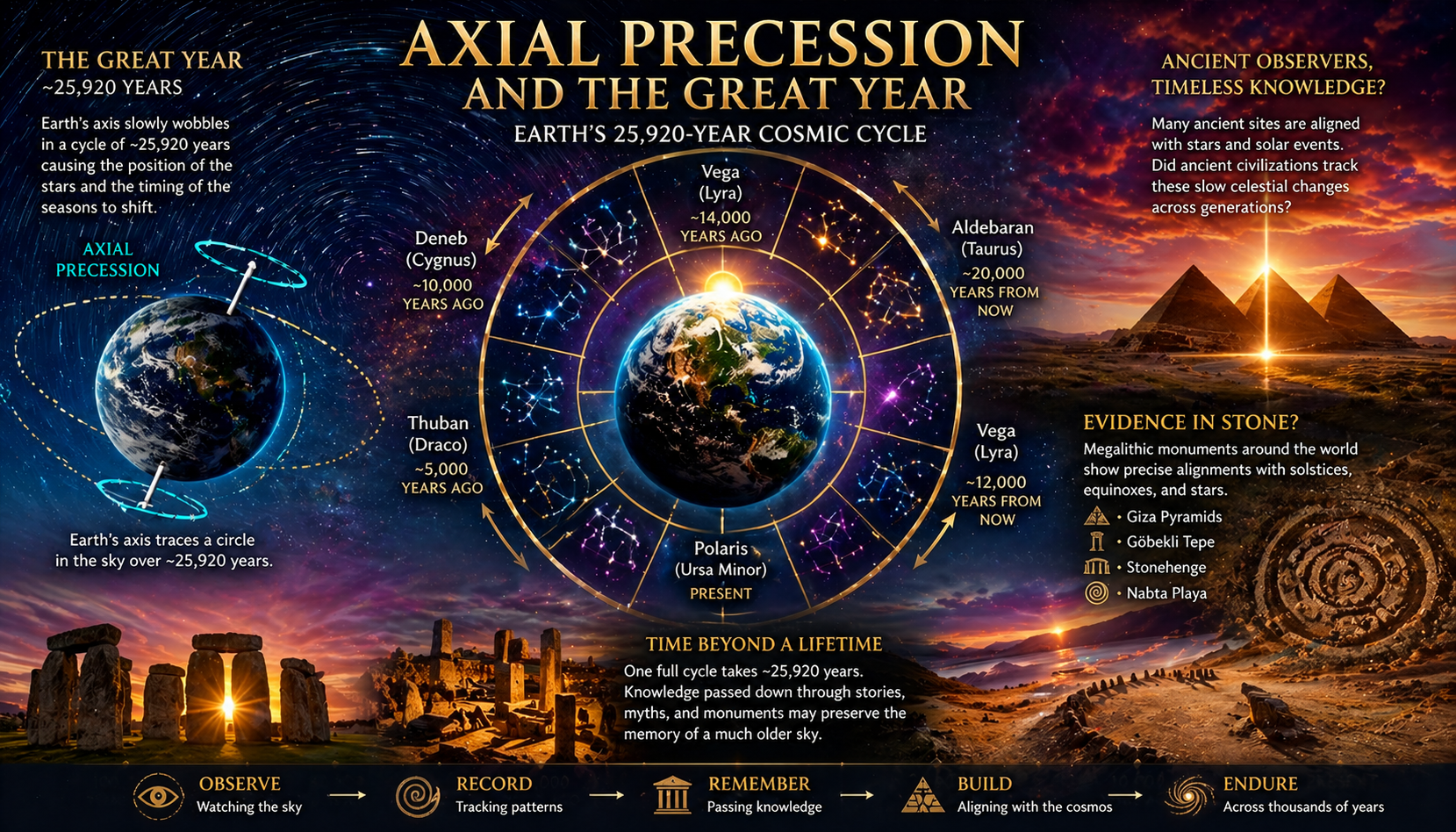
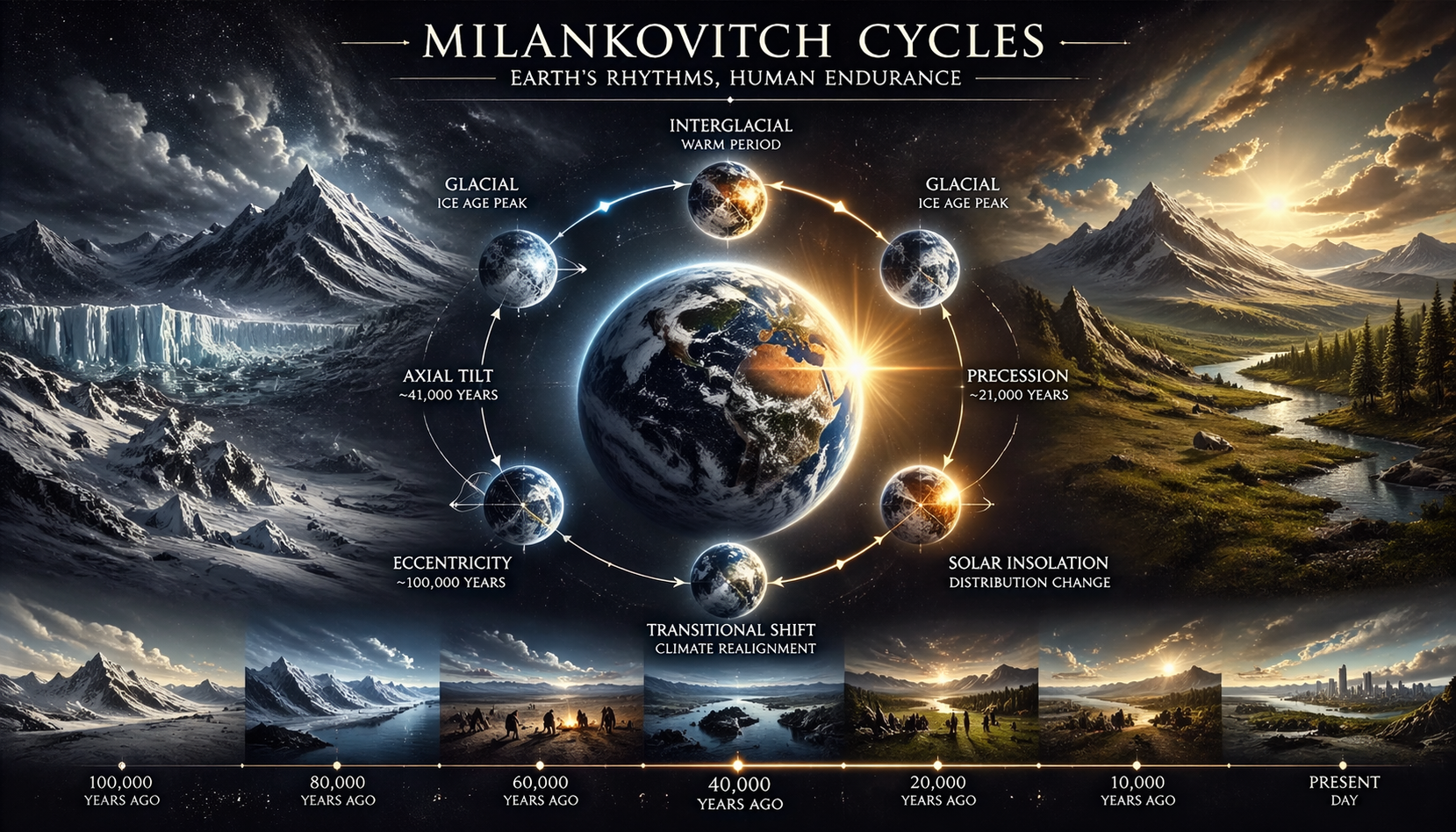
Some numerical patterns also appear in long-term astronomical cycles. The phenomenon known as the precession of the equinoxes causes the Earth’s rotational axis to shift slowly over thousands of years, moving the position of the equinoxes relative to the stars.
Ancient scholars may have recognized aspects of this phenomenon through careful observation of stellar positions over long periods of time.
Numbers associated with these cycles gradually became integrated into symbolic systems that connected cosmology, mythology, and timekeeping.
Sacred Numbers in Ancient Architecture
Sacred numbers appear prominently in the design of many ancient structures. Temples, pyramids, and ceremonial complexes often exhibit geometric proportions and spatial relationships that reflect numerical patterns.
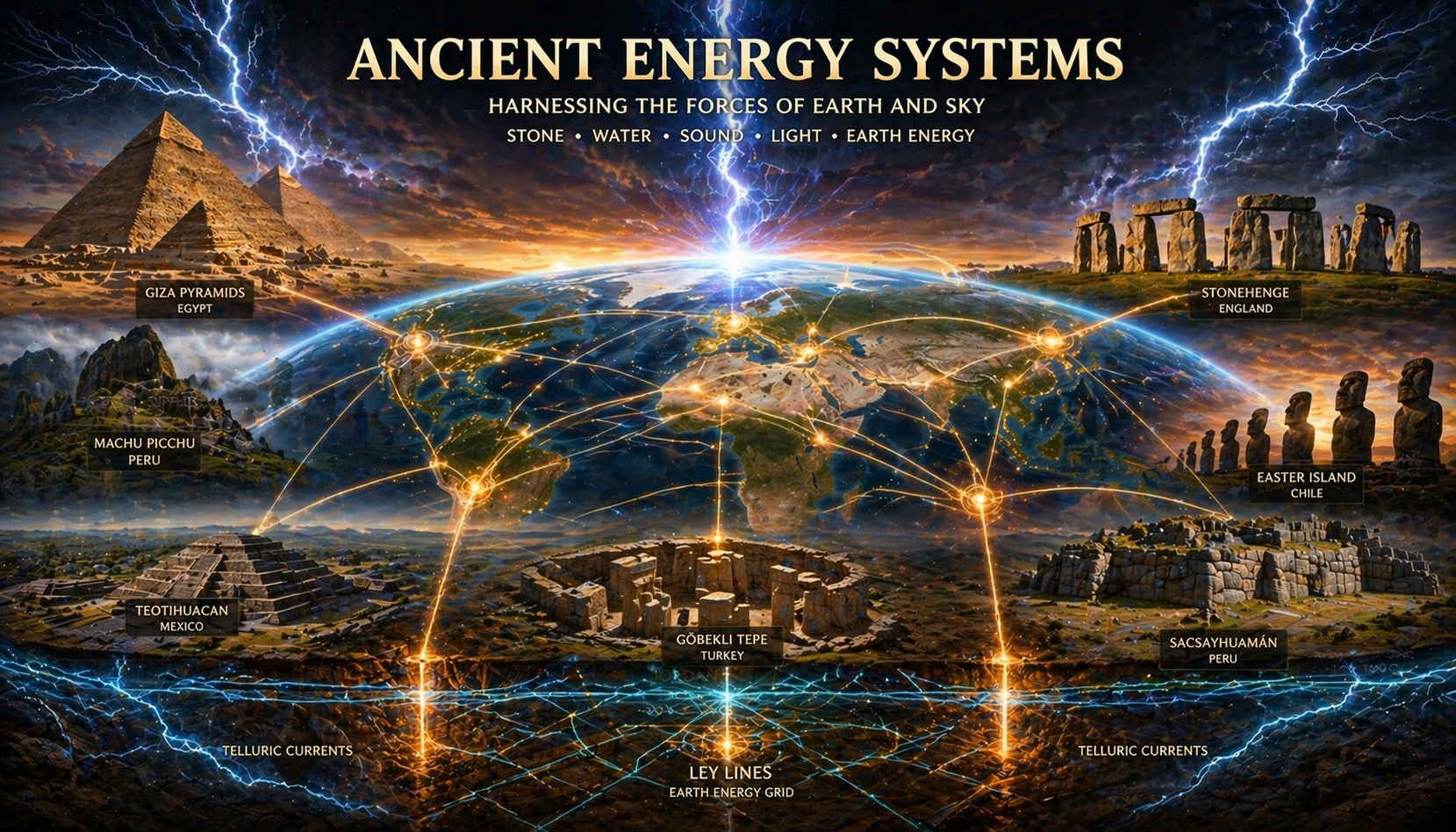
In some cases, architectural alignments correspond with astronomical events such as solstices or equinoxes. These alignments suggest that ancient architects integrated observational astronomy into the design of monumental structures.
Measurements within certain monuments appear to correspond with numerical ratios that also occur in geometry and mathematics. Some researchers argue that these patterns may reflect intentional design principles rooted in symbolic cosmology.
Architecture therefore served not only as physical construction but also as a medium through which sacred numbers could be expressed visually and spatially.
Through the use of geometry, measurement, and orientation, ancient builders may have attempted to create structures that mirrored cosmic order.
Geometry and the Mathematical Language of the Cosmos
The relationship between sacred numbers and geometry forms one of the most intriguing aspects of ancient mathematical traditions. Geometric shapes arise from numerical relationships that define their angles, proportions, and symmetries.
Triangles, squares, circles, and pentagons all possess mathematical properties that can be expressed through numerical ratios. These shapes appear throughout nature, from crystalline structures to biological growth patterns.
Ancient philosophers often viewed geometry as the bridge between abstract mathematics and the physical world. By studying geometric forms, scholars believed they could uncover principles that governed both natural structures and cosmic order.
When sacred numbers are expressed through geometry, they become visible patterns that can be observed in architecture, art, and natural phenomena.
Sacred Numbers and the Measurement of the Earth
Some researchers have suggested that ancient civilizations possessed sophisticated knowledge about the dimensions of the Earth and may have encoded this knowledge within systems of measurement.
Ancient units of length sometimes appear to correspond with astronomical observations or geometric ratios. These relationships have led some scholars to speculate that early cultures may have developed standardized measurement systems based on natural constants.
Although the evidence for these theories remains debated, the possibility that sacred numbers were integrated into systems of geographic measurement continues to attract interest among historians and researchers.
Sacred Numbers in Mythology and Religious Narratives
Mythological traditions across many cultures contain recurring numerical patterns that structure stories about creation, transformation, and cosmic order.
The number seven appears frequently in religious traditions and mythological narratives, often symbolizing completeness or divine structure.
The number twelve commonly appears in celestial hierarchies and systems that organize the heavens.
Other numbers, such as forty or seventy-two, appear in narratives associated with transformation, testing, or long periods of transition.
These recurring patterns suggest that mythological storytelling may have served as a way to preserve cosmological knowledge through symbolic narratives.
Cross-Cultural Patterns in Numerical Symbolism
One of the most intriguing aspects of sacred numbers is their appearance across civilizations that developed independently from one another.
Similar numerical patterns appear in cultures from the Mediterranean to South Asia, from East Asia to the Americas. While the meanings attached to these numbers often differ, the recurrence of the same numerical structures suggests that early societies may have drawn inspiration from shared observations of natural cycles.
The human tendency to identify patterns likely played an important role in the development of these symbolic systems.
Conclusion: The Enduring Mystery of Sacred Numbers
Sacred numbers continue to fascinate researchers because they reveal how ancient civilizations combined mathematics, observation, and philosophical reflection in their attempts to understand the universe. Whether these numerical patterns emerged independently in different cultures or were transmitted through long-lost traditions remains an open question.
What remains clear is that many early societies believed numbers expressed the fundamental order of reality. Through architecture, mythology, astronomy, and philosophy, sacred numbers became a language through which ancient scholars attempted to describe the structure of the cosmos.
Even in the modern world, the enduring presence of numerical patterns in science, mathematics, and nature continues to remind us that the relationship between numbers and the universe remains one of the most profound mysteries humanity has ever explored.
Additional Reading and Sources
Livio, Mario. The Golden Ratio: The Story of Phi (link)
Ruggles, Clive. Ancient Astronomy: An Encyclopedia of Cosmologies and Myth (link)
Krupp, Edwin. Echoes of the Ancient Skies (link)
Critchlow, Keith. Sacred Geometry: Philosophy and Practice.
Hannah, Robert. Time in Antiquity.
Ancient360 Origins of Numerology (link)
Ancient360 Ancient Number Systems (link)