Reframing the Purpose of Ancient Structures
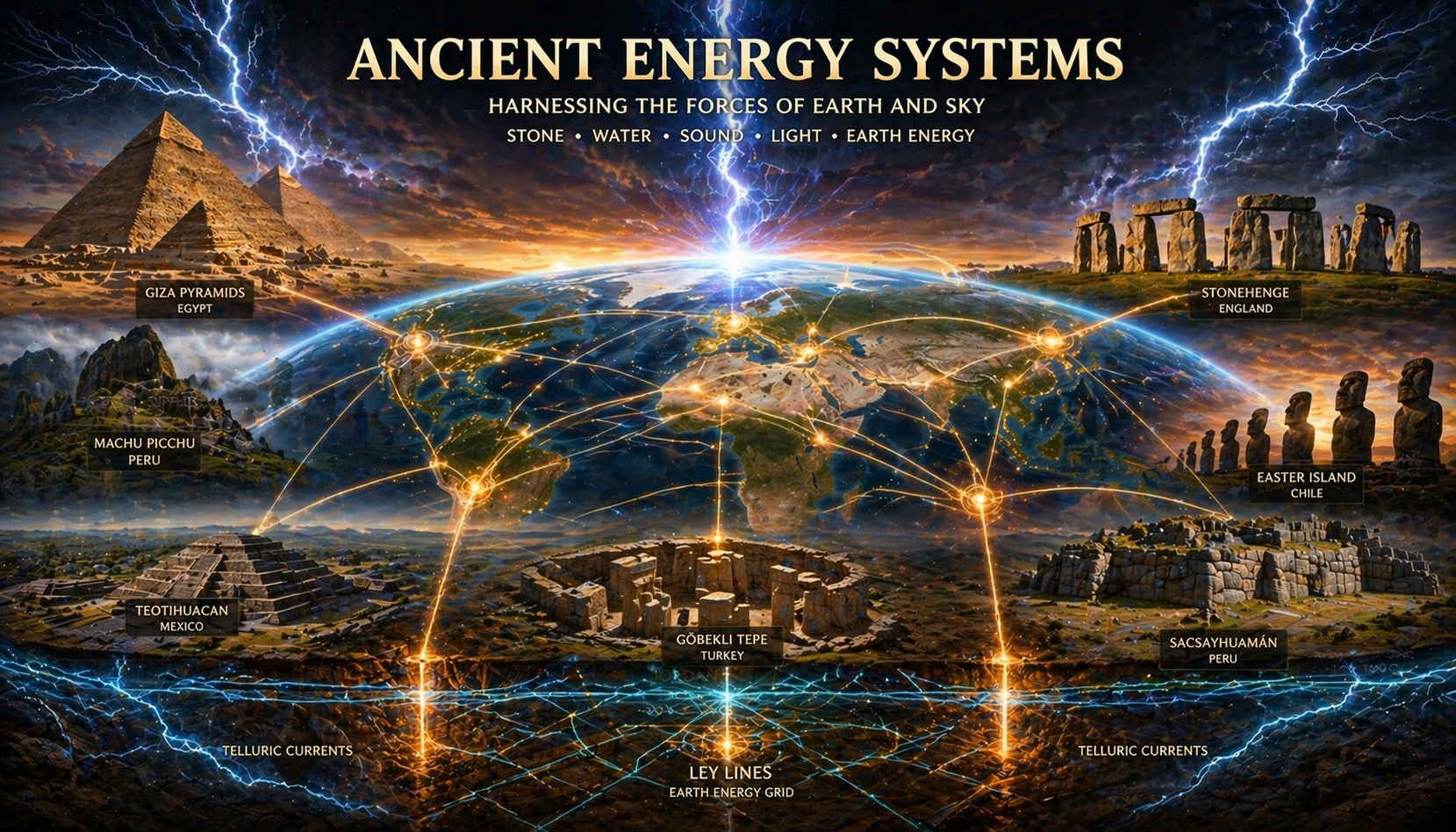
The study of ancient energy systems begins with a fundamental reconsideration of purpose. For generations, monumental structures have been interpreted primarily as ceremonial, symbolic, or funerary in nature. While these interpretations are supported by cultural and archaeological context, they may not fully account for the physical characteristics observed across many ancient sites. Increasingly, attention is being drawn to patterns involving material selection, structural precision, environmental integration, and recurring design features that suggest a deeper functional dimension—one that may involve interaction with natural forces such as vibration, water flow, light, and electromagnetic phenomena (Ancient Construction Systems Engineering link).
This perspective does not claim that ancient civilizations possessed modern electrical technologies, nor does it attempt to impose contemporary frameworks onto the past. Instead, it opens the possibility that early builders developed systems—intentionally or as a byproduct of design—that interacted with their environment in ways that are not yet fully understood. The concept of ancient energy systems therefore emerges not as a definitive conclusion, but as a structured line of inquiry grounded in observable features and interdisciplinary analysis.
As research expands through both academic and independent channels, a more complex picture begins to take shape—one in which ancient construction may represent not only architectural achievement, but also an applied understanding of natural principles that continues to invite investigation (Ancient Construction Engineering Before Civilizations link).
Structures as Systems: Beyond Monumentality
One of the defining characteristics of sites associated with ancient energy systems is their systemic nature. Rather than existing as isolated constructions, many of these sites appear to operate as integrated environments, where multiple elements interact in coordinated ways. Stone, water, orientation, and spatial geometry are not randomly combined, but arranged in patterns that suggest intentional design (Ancient Construction Similiraties Global Parallels link).
This systemic perspective shifts the focus from individual features to relationships. A stone block is no longer viewed solely as a structural component, but as part of a larger configuration that may influence how forces move through the environment. Similarly, the placement of a structure within a landscape may reflect not only accessibility or visibility, but also interaction with natural gradients such as elevation, water flow, or solar exposure.
When viewed through this lens, ancient energy systems begin to resemble engineered environments—spaces where multiple variables are aligned to produce consistent outcomes. Whether those outcomes were fully understood by their creators, or emerged through iterative refinement, remains an open question. What is clear is that the level of coordination involved suggests a degree of intentionality that extends beyond simple construction (Ancient Construction Geometry link).
Stone as a Medium: Material Selection and Properties
Stone is the primary medium through which ancient energy systems are expressed, and its selection appears to be far from arbitrary. Across multiple sites, specific types of stone are chosen repeatedly, often with properties that extend beyond durability. Granite, limestone, and basalt, for example, each possess distinct physical characteristics that influence how they respond to pressure, vibration, and environmental conditions (Ancient Energy Systems: Myth or Technology? link).
Research into material properties has highlighted the presence of quartz in certain stones, which under mechanical stress can exhibit measurable electrical effects. While it would be premature to conclude that ancient builders intentionally exploited such properties, the consistent use of specific materials invites further examination. At minimum, it suggests that stone selection was guided by more than availability alone.
Independent investigations, including those discussed by The Land of Chem, have explored how material composition may interact with structural design to produce measurable effects. These perspectives remain exploratory, yet they contribute to a broader understanding of how ancient energy systems might operate at the intersection of material science and environmental interaction (Lost Knowledge of the Ice Age Rewriting History link).
Precision as a Signature: Control Beyond Necessity
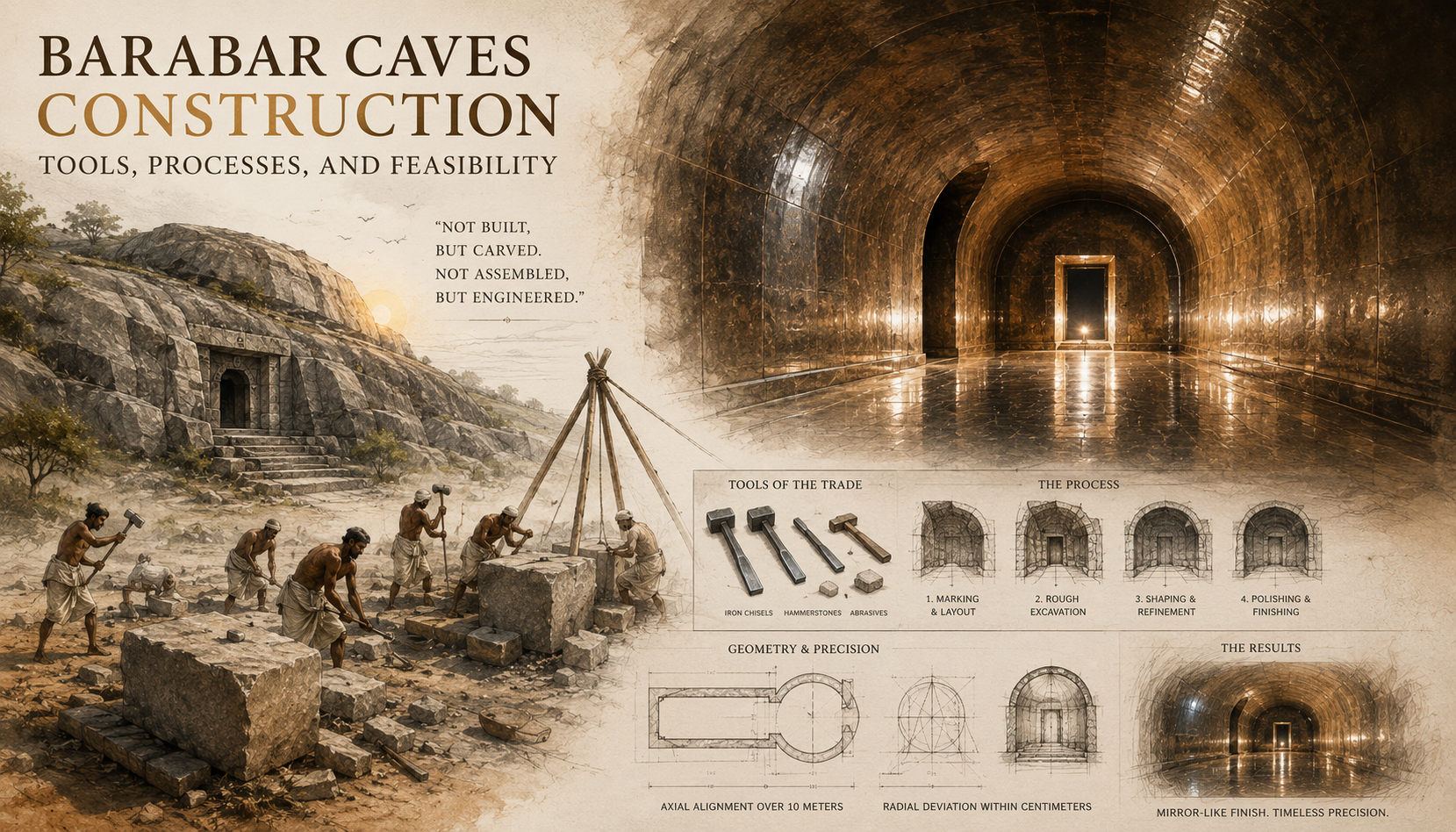
Precision is one of the most frequently cited features in discussions of ancient energy systems, particularly in relation to stone cutting and fitting. In many sites, surfaces are shaped with a level of accuracy that exceeds what is strictly necessary for structural stability. Joints are tight, angles are consistent, and surfaces are often finished to a high degree of smoothness.
From a conventional perspective, such precision can be explained through skilled craftsmanship and time-intensive methods. However, the consistency of these features across large scales raises questions about process efficiency and control. If precision is achieved repeatedly, it suggests the presence of reliable techniques and measurement systems that minimize variation.
Independent researchers, including those featured in analyses by UnchartedX and BAM Investigations, have documented surface characteristics and geometric consistency in sites such as the Barabar Caves. These observations highlight features that invite further technical evaluation, particularly when compared with known tools attributed to the same historical periods.
Rather than asserting alternative conclusions, these findings reinforce the idea that ancient energy systems may involve levels of control that are not yet fully accounted for within existing frameworks (Great Pyramid True Purpose link).
Water as a Dynamic Element
Water plays a recurring role in many sites associated with ancient energy systems, often appearing in ways that suggest functional integration rather than incidental presence. Channels, reservoirs, and proximity to natural water sources indicate that water was managed, directed, and possibly utilized as part of the system. From an engineering perspective, water can serve multiple roles:
- Transport medium
- Cooling agent
- Force multiplier through flow and pressure
The interaction between water and stone structures may also influence acoustic and vibrational behavior, creating conditions that differ significantly from dry environments. While these effects are well understood in modern contexts, their application in ancient settings remains underexplored.
Studies available through platforms such as ResearchGate have examined ancient irrigation and water management practices, demonstrating a high level of sophistication in controlling flow and distribution. Extending this understanding to ancient energy systems opens new avenues for interpreting how water may have contributed to broader functional outcomes (The Cosmic Code Decoding the Sky Temples link).
Acoustic Properties: Sound as a Physical Force
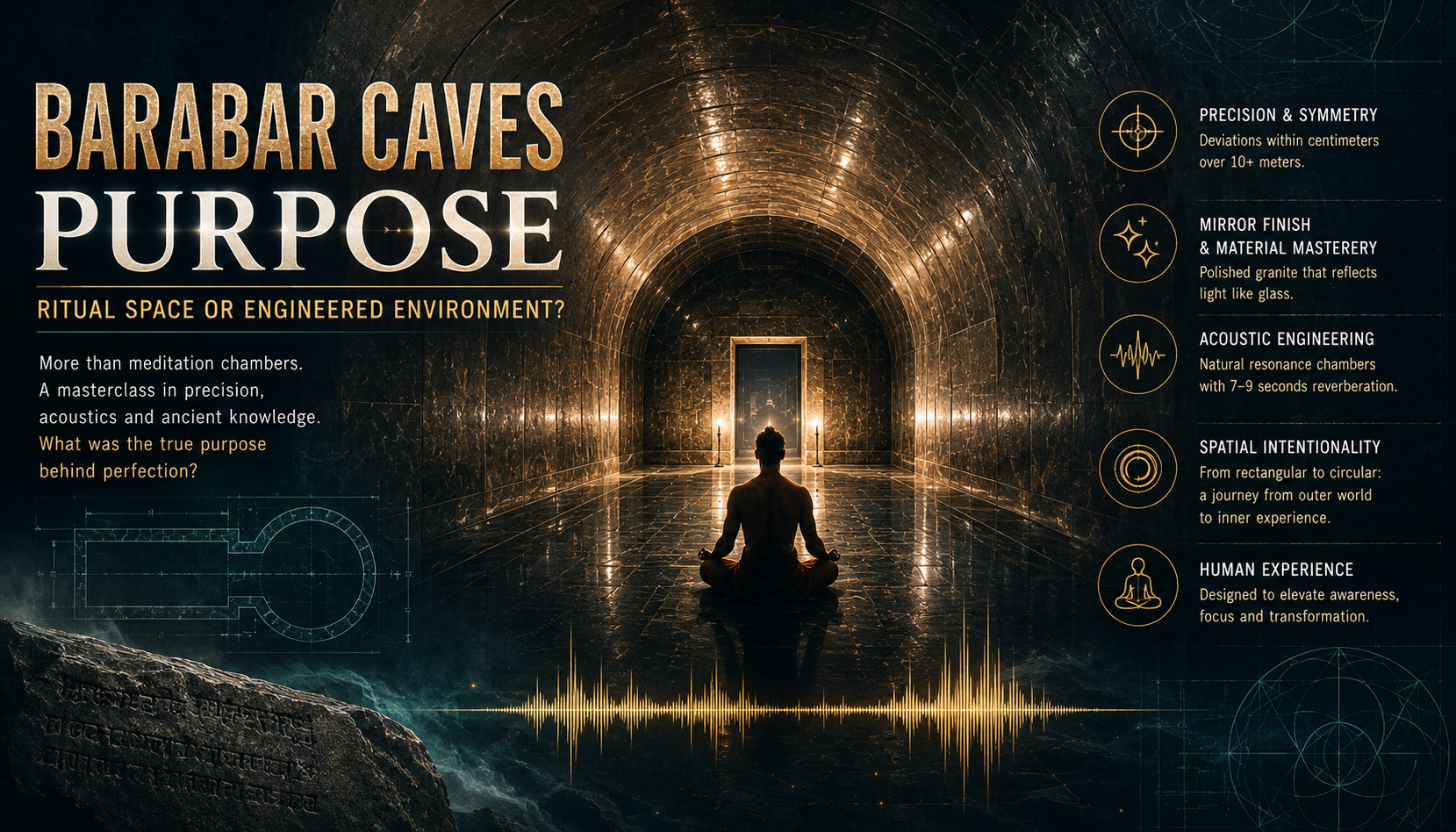
Acoustic behavior is another dimension that frequently appears in discussions of ancient energy systems. Certain structures exhibit resonance characteristics that amplify or sustain sound in distinctive ways. Chambers, corridors, and enclosed spaces can produce echoes, standing waves, or focused sound patterns that alter perception and potentially influence physical conditions.
The presence of such features does not necessarily imply intentional design for acoustic purposes. However, when combined with precision shaping and material selection, it becomes increasingly relevant to consider how sound interacts with the built environment.
Observations from independent documentation, including those associated with Megalithomania, have highlighted acoustic effects in various ancient sites. These accounts emphasize measurable phenomena—such as resonance and echo behavior—without requiring speculative interpretation.
In the context of ancient energy systems, acoustics represents a bridge between physical structure and dynamic interaction, suggesting that sound may have played a role beyond communication or ritual (Ancient Solar and Lunar Calendars link).
Light and Alignment: External Inputs
Light, particularly solar light, is a consistent feature in many ancient structures. Alignments with solstices, equinoxes, and cardinal directions indicate that builders were attentive to the movement of the sun and its interaction with architectural spaces.
In the framework of ancient energy systems, light can be understood as an external input—an environmental variable that interacts with the structure over time. Openings, corridors, and reflective surfaces may channel or concentrate light in specific ways, creating patterns that repeat on daily or seasonal cycles.
While these alignments are often interpreted symbolically, their precision suggests that they may also have served functional purposes, such as marking time or regulating activity within the structure. Whether these functions extend into energetic interactions remains an open question, but the consistency of alignment reinforces the idea of intentional design (Ancient Measurement Systems link).
Knowledge Systems: Integration and Transmission
The complexity of ancient energy systems implies the existence of underlying knowledge systems that guided their design and construction. These systems would need to integrate multiple domains, including material behavior, geometry, environmental observation, and process control.
Such integration suggests that knowledge was not fragmented, but organized in a way that allowed different elements to be combined effectively. The transmission of this knowledge across generations would be essential, particularly for large projects that span extended periods.
The work of researchers such as John A. Burke and Andrija Puharich explores how environmental and structural factors may interact in ways that are not immediately apparent, contributing to a broader understanding of how ancient energy systems could function as integrated frameworks.
Re-evaluating the Narrative
The exploration of ancient energy systems does not require the rejection of established archaeological interpretations. Instead, it encourages a re-evaluation of how those interpretations are constructed and where they may be incomplete. By incorporating both mainstream research and independent observations, a more comprehensive picture can emerge—one that acknowledges uncertainty while remaining grounded in evidence.
This approach allows for the possibility that ancient structures served multiple purposes simultaneously, combining symbolic, practical, and potentially functional roles. It also highlights the importance of interdisciplinary analysis, bringing together perspectives from archaeology, engineering, physics, and environmental science.
Conclusion: Systems, Not Mysteries
The concept of ancient energy systems reframes ancient construction as a form of applied knowledge, where materials, geometry, and environment interact within structured systems. While many aspects of these systems remain uncertain, the consistency of observable features suggests that they were not accidental.
Rather than viewing ancient structures as isolated achievements or unexplained anomalies, it may be more productive to see them as expressions of integrated design—systems that reflect a deep engagement with the natural world. This perspective does not diminish their cultural or symbolic importance, but instead expands their significance by introducing additional layers of functionality.
Future research, particularly when grounded in interdisciplinary collaboration, may help clarify whether these patterns represent intentional engineering, emergent properties, or a combination of both. Advances in material science, acoustic analysis, and environmental modeling offer promising tools for revisiting ancient sites with new questions and methods.
As investigation continues, the goal is not to impose modern assumptions onto the past, but to better understand the principles ancient builders may have observed and applied. In doing so, these structures may come to be recognized not only as monuments of history, but as enduring examples of complex systems thinking in early human societies.
References and Further Reading
John A. Burke and Andrija Puharich — Seed of Knowledge, Stone of Plenty (link)
ResearchGate — Studies on ancient engineering and organization (link)
JSTOR – Archaeology and ancient engineering (link)
Andrija Puharich – The Sacred Mushroom
Christopher Dunn – The Giza Power Plant (link)
Vance Tiede – Research on acoustics in megalithic sites (link)
UnchartedX – Focus on precision stonework and ancient systems (e.g., Egypt, Peru link)
The Land of Chem – Material and chemical perspectives (link)
Megalithomania – Site documentation and acoustics (link)
BAM Investigations – Field measurements and comparisons (link)
Pyramids as Machines: What were they? (Part1 – Part2 – Part3)