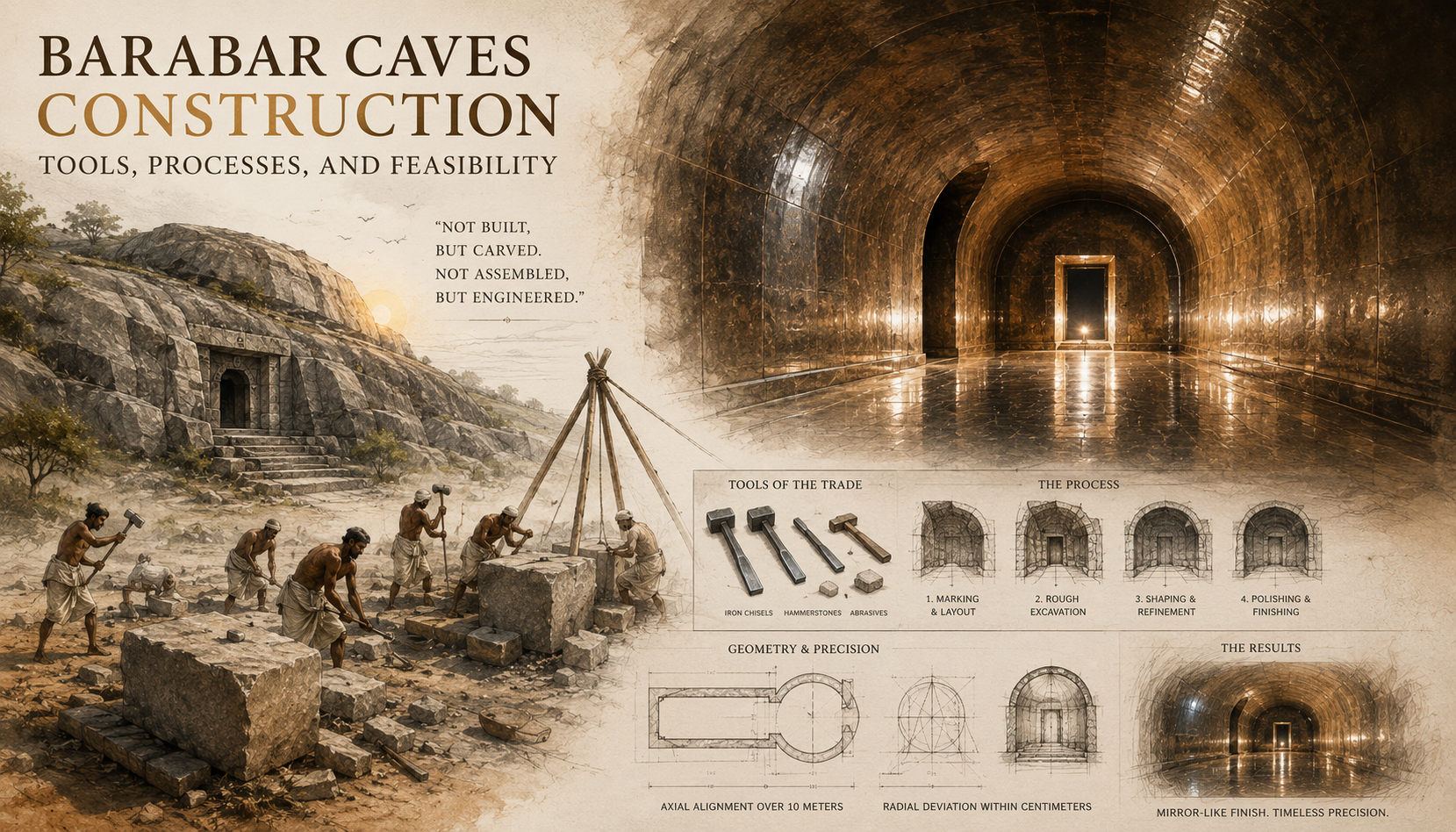
Prehistoric Construction Systems Engineering as an Integrated Discipline
The study of prehistoric construction systems engineering, when approached as a unified field of inquiry rather than a fragmented collection of archaeological observations, reveals a pattern of structured decision-making that appears to extend far beyond what is traditionally described as simple trial-and-error learning, suggesting instead that ancient builders may have operated within coherent systems of knowledge that guided their ability to design, organize, and execute large-scale construction projects with a level of consistency that remains impressive even when evaluated through the lens of modern engineering principles (Ancient Construction Project Management Systems link).
In examining early monumental architecture across different geographical regions, it becomes increasingly evident that construction was rarely a spontaneous or isolated act, but rather the culmination of interconnected processes involving planning, material selection, labor organization, and long-term spatial reasoning, all of which point toward an implicit form of engineering logic embedded within prehistoric construction systems engineering practices long before the emergence of formal scientific notation or theoretical modeling (Ancient Construction Materials: Lost Techniques link).
Structural Awareness and Early Engineering Logic
One of the most compelling aspects of prehistoric construction systems engineering is the apparent understanding of structural stability demonstrated in ancient monuments, where massive stone elements were positioned in ways that suggest deliberate attention to load distribution, balance, and long-term endurance, even in the absence of written mathematical frameworks or explicit engineering documentation (Prehistoric Construction Systems: Engineering Before Civilization link).
The enduring stability of structures such as pyramidal complexes and large-scale megalithic arrangements implies that builders were not only aware of the immediate physical properties of materials but also capable of anticipating long-term environmental interactions, including erosion, seismic activity, and gradual subsidence, all of which would have required a form of predictive reasoning that aligns closely with what modern engineering would classify as systems-based design thinking.
Rather than relying on isolated experimentation, prehistoric construction systems engineering appears to have incorporated accumulated experiential knowledge, transmitted across generations through practice-based learning environments in which repetition, refinement, and observation collectively contributed to increasingly sophisticated construction outcomes over extended periods of cultural development (Construction Logistics Organizing the Impossible link).
Planning, Geometry, and Spatial Organization
Another defining feature of prehistoric construction systems engineering lies in the use of spatial organization and geometric planning, which can be observed in the consistent alignment and proportional relationships present in many ancient structures, where symmetry, orientation, and scale appear to have been carefully controlled rather than arbitrarily determined (Sacred Numbers in Megalithic Structures link).
The repetition of geometric patterns across widely separated regions suggests that prehistoric builders may have developed intuitive or practical systems of measurement that enabled them to replicate architectural forms with a high degree of accuracy, even in the absence of standardized measurement units or formal drafting tools, thereby indicating that spatial reasoning played a central role in the broader framework of prehistoric construction systems engineering (Ancient Construction Geometry: Planning Before Measurement link).
In this context, geometry should not be interpreted merely as a mathematical abstraction, but rather as a functional tool embedded within construction practice itself, serving as a bridge between conceptual design and physical execution, allowing builders to translate abstract spatial relationships into durable material forms that could be consistently reproduced across different environmental and cultural conditions (Sacred Geometry and Megalithic Structures link).
Emergence of Systemic Thinking in Ancient Construction
The presence of systemic thinking within prehistoric construction systems engineering becomes particularly apparent when considering the interconnected nature of design decisions, where changes in one aspect of construction—such as material selection or foundation depth—would inevitably influence other aspects of the building process, including structural load distribution, labor requirements, and transport logistics (Ancient Construction Similarities: Global Parallels link).
This interdependence suggests that ancient builders may have operated with an implicit understanding of construction as a unified system rather than a collection of independent tasks, meaning that successful project completion required continuous coordination between multiple domains of knowledge, each contributing to the stability and functionality of the final structure.
Such systemic integration implies that prehistoric construction systems engineering was not limited to physical construction alone, but also encompassed planning methodologies that accounted for environmental constraints, resource availability, and temporal sequencing, thereby reflecting a level of organizational complexity that challenges simplistic interpretations of early technological development (Prehistoric Construction Systems Megalithic Engineering link).
Continuity of Knowledge and Early Engineering Culture
The continuity observed in construction techniques across extended historical periods suggests that prehistoric construction systems engineering was supported by stable cultural mechanisms for knowledge transmission, likely involving apprenticeship-based learning systems in which technical skills were passed down through direct participation in building activities rather than through formalized written instruction (Ancient Construction Materilas: Lost Techniques link).
This form of embodied knowledge transfer would have allowed construction practices to evolve gradually while preserving essential structural principles, ensuring that each generation of builders could refine existing methods without losing the foundational logic that underpinned successful architectural outcomes.
In this sense, prehistoric construction systems engineering can be understood not only as a technical practice but also as a cultural system in which knowledge, skill, and material practice were deeply intertwined, forming a continuous lineage of engineering intelligence expressed through built environments that still persist in the archaeological record today (Ice Age Knowledge – Science Before the Younger Dryas link).
References and Further Reading
National Geographic — Ancient Engineering and Labor Systems
Journal of Archaeological Science — Construction Logistics Studies (link)
Archaeological Institute of America — Field Reports
Kerzner, Harold — Project Management: A Systems Approach (link)
Fletcher, Banister — A History of Architecture (link)
World Atlas — Ancient Architecture Materials (link)
Encyclopaedia Britannica — Geometry in Architecture (link)
National Geographic — Ancient Engineering and Alignments (link)