The Intelligence Behind Materials
The study of ancient construction materials introduces a critical yet often underestimated dimension of prehistoric construction systems, one that shifts attention away from the visible grandeur of monuments and toward the underlying intelligence required to select, manipulate, and integrate materials in ways that ensured both structural integrity and long-term durability. While modern engineering relies on formalized material science, standardized testing, and industrial processing, ancient builders operated within a framework that appears to have been based on empirical observation, iterative refinement, and a deep familiarity with the natural properties of stone, earth, and other available resources (Ancient Construction Geometry – Planning Before Measurements link).
Across multiple civilizations, from the limestone casing of the Egyptian pyramids to the andesite blocks of the Andes and the sandstone constructions of the Near East, we observe a consistent pattern: materials were not chosen arbitrarily, but according to specific criteria that balanced strength, workability, environmental resistance, and logistical feasibility. This raises an important question that extends beyond simple construction techniques—were ancient builders merely experimenting with materials, or were they applying a form of knowledge that functioned as an early, non-formalized material science system?
Stone Selection — Beyond Availability
At first glance, the selection of stone in ancient construction might appear to be dictated primarily by proximity, yet a closer examination of ancient construction materials reveals a far more nuanced approach in which geological characteristics played a decisive role. Builders demonstrated an apparent understanding of hardness, grain structure, fracture behavior, and weathering resistance, selecting different types of stone for different functional roles within the same structure (Prehistoric Construction Logisitcs – Organizing the Impossible link).
In Egypt, for example, softer limestone was often used for the core of pyramids due to its relative ease of extraction and shaping, while harder granite was reserved for structural or ceremonial elements requiring greater durability. Similarly, in the Andes, builders selected stones that could be precisely shaped and interlocked, creating structures capable of withstanding seismic activity without the need for mortar. These decisions suggest that ancient construction systems incorporated a level of material discrimination that goes beyond opportunistic use, indicating instead a deliberate and informed selection process.
This raises the possibility that knowledge of material properties was accumulated over long periods through observation and practice, forming a body of empirical understanding that guided construction decisions even in the absence of written documentation or formal scientific frameworks.
Polygonal Masonry — Precision Without Binding Agents
One of the most striking examples of advanced use of ancient construction materials is polygonal masonry, particularly in regions such as Peru, where stones are shaped to fit together with extraordinary precision, forming complex interlocking patterns without the use of mortar. The technical challenge of achieving such fits lies not only in shaping individual stones but also in ensuring that each piece conforms perfectly to its neighbors, creating a cohesive structure that distributes stress evenly (Prehistoric Construction Systems – Megalithic Engineering link).
The durability of these constructions, many of which have survived earthquakes that damaged later colonial buildings, suggests that the techniques employed were not only effective but optimized for environmental conditions. The absence of binding agents eliminates potential نقاط of weakness, while the irregular shapes of the stones allow for slight movement under stress, preventing catastrophic failure.
The methods used to achieve this level of precision remain a subject of ongoing investigation. While experimental archaeology has demonstrated that such results can be achieved with relatively simple tools given sufficient time and skill, the consistency observed across large structures raises questions about the efficiency and scalability of these techniques, and whether additional methods—now lost or not yet fully understood—may have been employed.
Surface Treatment and Finishing Techniques
Beyond the structural aspects, ancient construction materials also reveal sophisticated approaches to surface treatment and finishing, where aesthetic considerations intersect with functional requirements. In many ancient structures, stone surfaces exhibit a level of smoothness and uniformity that suggests careful finishing processes, possibly involving abrasion, polishing, or other techniques designed to refine the surface (First Astronomers Mapping the Sky Before Civilizations link).
In Egypt, the outer casing stones of the pyramids were polished to a high degree of smoothness, creating reflective surfaces that may have had both symbolic and practical functions, such as reducing erosion or enhancing visibility. Similarly, in other regions, carved reliefs and inscriptions demonstrate precise control over material removal, indicating a level of craftsmanship that extends beyond basic construction into the realm of fine workmanship.
These finishing techniques imply not only skill but also the availability of tools and methods capable of achieving consistent results across large surfaces. While the exact processes may vary, the evidence suggests that ancient builders invested significant effort in refining the appearance and performance of their materials, integrating aesthetics into the broader construction system.
Geopolymers and Alternative Material Hypotheses
In recent decades, some researchers have proposed that certain ancient constructions may have utilized forms of synthetic or reconstituted stone, often referred to as geopolymers, challenging the assumption that all stone blocks were carved directly from natural sources. Within the discussion of ancient construction materials, these hypotheses remain controversial and are subject to ongoing debate within the scientific community (Prehistoric Symbols Lost Knowledge Before Written History link).
Proponents argue that certain features—such as the apparent uniformity of blocks or the presence of microscopic characteristics inconsistent with natural stone—could indicate the use of casting techniques, where crushed stone and binding agents were combined to form blocks in situ. Critics, however, maintain that the available evidence can be explained through conventional quarrying and shaping methods, emphasizing the need for rigorous analysis and caution in interpreting results.
From an investigative standpoint, the value of these hypotheses lies not necessarily in their immediate acceptance, but in their ability to expand the scope of inquiry, encouraging a more detailed examination of material properties and construction techniques. Whether or not geopolymers were used, the discussion highlights the complexity of ancient construction materials and the possibility that some aspects of their use have yet to be fully understood.
Durability and Environmental Adaptation
A defining characteristic of ancient construction materials is their remarkable durability, with many structures remaining intact after thousands of years of exposure to environmental conditions that would degrade less carefully selected or processed materials. This longevity suggests that ancient builders were not only concerned with immediate construction needs but also with the long-term performance of their materials (Sacred Geometry as Universal language link).
Factors such as resistance to erosion, thermal expansion, moisture absorption, and biological growth would all influence material performance over time. The ability to select and prepare materials that could withstand these challenges indicates a level of foresight and environmental awareness that aligns with modern principles of durability and sustainability.
In some cases, the placement and orientation of materials within a structure may also contribute to their longevity, with certain stones positioned to minimize exposure to damaging conditions. This integration of material selection and structural design reflects a holistic approach to construction, where each component is considered in relation to the whole.
Tool Interaction and Material Manipulation
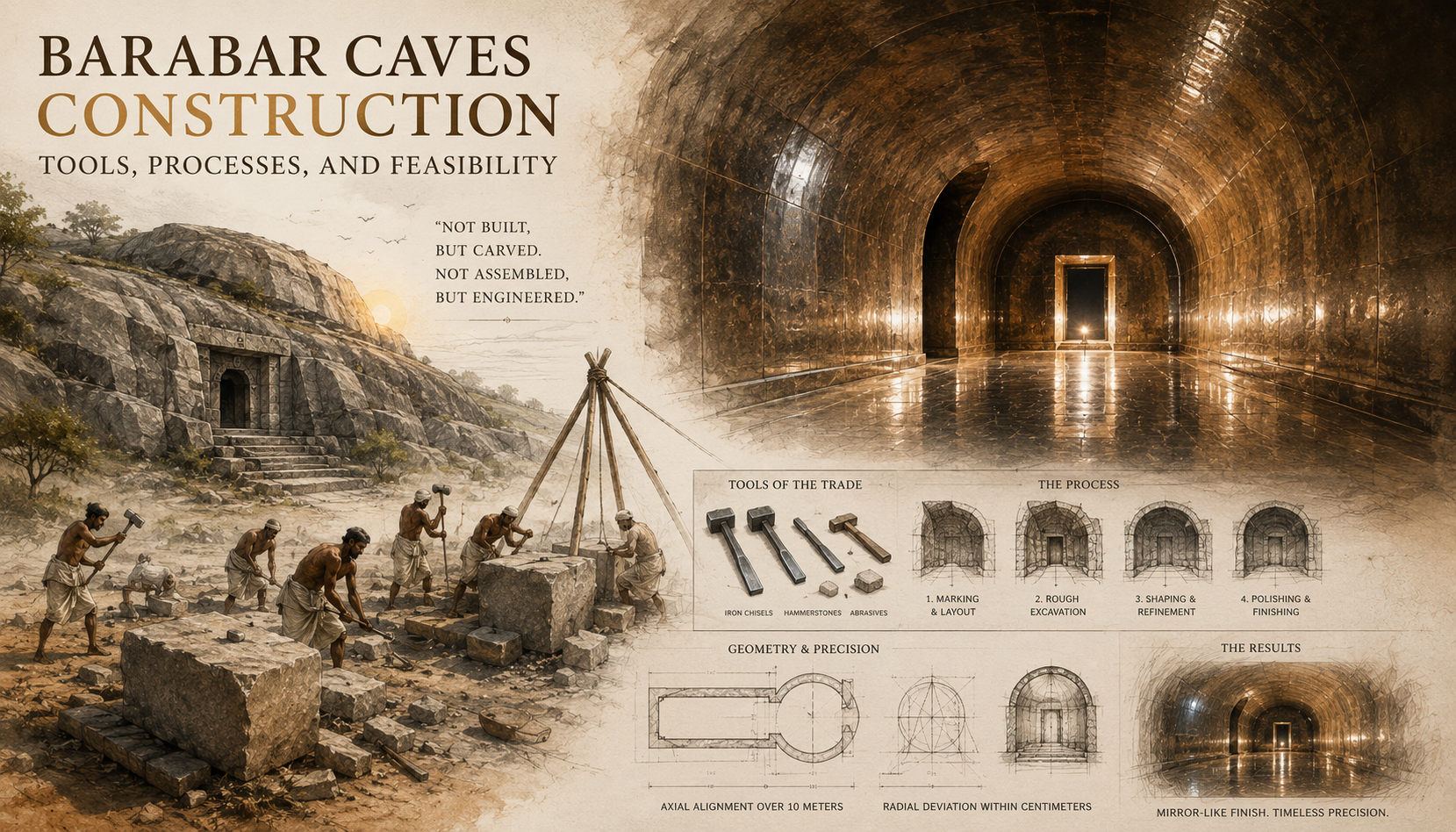
The relationship between tools and ancient construction materials is a critical factor in understanding how these materials were shaped and assembled. The hardness and composition of stone determine the types of tools that can be used effectively, as well as the techniques required for cutting, shaping, and finishing.
Evidence of tool marks on ancient stones provides insight into the methods employed, revealing patterns of cutting, grinding, and polishing that can be analyzed to infer the types of tools used. While many of these marks are consistent with known tool types, such as copper chisels or stone hammers, some features—such as extremely smooth surfaces or precise कट lines—continue to be the subject of investigation.
It is important to approach these observations with scientific caution, recognizing that multiple explanations may exist and that the absence of direct evidence for certain tools does not necessarily imply their existence. However, the interaction between tools and materials remains a key area for research, offering potential insights into the capabilities and limitations of ancient construction systems.
Loss of Techniques — A Fragile Knowledge System
One of the most compelling aspects of ancient construction materials is the possibility that some techniques used in their manipulation have been lost over time. Unlike physical structures, which can endure for millennia, knowledge systems are inherently fragile, particularly when they rely on oral transmission or specialized expertise concentrated within a limited group of individuals.
Historical events such as environmental changes, population disruptions, or the destruction of knowledge centers—such as libraries or workshops—can lead to the loss of technical knowledge, leaving behind only the آثار of what was once a more complete system. This raises the possibility that certain methods used in ancient construction are no longer fully understood, not because they were beyond human capability, but because the continuity of knowledge was interrupted (Sacred Numbers Measurement System link).
Within this framework, the study of ancient construction materials becomes not only an investigation of past techniques but also an attempt to reconstruct fragments of a larger system, piecing together evidence from surviving structures, tool marks, and material analysis to approximate the methods that were once employed.
Conclusion: Matter as Knowledge
Ancient construction materials represent more than the physical components of prehistoric structures; they embody a form of knowledge that integrates observation, experimentation, and application into a coherent system capable of producing enduring results. By examining how materials were selected, shaped, and used, we gain insight into the intellectual frameworks that guided ancient builders, revealing a level of sophistication that challenges simplistic narratives of technological progression.
The possibility that some of this knowledge has been lost adds an additional layer of complexity, inviting further research and encouraging a more open yet critical approach to interpreting the evidence. As new analytical techniques continue to emerge, from microscopic analysis to advanced imaging, the study of ancient construction materials will likely yield new insights, contributing to a deeper understanding of how early human societies engaged with the physical world.
References and Further Reading
Encyclopaedia Britannica — Building Materials in Antiquity
Journal of Archaeological Science — Stone Analysis Studies
National Geographic — Ancient Engineering Materials
Davidovits, Joseph — Geopolymer Research (Critical Perspective)
Archaeological Institute Reports — Andean Masonry
World Atlas — Ancient Architecture Materials (link)
Encyclopaedia Britannica — Geometry in Architecture (link)
National Geographic — Ancient Engineering and Alignments (link)
JSTOR — Megalithic Geometry Studies
Archaeological Reports — Giza Plateau Survey (link)
Ruggles, Clive — Ancient Astronomy: An Encyclopedia of Cosmologies and Myth (link)