Managing Complexity Before Management Existed
The concept of ancient construction project management introduces one of the most overlooked yet intellectually compelling dimensions of prehistoric construction systems, shifting the analytical focus away from tools and materials toward the coordination of complexity, where large-scale building efforts required not only engineering capability but also structured organization, strategic planning, and sustained execution over extended periods of time. While modern project management relies on formal methodologies, standardized processes, and digital tools, ancient civilizations operated without these frameworks, yet consistently delivered monumental projects that demanded precision, coordination, and resilience.
When examining constructions such as the pyramids of Egypt, the urban systems of the Indus Valley, or the monumental complexes of Mesoamerica, it becomes increasingly difficult to attribute their realization solely to spontaneous organization or unstructured labor (Ancient Construction Similiarities: Global Parallels link). Instead, the evidence suggests the existence of implicit systems—proto-management frameworks—that governed the allocation of resources, the sequencing of tasks, and the coordination of human effort. These systems may not have been documented in written form, but their remains are embedded in the scale, consistency, and durability of the structures themselves, offering a window into a level of organizational intelligence that predates formal theory yet aligns with many of its principles (Ancient Construction Materials Lost Techniques link).
Defining the Scope: What Needed to Be Managed
At its core, ancient construction project management required the coordination of multiple variables that remain central to modern project execution: scope, time, cost, resources, risk, and quality. Each of these elements introduces its own constraints and dependencies, creating a network of interrelated factors that must be balanced to achieve a successful outcome (Ancient Construction Geometry and Planning link).
The scope of ancient construction projects was often vast, involving not only the physical structure but also the supporting infrastructure necessary to sustain the workforce and maintain progress. Time constraints were influenced by environmental cycles, labor availability, and the long-term vision of the project, which in some cases extended across decades or generations. Resources included not only materials but also human expertise, tools, and environmental assets such as water and terrain.
Managing these variables without formal documentation or computational tools implies the existence of cognitive and organizational strategies capable of handling complexity in a systematic way. Whether through hierarchical leadership, distributed knowledge systems, or a combination of both, ancient builders appear to have developed methods for maintaining control over projects that would challenge even modern management frameworks (Ancient Construction Logistics Organizing the Impossible link).

Labor Systems: Structured Workforce Organization
One of the most critical components of ancient construction project management lies in the organization of labor, where the transformation of individual effort into coordinated productivity requires clear roles, responsibilities, and communication pathways. Large-scale construction projects demand specialization, with different groups focusing on tasks such as quarrying, transport, shaping, alignment, and assembly (Ancient Construction Systems Megalithic Engineering link).
The existence of such specialization implies a structured workforce in which skills are developed, recognized, and deployed according to project needs. This structure may have included supervisory roles responsible for overseeing specific phases of construction, ensuring that standards were maintained and that tasks were completed in the correct sequence. The presence of worker settlements near major construction sites suggests that labor was not only organized but also supported through systems of provisioning, housing, and possibly compensation.
Communication within this system would have been essential, enabling coordination between different teams and ensuring that changes in one area were reflected across the project. In the absence of written instructions, this communication likely relied on direct supervision, standardized practices, and shared understanding developed through training and repetition.
Time Management: Building Within Natural Cycles
Time management in ancient construction project management differs fundamentally from modern approaches, as it is closely tied to environmental and social cycles rather than continuous, clock-based scheduling. Agricultural societies, for example, would have needed to allocate labor between farming and construction, creating seasonal windows during which building activities could be intensified (Sacred Geometry as Universal Language link).
This introduces the concept of cyclical scheduling, where project timelines are aligned with predictable patterns such as seasons, weather conditions, and resource availability. Quarrying might be prioritized during dry periods, transport during times when terrain conditions are favorable, and assembly when sufficient labor is available. This approach requires long-term planning and the ability to anticipate future conditions, ensuring that each phase of the project is executed at the optimal time.
The duration of many ancient construction projects suggests that time management extended beyond immediate scheduling into multi-year or even multi-generational planning. Maintaining continuity across such timescales requires mechanisms for preserving knowledge, aligning objectives, and ensuring that successive groups of workers can continue the project without loss of direction.
Resource Allocation: Balancing Supply and Demand
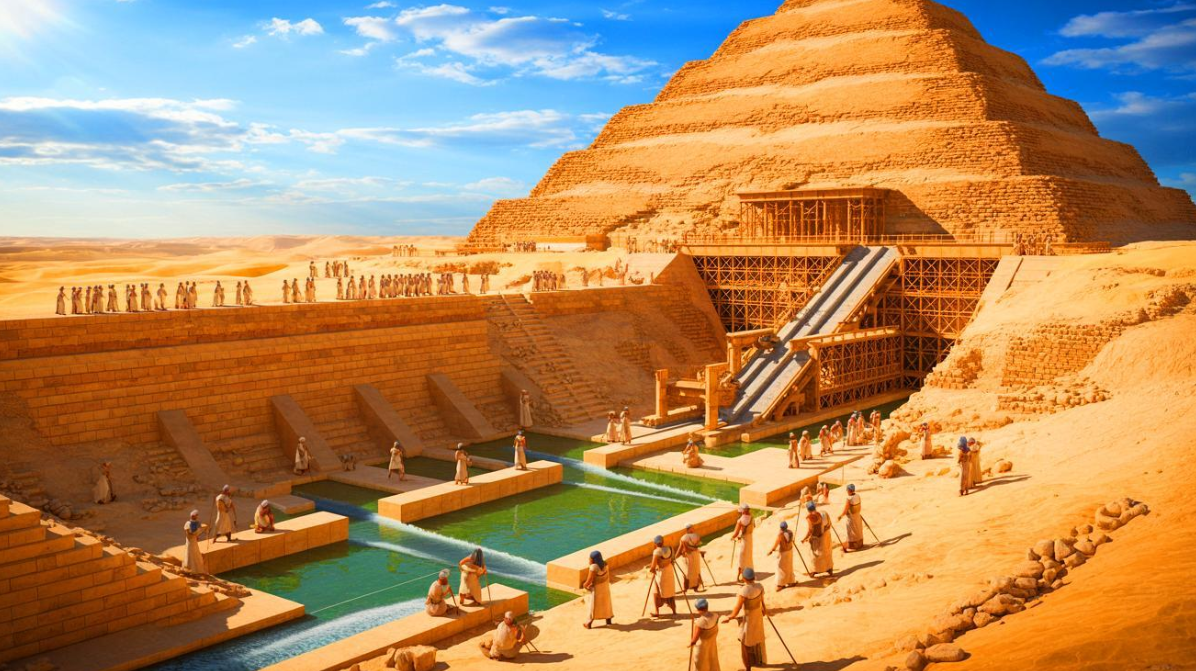
Effective resource allocation is a cornerstone of ancient construction project management, where the availability and distribution of materials, tools, and labor must be carefully balanced to avoid delays and inefficiencies. This involves not only securing resources but also managing their flow throughout the project, ensuring that each phase has access to what it needs when it needs it (Geometry of Ancient Structure: Earth Scaling and Cosmic Code link).
The logistics of transporting large quantities of stone, for example, require coordination between quarrying operations and construction sites, with intermediate stages such as storage and staging areas. Any disruption in this chain can have cascading effects, delaying subsequent tasks and increasing the overall duration of the project.
Resource allocation also extends to human resources, where the deployment of skilled workers must be optimized to maintain productivity without overburdening individuals or creating bottlenecks. This suggests the presence of decision-making processes that evaluate priorities, adjust allocations, and respond to changing conditions in real time.
Risk Management: Planning for Uncertainty
Uncertainty is an inherent aspect of any large-scale construction project, and ancient construction project management appears to have incorporated strategies for mitigating risk and adapting to unforeseen challenges. These risks could include structural failure, material defects, environmental disruptions, or logistical breakdowns, each of which has the potential to compromise the project (Sacred Numbers in Ancient Structures link).
Evidence of abandoned or modified structures indicates that ancient builders were willing to adjust their plans in response to changing conditions, suggesting a flexible approach to project management. This adaptability may have been supported by redundancy in design, allowing structures to remain stable even if certain elements did not perform as expected.
Risk management also involves anticipation, where potential issues are identified and addressed before they become critical. This could include selecting stable construction sites, testing materials, or designing structures to withstand environmental stresses. The ability to manage risk effectively contributes to the overall resilience of the construction system, enabling projects to reach completion despite uncertainty (Geometry of Pyramids and Earth Scalink link).
Quality Control: Maintaining Standards Without Documentation
Maintaining consistent quality across large-scale projects is a significant challenge, particularly in the absence of written specifications or standardized measurement systems. In ancient construction project management, quality control appears to have been achieved through a combination of skilled craftsmanship, supervision, and iterative refinement.
The precision observed in many ancient structures suggests that standards were clearly understood and consistently applied, even if they were not formally documented. This may have been facilitated by training systems in which experienced workers passed on techniques and expectations to less experienced individuals, ensuring continuity of practice.
Inspection and correction likely played a role as well, with supervisors or master builders evaluating work and making adjustments as needed. This process ensures that errors are identified early and corrected before they propagate, maintaining the overall integrity of the structure.
Knowledge Transfer: Continuity Across Generations
One of the most remarkable aspects of ancient construction project management is the ability to sustain projects and maintain knowledge across extended periods, including scenarios where construction spans multiple generations. This requires mechanisms for preserving and transmitting information, ensuring that the original vision and technical requirements are not lost over time.
In the absence of written records, knowledge transfer may have relied on oral traditions, apprenticeship systems, and symbolic representations embedded within the construction itself. Experienced individuals would play a key role as custodians of knowledge, guiding new workers and ensuring that techniques are applied correctly.
The continuity observed in construction styles and techniques across time suggests that these methods were effective, allowing complex projects to be completed despite the challenges of long-term execution. This highlights the importance of knowledge as a central component of project management, linking past, present, and future efforts within a coherent system.
 Proto-Project Management: A Precursor to Modern Frameworks
When analyzed through a modern lens, ancient construction project management exhibits many characteristics that align with contemporary methodologies, including task sequencing, resource planning, risk management, and quality assurance. While it would be inaccurate to suggest that ancient builders employed formal frameworks such as Agile or Waterfall, the underlying principles are clearly present.
This suggests that project management, as a discipline, may have roots that extend far deeper into human history than commonly recognized. Rather than emerging suddenly in the modern era, it may represent the formalization of practices that have been developed and refined over millennia, evolving from intuitive systems into structured methodologies.
Understanding these origins provides valuable insight into the nature of project management itself, highlighting its fundamental role in enabling complex human endeavors and its adaptability across different contexts and technological levels.
Conclusion: The Invisible Architecture of Achievement
Ancient construction project management reveals the hidden systems that made monumental achievements possible, demonstrating that the true complexity of prehistoric construction lies not only in the physical structures but in the organization of the processes that created them. By examining how ancient builders managed labor, resources, time, and risk, we gain a deeper appreciation for the sophistication of their systems and the intelligence required to sustain them.
This perspective challenges the notion that advanced organizational thinking is a recent development, suggesting instead that the capacity to manage complexity is a fundamental aspect of human capability.
As research continues to uncover new evidence and refine existing interpretations, the study of ancient construction project management will remain a key area for understanding the full scope of human achievement, bridging the gap between past and present and offering insights that remain relevant even in the modern world.
References and Further Reading
National Geographic — Ancient Engineering and Labor Systems
Journal of Archaeological Science — Construction Logistics Studies (link)
Archaeological Institute of America — Field Reports
Kerzner, Harold — Project Management: A Systems Approach (link)
Fletcher, Banister — A History of Architecture (link)
World Atlas — Ancient Architecture Materials (link)
Encyclopaedia Britannica — Geometry in Architecture (link)
National Geographic — Ancient Engineering and Alignments (link)