Sacred Geometry in Ancient Civilizations and the Memory of a Forgotten Science
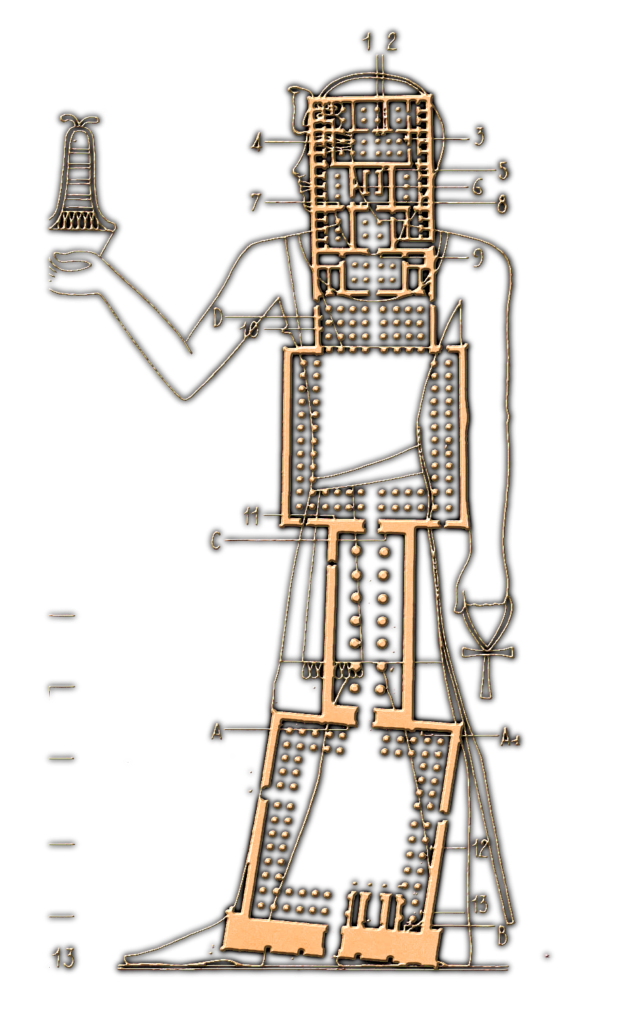
The study of sacred geometry ancient civilizations reveals a profound and recurring pattern across the archaeological record: ancient cultures across different continents appear to have encoded mathematical proportions, astronomical alignments, and symbolic ratios into their monuments, cities, and sacred landscapes. These patterns suggest not merely artistic expression or religious symbolism, but a structured scientific worldview rooted in observation of cosmic order and natural law.
From megalithic structures aligned to celestial events to architectural designs reflecting harmonic ratios, ancient builders appear to have shared a unified language of form, proportion, and orientation that transcended geography and time. The persistence of these geometric principles raises a compelling question: were these civilizations independently discovering universal truths, or were they inheriting fragments of a much older body of knowledge now largely lost to history?
Sacred geometry, within this context, emerges not as mysticism alone but as a technological and cosmological framework through which early societies sought to understand the relationship between Earth, the heavens, and consciousness itself. The repetition of precise numerical relationships in structures separated by vast distances suggests a level of knowledge transmission or continuity that challenges conventional models of cultural development.
This article explores how sacred geometry shaped ancient civilizations, how mathematical design encoded cosmological knowledge, and how the possibility of lost chapters of human history may help explain the remarkable precision observed in the ancient world.
Sacred Geometry Ancient Civilizations as a Universal Language of Knowledge
Across the ancient world, geometry functioned as a universal language capable of describing natural patterns, celestial cycles, and structural harmony. Unlike written language, geometric relationships remain constant across cultures, allowing knowledge to be preserved through form rather than text.
Ancient builders observed that nature itself operates through repeating mathematical structures: spiral galaxies mirror biological growth patterns, crystal lattices exhibit precise symmetry, and planetary motion follows predictable cycles. By encoding these relationships into architecture, ancient civilizations created structures that reflected the underlying order of the cosmos.
This worldview suggests that geometry was not merely decorative but foundational to understanding existence itself.
Mathematical Order in Monumental Architecture
Many ancient monuments demonstrate precise geometric relationships that exceed purely functional requirements.
The Geometry of Monumental Construction
-
The proportions of the Great Pyramid of Giza closely approximate relationships associated with π and the golden ratio.
-
The stone circle at Stonehenge encodes solar and lunar cycles through its spatial arrangement.
-
The urban layout of Teotihuacan reflects consistent angular orientation and proportional planning.
These sites demonstrate consistent attention to mathematical precision, astronomical alignment, and symbolic proportion, suggesting a shared architectural philosophy grounded in cosmic order.
Such precision raises fundamental questions regarding the origin of this knowledge and the methods by which it was transmitted across generations.
Cosmic Cycles and the Architecture of Time
Ancient civilizations were deeply concerned with measuring and tracking celestial motion. Geometry provided the tools to transform astronomical observation into permanent architectural form.
Structures were often aligned with:
-
solstices and equinoxes
-
lunar standstill cycles
-
stellar risings and settings
-
planetary motion
Through these alignments, monuments became instruments that measured time, regulated ritual life, and preserved astronomical knowledge across centuries.
The integration of cosmic cycles into architecture reflects a worldview in which human society was expected to remain synchronized with universal rhythms.
Sacred Numbers and the Structure of Reality
Ancient mathematical traditions frequently emphasized specific numerical ratios believed to express universal harmony.
Recurring sacred numbers include:
-
3 — balance and triadic structure
-
7 — planetary cycles and cosmic order
-
12 — celestial divisions and temporal systems
-
108 — astronomical and geometric relationships
These numbers appear in architectural dimensions, ritual systems, and symbolic cosmologies across multiple ancient cultures, suggesting a shared numerical philosophy.
Evidence of Advanced Knowledge in Early Civilizations
Archaeological evidence increasingly demonstrates that ancient cultures possessed sophisticated knowledge in fields such as astronomy, engineering, and mathematics earlier than previously assumed. Peer-reviewed research supports this perspective:
-
Journal for the History of Astronomy — studies on megalithic astronomy and celestial alignment
-
Antiquity — research on early architectural planning and landscape organization
-
Cambridge Archaeological Journal — analyses of symbolic cognition in ancient societies
These findings suggest that ancient knowledge systems were complex, systematic, and deeply integrated with environmental observation.
The Possibility of Lost Chapters of Human History
The widespread presence of sophisticated geometric knowledge raises unresolved questions regarding its origin. Several possibilities exist:
-
independent discovery across cultures
-
long-term knowledge transmission networks
-
preservation of earlier advanced traditions
-
lost or misunderstood phases of civilization
While definitive conclusions remain elusive, ongoing archaeological discoveries continue to expand our understanding of ancient capabilities and challenge simplified historical narratives.
The possibility that significant portions of early human knowledge have been lost or misunderstood remains an open area of investigation within interdisciplinary research.
Geometry, Consciousness, and Sacred Space
Many ancient traditions viewed geometric forms as influencing perception and experience. Sacred structures were designed not only for observation but for participation.
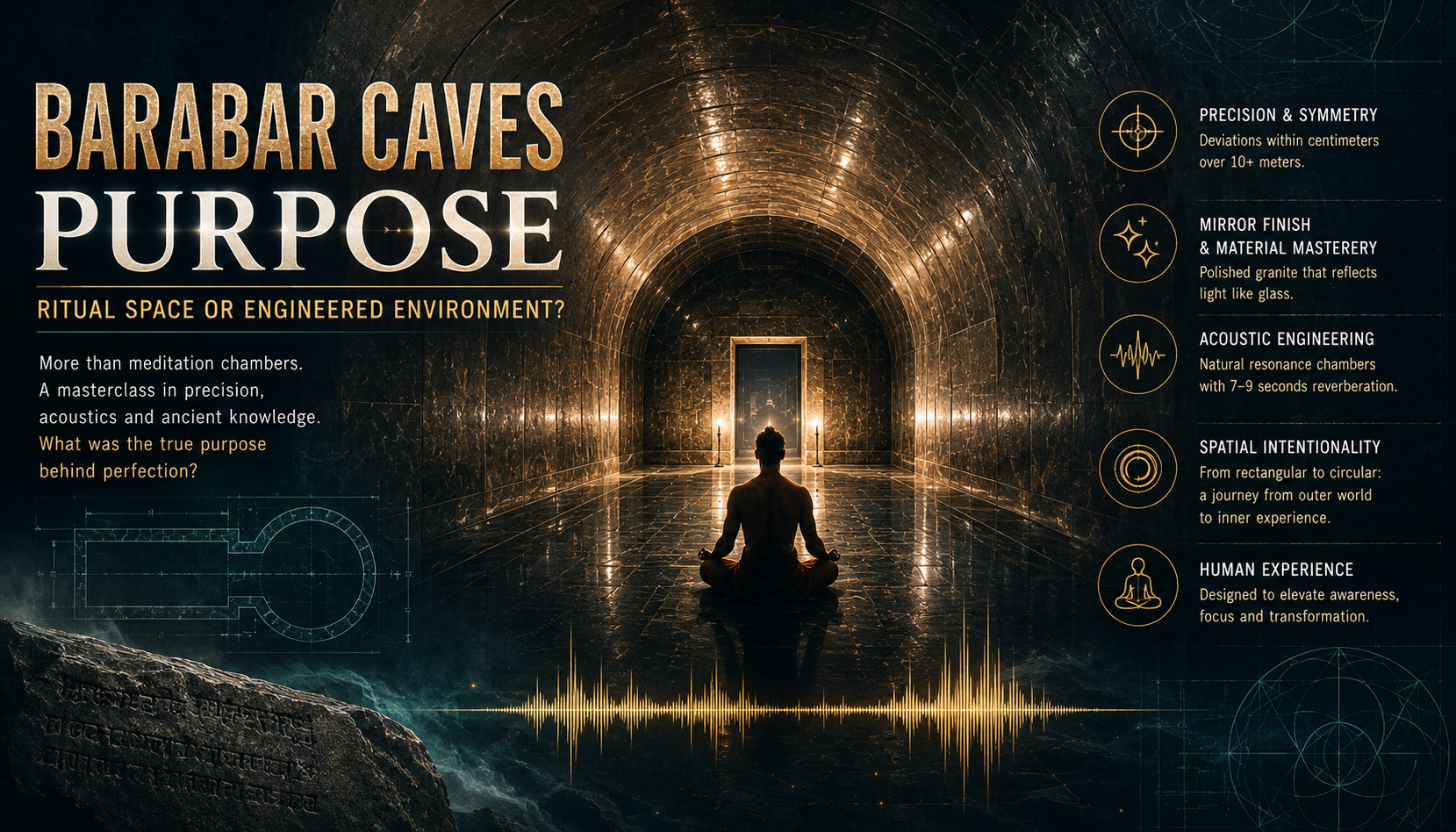
Spatial proportions, acoustic resonance, and light alignment may have been intended to create environments that affected human awareness, reinforcing the connection between cosmic order and individual experience.
This perspective positions sacred geometry as both scientific and experiential — a bridge between physical reality and symbolic meaning.
The Global Continuity of Sacred Geometry Ancient Civilizations
Despite vast geographical separation, ancient cultures display striking similarities in:
-
proportional design principles
-
symbolic geometric forms
-
astronomical orientation
-
mathematical ratios
-
cosmological interpretation
This global continuity suggests that sacred geometry may reflect universal patterns discovered through observation of nature itself.
Key Insights
-
Sacred geometry served as a universal framework linking mathematics, astronomy, and architecture.
-
Ancient monuments encode precise geometric and astronomical relationships.
-
Mathematical ratios structured both physical construction and symbolic meaning.
-
Evidence suggests advanced knowledge in early civilizations.
-
The possibility of lost knowledge traditions remains open to investigation.
Additional Reading and Sources
Ruggles, C. Astronomy in Prehistoric Britain and Ireland. Yale University Press.
Magli, G. Architecture, Astronomy and Sacred Landscape in Ancient Egypt. Cambridge University Press.
Renfrew, C. The Archaeology of Cult. Cambridge University Press.
Aveni, A. Skywatchers. University of Texas Press.
Ancient360 – Decoding the Sky Temple (link)
Ancient360 – Cosmic Alignments (link)
Ancient360 – Sacred Geometry (link)
Peer-reviewed journals:
-
Journal for the History of Astronomy (link)
-
Antiquity (link)
-
Cambridge Archaeological Journal (link)