Star Maps of the Ancients — Charting Heaven on Earth
Since the dawn of civilization, humanity has looked to the stars for guidance, rhythm, and meaning. But what if the stars were not only observed — what if they were mirrored on Earth? Across continents, from Egypt to Mesoamerica and beyond, the star maps of the ancients reveal a profound cosmic blueprint: temples, pyramids, and cities aligned with constellations, transforming sacred landscapes into living reflections of the heavens.
Mapping Heaven in Stone
Across the ancient world, sacred architecture was not placed randomly.
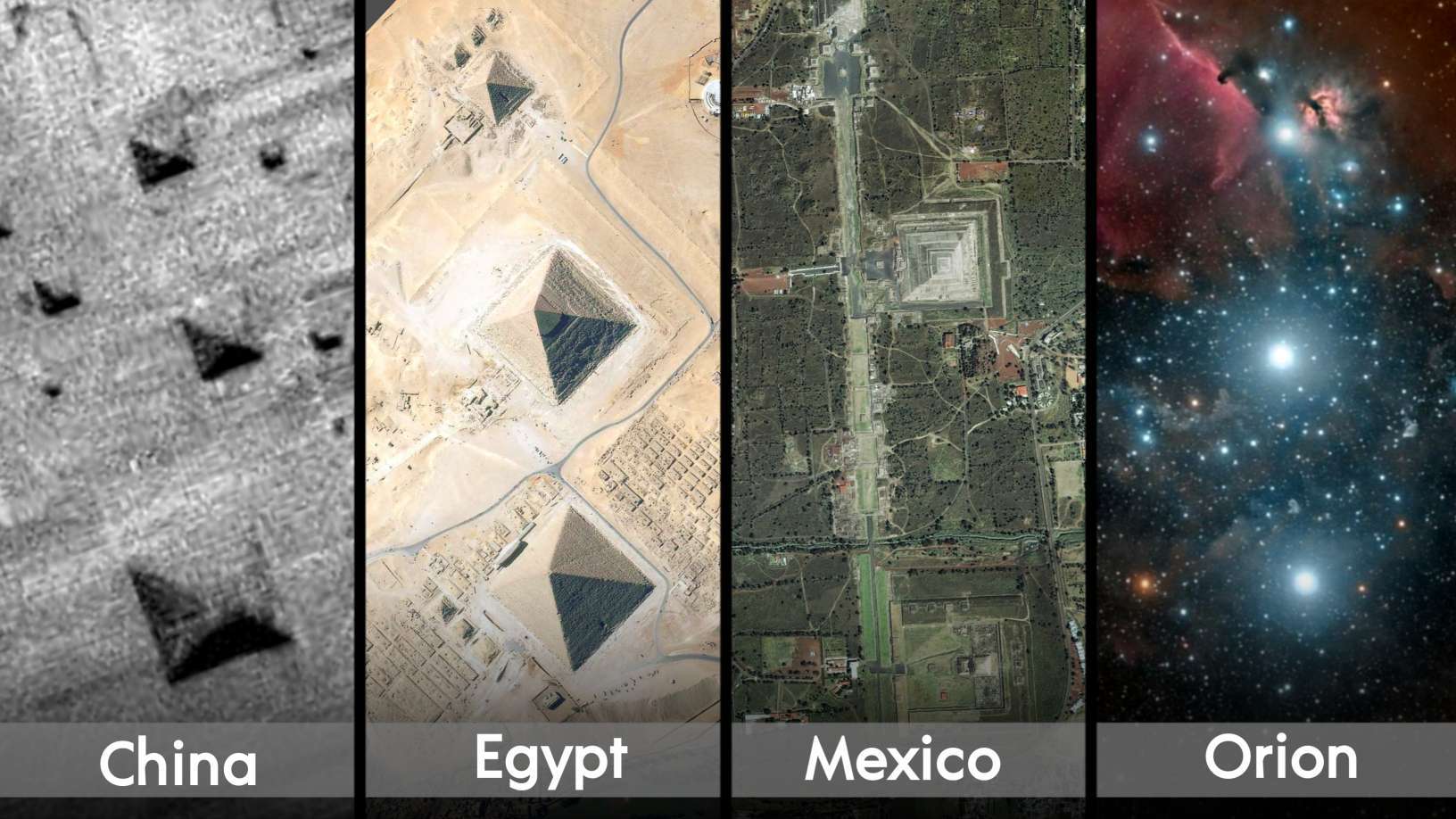
The layout of temples, pyramids, and ceremonial centers appears to follow celestial geometry — a pattern mapping heaven onto earth.
-
The Pyramids of Giza are aligned with Orion’s Belt, an arrangement so precise that even their spacing mirrors the stars’ position in 10,500 BCE.
-
In Teotihuacán, Mexico, the Pyramid of the Sun and Pyramid of the Moon form alignments corresponding to Pleiades and Orion, suggesting a cosmological city plan.
-
The Angkor Wat complex in Cambodia reflects the constellation Draco, connecting royal divinity with celestial cycles.
These alignments suggest that ancient architects were guided by a principle: “As above, so below.”
Encoded Knowledge in Architecture
The star maps of the ancients go beyond simple alignments — they encode astronomical time.
By correlating monuments with celestial precession, ancient builders could mark epochs lasting thousands of years.
For instance, the Great Sphinx faces directly east, aligning with the rising sun during the Age of Leo — around 10,500 BCE — implying that its orientation might commemorate the constellation ruling that era.
Similarly, the Maya calendar and the Temple of Kukulkán track both solar and stellar cycles, allowing ancient astronomers to synchronize ritual, agriculture, and cosmic rhythm.
This architectural precision shows that temples were timekeepers, recording not days or seasons, but ages of the world.

A Global Celestial Blueprint
From South America’s Tiwanaku to the Stone Circles of Nabta Playa in Egypt, we see repeating geometric relationships to the sky — sometimes using the same stars.
Such patterns raise questions: did ancient civilizations share a global cosmological system, or rediscover similar truths independently?
The concept of a celestial blueprint uniting heaven and earth suggests an ancient scientific-spiritual worldview — one where humanity mirrored cosmic order to maintain balance on Earth.
The cosmic code, sacred geometry, and stellar alignments found in these sites together form a unified language: the sky was the master plan, and Earth its reflection.
Decoding the Message of the Stars
Researchers like Robert Bauval, Graham Hancock, and Thomas Brophy propose that these alignments are remnants of an advanced prehistoric knowledge system — one that understood precession, axial tilt, and the rhythms of cosmic time.
In this view, star maps of the ancients are not only architectural feats but messages across millennia, warning or guiding future generations to remember the link between Earth and the cosmos.
Such ideas, once fringe, are now explored with modern tools: satellite imaging, astronomical software, and precise dating techniques revealing correlations once invisible to the naked eye.
What Did the Ancients Truly Know?
Were these alignments mere coincidence or deliberate design?
Did ancient priests and architects possess advanced astronomical understanding — or even inherit it from a civilization before recorded history?
If the temples, pyramids, and sacred cities are indeed star maps, then perhaps they reflect more than devotion. They may represent a legacy of lost cosmic science, bridging myth and mathematics, heaven and stone.
Key Concepts
-
Star maps of the ancients mirror constellations in terrestrial architecture.
-
Alignments reflect deep astronomical and precessional knowledge.
-
Sacred sites across continents may share a global celestial model.
-
Architecture encoded both space and cosmic time.
-
Possible evidence of a shared ancient legacy of sky-watching civilizations.
Unanswered Questions
Could our ancestors have encoded the sky itself into their monuments — a permanent record of their cosmological vision?
Do these star maps reveal humanity’s forgotten connection to the heavens — a memory of an age when the stars were both compass and scripture?
As we decipher these alignments today, we may be retracing the very paths they once followed, reconnecting the heavens and the earth in a single, enduring pattern.
Additional readings