Knowledge Loss Cycles and System Reset
For over 300,000 years—perhaps far longer than we currently understand—human beings have walked the Earth through cycles of stability and catastrophe (Milankovitch Cycles and Climate Forcing link). Across that immense span of time, how many civilizations rose, adapted, and disappeared? How many natural cataclysms did humanity endure before recorded history even began? And how much knowledge may have vanished alongside them?
Modern history often presents human development as a steady and continuous ascent: from primitive survival to agriculture, from agriculture to cities, from cities to advanced technological societies. But is that narrative complete? Or does it represent only the fragments that survived the passage of time?
If entire coastlines were swallowed by rising seas, if climate shifts abruptly transformed habitable regions, or if geological disasters erased centers of population, what traces would remain thousands—or tens of thousands—of years later? How much knowledge could disappear if the societies that carried it were suddenly disrupted?
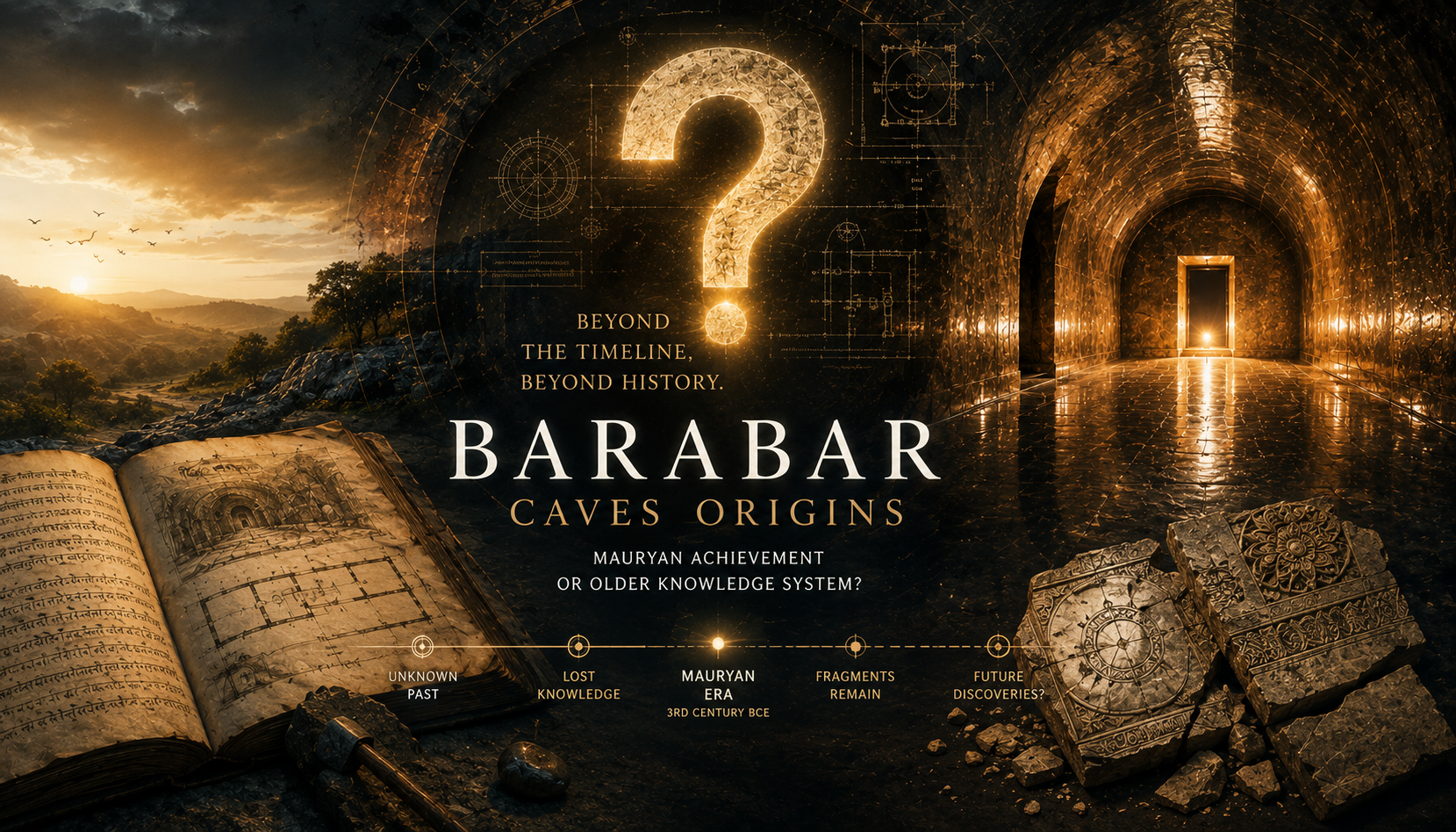
These questions become even more compelling when considering the persistence of ancient structures and anomalies that continue to challenge explanation. Across the world stand megalithic sites, astronomical alignments, and engineering achievements whose precision still provokes debate. Some contain features so exact, so geometrically sophisticated, that their full complexity only becomes visible through modern surveying tools, satellite imaging, lidar scanning, or advanced analytical equipment (Axial Precession and the Great Year link). Why do certain ancient constructions appear to encode levels of planning and precision far beyond what is commonly assumed of their era? Were these achievements isolated discoveries—or remnants of knowledge inherited from much older traditions?
Equally important is the question of transmission. How was knowledge preserved across generations in periods before durable writing systems? How did ideas survive collapse, migration, or environmental upheaval? Was knowledge repeatedly rediscovered independently, or passed forward in fragmented form through myths, rituals, symbols, and oral traditions?
The concept of Knowledge Loss Cycles emerges from these uncertainties. It proposes that human history may not be a single uninterrupted progression, but a repeating pattern of advancement, disruption, loss, and recovery. Rather than viewing civilization as a straight line, Knowledge Loss Cycles invite us to consider whether humanity has experienced multiple eras of development—some remembered, others almost entirely erased by time and catastrophe.
What survives today may not represent the beginning of civilization, but only the latest chapter of a much older human story (Climate History and the Last 40,000 Years link).
Knowledge Loss Cycles and the Discontinuity of History
The theory of Knowledge Loss Cycles challenges the assumption that human progress has been linear and uninterrupted. Conventional archaeology often describes civilization as a gradual evolution from simple tools and nomadic societies toward agriculture, urbanization, and technological sophistication. Yet this interpretation depends entirely on what evidence has survived.
What if survival itself creates a distorted historical picture?
If societies advanced, collapsed, and rebuilt multiple times across deep history, then the archaeological record may preserve only fragments of a much larger continuum. Entire chapters of human development could have disappeared through environmental destruction, population collapse, or the simple erosion of time.
In this context, periods of rediscovery may appear to modern observers as “new” innovations, when they may instead represent the recovery of older knowledge systems. Human history, rather than unfolding as a straight ascent, may resemble a sequence of interrupted trajectories—advancement followed by disruption, preservation followed by loss.
This perspective does not reject established archaeological evidence. Instead, it asks whether the evidence available today represents the entirety of human history—or merely the surviving remnants of it (Yuga Cycles and Mythological Time Systems link).
Environmental Triggers of Knowledge Loss Cycles
One of the most significant drivers of Knowledge Loss Cycles may be environmental instability. Throughout Earth’s history, climate has shifted dramatically, sometimes with extraordinary speed. Ice ages advanced and retreated, sea levels rose and fell, volcanic eruptions altered ecosystems, and geological events transformed entire regions (Black Sea Deluge: Rapid Sea Level Rise link).
The end of the last Ice Age offers a striking example. During periods such as the Younger Dryas, global climate conditions appear to have changed rapidly within relatively short timescales. Massive glacial melt contributed to rising sea levels that submerged vast coastal territories—areas where early human populations were most likely concentrated.
If ancient settlements, centers of learning, or trade networks existed along coastlines now underwater, what remains accessible to archaeology today may represent only a fraction of earlier human habitation.
Environmental catastrophes do not merely destroy structures; they interrupt continuity. Written records vanish. Oral traditions fragment. Specialized skills disappear when the communities that maintain them collapse. Even highly organized societies can become vulnerable when food systems, migration routes, or ecological stability break down.
Knowledge Loss Cycles suggest that humanity’s development may have been shaped not only by innovation, but by repeated episodes of survival and reconstruction in the aftermath of environmental upheaval.
Material Fragility and the Limits of the Archaeological Record
Another challenge in understanding deep human history lies in the fragility of materials themselves. Much of what ancient societies may have created was likely perishable: wood, textiles, plant fibers, leather, pigments, and organic compounds rarely survive across tens of thousands of years (Cultural Memory Cataclysms Flood Myths link).
Stone endures more effectively, but even monumental structures are vulnerable to erosion, burial, tectonic activity, and reinterpretation over time. Entire cities can disappear beneath sediment, forests, deserts, or oceans.
This creates a profound bias in the archaeological record. Durable remains become the foundation for reconstructing history, while fragile systems of knowledge may vanish almost entirely.
What forms of understanding leave no permanent trace? Navigation techniques passed orally through generations. Astronomical observations encoded in ritual. Mathematical systems transmitted symbolically rather than textually. Technologies dependent on organic materials now decomposed beyond recovery.
The absence of evidence does not necessarily prove the absence of complexity. It may instead reflect the selective survival of history itself.
Knowledge Loss Cycles therefore raise an important methodological question: how much of humanity’s past has been lost not because it never existed, but because time erased the medium through which it was preserved?
Re-Emergence and Rediscovery
Knowledge Loss Cycles do not imply permanent disappearance. Rather, they suggest that knowledge can re-emerge—sometimes independently, sometimes through fragmented transmission across generations and cultures. Throughout history, similar developments appear repeatedly in distant regions:
- monumental construction techniques
- astronomical alignments
- systems of measurement
- symbolic and mythological patterns
- agricultural innovations
- methods of navigation and timekeeping
Mainstream explanations often interpret these parallels as examples of independent invention, and in many cases that may be true. Yet another possibility exists: that certain foundational ideas survived periods of collapse in incomplete or transformed forms (Older Dyas and Younger Dryas).
Knowledge does not always vanish entirely. Fragments persist in stories, rituals, architecture, or inherited practices whose original meaning becomes obscured over time. A civilization may forget the origins of its knowledge while continuing to preserve aspects of it unconsciously.
In this way, history may involve repeated cycles of forgetting and remembering. Civilizations rediscover principles that may once have been known long before, creating the appearance of linear advancement while masking deeper cycles beneath the surface.
Ancient Engineering and the Question of Sophistication
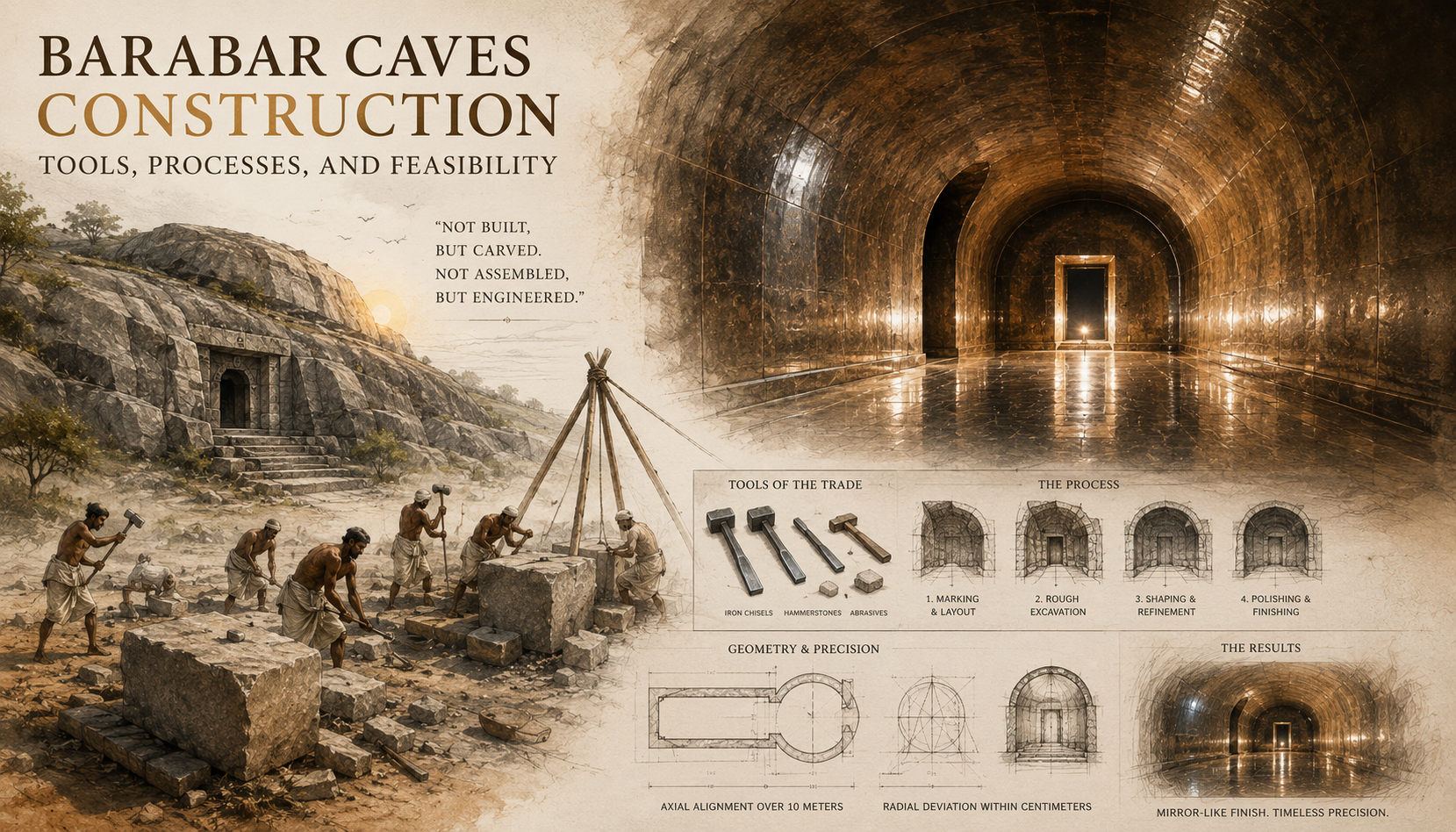
Some of the most provocative questions surrounding Knowledge Loss Cycles emerge from ancient engineering itself. Across multiple continents stand structures whose precision, scale, and alignment continue to generate debate among researchers, historians, and engineers (Ancient Construction Materials Lost Techniques link).
Megalithic constructions display extraordinary stonework. Certain ancient sites align with astronomical events such as solstices and equinoxes with remarkable accuracy. Others reveal geometric relationships only fully recognized through modern surveying technologies, aerial imaging, satellite analysis, or lidar mapping.
How were these achievements accomplished? How much knowledge was required to design, coordinate, and execute them?
Conventional explanations attribute such accomplishments to gradual experimentation accumulated over generations. Knowledge Loss Cycles do not necessarily reject this interpretation, but they broaden the scope of inquiry. Could some techniques have deeper origins than currently assumed? Could certain engineering principles represent inherited traditions refined across multiple historical phases rather than singular inventions?
Importantly, this perspective does not require the existence of mythical lost super-civilizations. Instead, it proposes something more measured yet equally profound: that human sophistication may have emerged, disappeared, and re-emerged multiple times throughout deep history.
If so, then ancient structures may not simply be isolated monuments. They may represent surviving markers from longer and more complex cycles of human development.
Cultural Memory as a Bridge Across Time
If Knowledge Loss Cycles occurred, then cultural memory becomes one of the most important mechanisms of continuity. Across civilizations worldwide, myths and traditions repeatedly describe floods, fires, darkness, destruction, migrations, and renewal. While these narratives differ in detail, many preserve recurring themes of collapse followed by rebirth (Ancient Constructions – Global Parallels link).
Such stories are often dismissed as symbolic or religious allegory alone. Yet they may also function as encoded memory—simplified reflections of real environmental instability experienced across generations.
Oral traditions can preserve information for extraordinary lengths of time, though often in transformed or symbolic forms. Rituals, sacred architecture, calendars, and cosmological systems may carry fragments of earlier knowledge even after their original context has been forgotten.
In this sense, cultural memory acts as a bridge between cycles. It allows elements of understanding to survive disruption, even when the societies that created them disappear.
What remains after collapse may not be complete knowledge, but echoes of it.
Rethinking Human Progress
Knowledge Loss Cycles invite a fundamental reconsideration of progress itself. Modern civilization often assumes that advancement moves steadily forward—that technology, science, and social complexity naturally accumulate over time. Yet history repeatedly demonstrates that societies are vulnerable to disruption. Empires collapse. Infrastructure fails. Knowledge can disappear within surprisingly short periods when systems of transmission break down. If this vulnerability exists today, why would earlier civilizations have been immune to it?
Rather than understanding human history as a continuous upward trajectory, Knowledge Loss Cycles suggest a more dynamic model: one of adaptation, interruption, recovery, and transformation.
This perspective aligns with evidence of environmental instability throughout Earth’s past while also accounting for gaps, discontinuities, and unresolved questions within the archaeological record. It does not claim certainty where evidence remains incomplete. Instead, it encourages broader inquiry into the resilience—and fragility—of civilization itself.
Humanity’s story may not be one uninterrupted ascent from simplicity to complexity. It may instead be the result of repeated attempts to rebuild, preserve, and rediscover knowledge across deep time (Ancient Construction Management Systems link).
Conclusion
Knowledge Loss Cycles offer a framework for exploring the possibility that human history has been shaped not only by progress, but by repeated disruption, collapse, and recovery. Over hundreds of thousands of years, humanity may have endured climatic catastrophes, rising seas, geological upheavals, and societal fragmentation capable of erasing vast amounts of accumulated knowledge.
If this occurred, then the historical record available today may represent only a partial archive of human experience.
Ancient structures, recurring myths, unexplained parallels between civilizations, and the fragility of material evidence all raise important questions about continuity across deep time. How much has survived? How much has been forgotten? And how many times has humanity rebuilt from the remnants of earlier worlds?
Definitive answers remain elusive. Yet the concept of Knowledge Loss Cycles encourages a broader and more open investigation into the nature of civilization, resilience, and memory itself.
What we call history may not be the complete story of humanity’s rise—but the latest surviving chapter in a far older cycle of loss and rediscovery (Prehistoric Construction Engineering link).
References and Further Reading
ResearchGate – Studies on cultural transmission and knowledge systems
NASA – Climate change and Earth system dynamics (link)
Research on cultural transmission and collective memory
Studies on climate instability and post-Ice Age sea level rise (link)
Geological evidence surrounding the Younger Dryas period (link)
Research into megalithic architecture and archaeoastronomy
Richard B. Alley, The Two-Mile Time Machine
Ancient Energy Systems: Myth or Technology? (link)
Ancient Hyper Forests and Giant Trees (link)
Pre Flood Civilization and Environmental Collapse (link)
Was the Ancient World Phisically Different? (link)
Giant Humans Before the Younger Dryas (link)
Ancient Construction Project Management (link)
Ice Age Civilization Lost Worlds Before Floods (link)
Lost Knowledge of Ice Age Rewritten History (link)
Ice Age Knowledge Science Before Younger Dryas (link)