Ancient DNA Migration Patterns: Mapping Humanity’s Journey
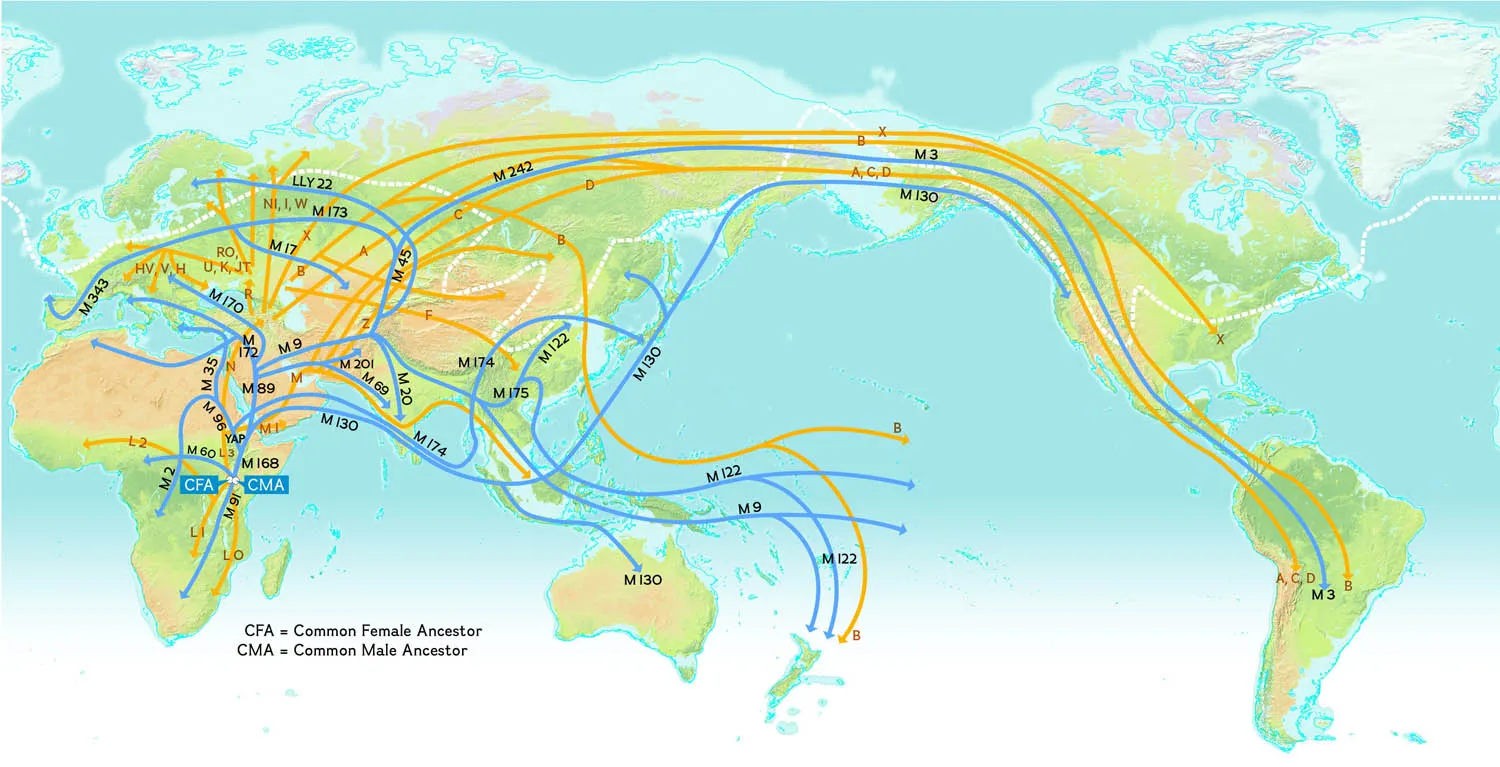
The study of ancient DNA migration patterns is reshaping everything we thought we knew about humanity’s epic journey across the planet. Far from a single, simple migration out of Africa, the emerging genetic record reveals a complex web of movements, interactions, and forgotten lineages. Through the lens of ancient DNA, the human story becomes one of repeated dispersals, returns, interbreeding, and survival against dramatic environmental changes.
Tracing the First Steps
For decades, the “Out of Africa” model was depicted as a one-time event—modern humans leaving Africa around 60,000 years ago and populating the rest of the world. Ancient DNA tells a more intricate story. Genetic evidence now shows multiple migration waves, some earlier than expected. Remains such as those at Misliya Cave in Israel (circa 177,000 years ago) and Apidima Cave in Greece (over 200,000 years old) hint that early modern humans ventured out much earlier than the classic timeline suggests.
By analyzing ancient DNA migration patterns, scientists can identify genetic lineages that trace these early journeys. Some groups vanished or merged with other populations, leaving behind genetic signatures but little archaeological evidence. Others paved the way for later waves that would eventually populate the continents.
The Meeting of Peoples: Neanderthals, Denisovans, and Modern Humans
Ancient DNA has revealed encounters between different human groups that were invisible to archaeology alone. Around 50,000–60,000 years ago, migrating Homo sapiens interbred with Neanderthals in Eurasia. Shortly thereafter, some groups encountered the Denisovans—a mysterious population identified only through DNA and a few bone fragments in Siberia’s Denisova Cave.
Today, the genetic legacy of these meetings persists. Non-African populations carry Neanderthal DNA, while populations in Melanesia and parts of Southeast Asia carry Denisovan DNA. These interactions were not isolated incidents but part of a long, tangled web that ancient DNA continues to unravel.
Peopling the Americas: A Genetic Puzzle
One of the most dramatic revelations comes from the Americas. For decades, the “Clovis-first” model proposed that humans entered the Americas around 13,000 years ago. But discoveries such as the White Sands footprints in New Mexico—dated to at least 21,000–23,000 years ago—combined with ancient DNA findings, challenge this timeline.
Genetic studies point to multiple migration pulses into the Americas, possibly by different routes: inland through Beringia and along coastal pathways. These ancient DNA migration patterns suggest that humans may have reached the continent far earlier than previously accepted, adapting to changing climates and landscapes with remarkable resilience.
Ghost Populations and Lost Journeys
One of the most intriguing outcomes of ancient DNA research is the identification of “ghost populations”—groups that left no direct archaeological trace but whose DNA remains in modern humans. These populations appear in genetic analyses as signals that don’t match any known groups. For example, in West Africa, researchers found traces of an unknown archaic human population that diverged hundreds of thousands of years ago.
Similarly, some South American Indigenous groups display genetic links to Australasian populations, hinting at migrations or contacts that defy traditional models. These genetic breadcrumbs expand our view of ancient DNA migration patterns, revealing forgotten chapters of human exploration.
Environmental Shifts, Migrations, and Survival
Human migrations did not occur in a vacuum. Dramatic environmental events—such as ice ages, volcanic eruptions, and cataclysms like the Younger Dryas—shaped migration routes and survival strategies. DNA evidence helps trace how groups responded to these changes: retreating, adapting, or moving into new lands.
With each new sequencing technique, timelines stretch further back, and the neat narrative of linear human expansion gives way to a dynamic, braided story. How many migrations remain hidden in unexplored caves or buried sediments? What populations might have thrived and disappeared before leaving written records?
Additional reading