Reconsidering the Function of Ancient Monuments
The study of ancient energy systems introduces a critical shift in how monumental architecture is interpreted, moving beyond purely symbolic or ceremonial explanations toward the possibility that some structures may have served functional roles involving natural forces. While mainstream archaeology has long associated ancient monuments with religious, cultural, and political purposes, a growing body of interdisciplinary research suggests that these explanations may not fully account for the technical characteristics observed in many sites (Ancient Construction Systems Engineering link).
Across different regions of the world, ancient builders created structures with remarkable precision, durability, and alignment, often incorporating specific materials and environmental positioning that appear deliberate rather than incidental. These features raise an important question: were these structures designed solely for symbolic meaning, or did they also interact with natural forces such as water flow, resonance, and electromagnetic conditions in ways that are not yet fully understood?
This article explores that question by examining both established archaeological interpretations and alternative hypotheses, integrating engineering analysis, experimental research, and scientific studies to evaluate whether the concept of ancient energy systems offers a meaningful framework for understanding these structures (Ancient Construction Systems Engineering Before Civilization link)
Energy in the Ancient World — A Functional Perspective
To evaluate the possibility of ancient energy systems, it is essential to clarify what is meant by energy in this context. In modern terms, energy refers to the capacity to perform work, encompassing mechanical, thermal, acoustic, and electromagnetic forms. Ancient societies were undoubtedly familiar with certain natural energy sources, including sunlight, water, and wind, which were used for agriculture, transport, and basic mechanical processes (Ancient Construction Project Management link).
The question, however, is whether these societies developed more advanced methods of interacting with natural forces, potentially integrating them into architectural systems. This does not require assuming technologies identical to modern ones, but rather exploring whether ancient builders may have understood and utilized environmental principles in ways that have not been fully documented or preserved.
Such an approach requires careful analysis, distinguishing between measurable physical phenomena and speculative interpretations, while remaining open to the possibility that some knowledge systems may have been lost or only partially understood today (Ancient Construction Logistics link).
The Great Pyramid — Engineering and Hypothesis
The Great Pyramid of Giza is central to discussions of ancient energy systems, due to its scale, precision, and internal complexity. Traditional interpretations identify it as a tomb, supported by historical context and archaeological findings. However, certain features have prompted alternative analyses that consider additional functional possibilities.
Engineering-focused interpretations, such as those presented by Giza Power, examine the pyramid as a unified system, suggesting that its internal chambers and shafts may reflect intentional design beyond symbolic purpose. Particular attention has been given to the use of granite in key areas, a material that contains quartz and exhibits piezoelectric properties under specific conditions.
These observations have led to hypotheses that the structure could have interacted with natural forces such as vibration or pressure. At the same time, it is important to emphasize that there is no direct empirical evidence confirming that the pyramid functioned as an energy generator. Mainstream archaeology maintains that its design can be explained through known construction techniques and cultural context (Ancient Construction Megalithic Engineering link).
A balanced interpretation therefore considers both perspectives, recognizing that while the pyramid’s design invites further investigation, conclusions must remain grounded in verifiable evidence.
Resonance and Acoustic Properties in Stone Structures
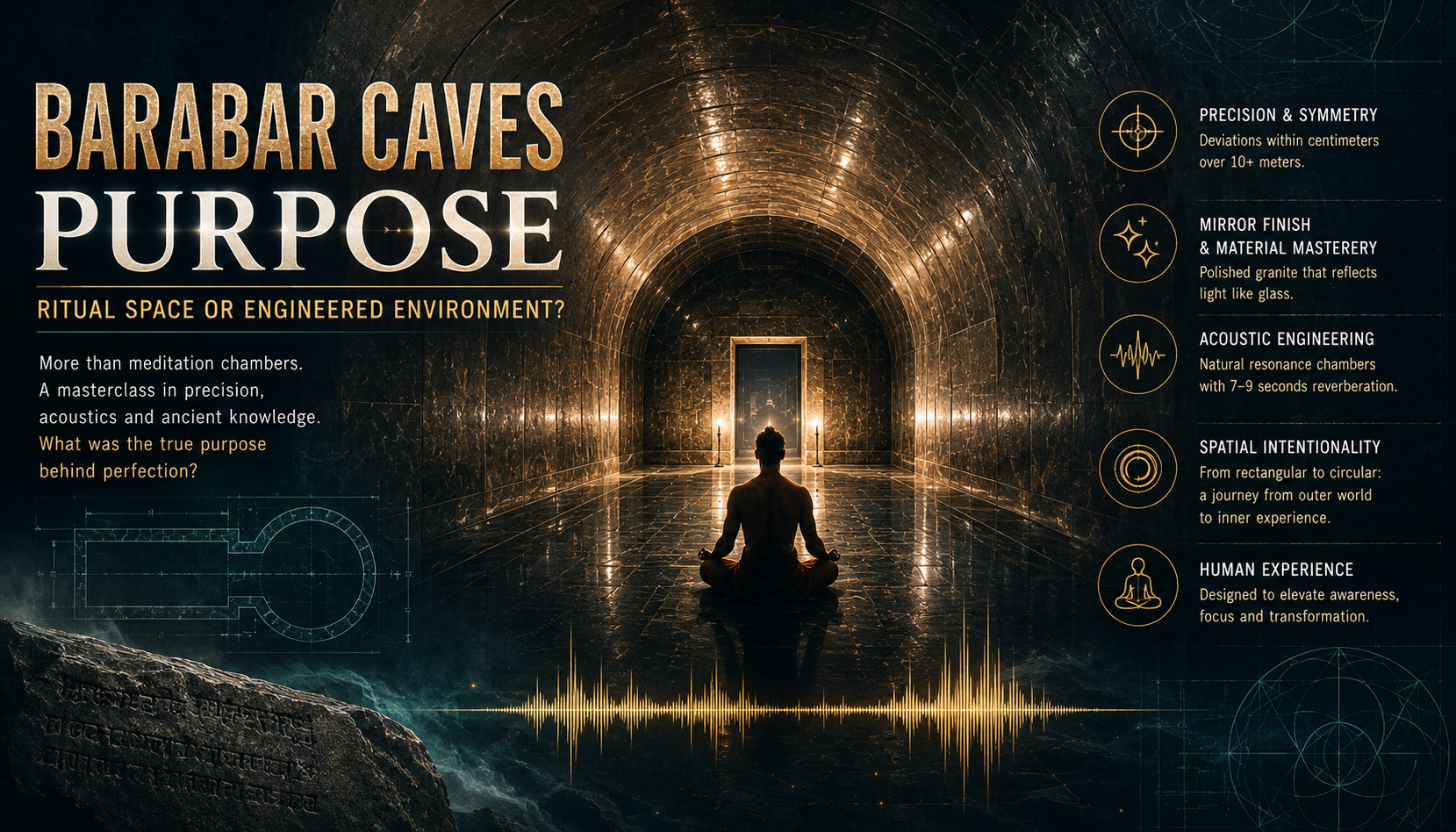
Resonance is a well-understood physical phenomenon in which a system amplifies specific frequencies, and it plays a central role in many discussions of ancient energy systems. Enclosed stone structures often exhibit acoustic properties that enhance sound, creating measurable effects such as amplification and sustained vibration (Geometry as Architecture Consciousness link).
In various ancient sites, including chambers and subterranean spaces, researchers have documented acoustic behaviors that appear consistent and repeatable. These effects are influenced by geometry, material density, and spatial configuration, all of which can be analyzed using modern acoustic methods.
Independent researchers, including those associated with The Land of Chem, have proposed that these acoustic properties may have been intentionally integrated into the design of certain structures. According to this perspective, resonance could have played a role in influencing materials or environmental conditions.
From a scientific standpoint, acoustic effects are measurable and real. The challenge lies in determining whether they were intentionally engineered for specific functions or are incidental outcomes of architectural design (Ancient Construction Geometry Planning Before Measurements link).
Electromagnetic Observations and Experimental Research
Field-based research provides another dimension to the study of ancient energy systems, particularly through the work of John A. Burke and Andrija Puharich. Their investigations involved measuring electromagnetic conditions at megalithic sites and conducting controlled experiments related to plant growth.
Their findings suggest that certain locations exhibit measurable electromagnetic variations, and that these conditions may influence biological processes such as seed germination. While these results do not confirm intentional design for energy generation, they indicate that ancient sites can interact with natural environmental fields in observable ways.
This line of research supports the broader idea that ancient builders may have selected locations and designed structures with an awareness of environmental conditions, even if the full extent of their understanding remains uncertain.
Water Systems and Environmental Engineering
Water management is one of the most well-documented aspects of ancient engineering, and it plays an important role in discussions of ancient energy systems. Civilizations across the world developed advanced methods for controlling water flow, including irrigation systems, canals, and drainage networks (Ancient Knowledge Carved in Stone link).
Scientific studies, including those available through ResearchGate, have demonstrated that ancient agricultural systems were highly sophisticated, with evidence of selective irrigation and environmental optimization. These findings confirm that early societies possessed a detailed understanding of water as a resource and a system.
Some researchers have proposed that water may have also contributed to other processes, such as reducing friction during construction or interacting with structural elements in ways that could influence vibration or pressure. While these ideas remain under investigation, they align with the broader theme of integrating natural forces into engineered systems.
Materials and Physical Properties
The materials used in ancient construction are central to the discussion of ancient energy systems, particularly when considering their physical properties. Granite, limestone, and basalt each respond differently to stress, vibration, and environmental conditions (Sacred Knowledge and Megalithic Architecture link).
Granite, for example, contains quartz, which exhibits piezoelectric behavior under certain conditions. While this property is scientifically established, its relevance to ancient construction remains uncertain, as there is no direct evidence that ancient builders intentionally used it for this purpose.
However, the deliberate selection and placement of materials within structures suggests that builders were aware of their practical properties, even if their understanding was based on observation rather than formal theory. This reinforces the idea that ancient construction systems were guided by empirical knowledge developed over time (Ancient Construction Materials: Lost Techniques link).
Global Patterns and Recurring Features
The presence of similar features across different ancient sites raises important questions about ancient energy systems and the development of construction knowledge. Structures in different regions often share characteristics such as precise alignment, material selection, and environmental integration.
Mainstream interpretations attribute these similarities to independent development, where different societies arrive at similar solutions to common challenges. Independent researchers, however, have suggested that there may have been forms of knowledge transmission or shared traditions that contributed to these patterns.
While definitive evidence for large-scale knowledge networks remains limited, the consistency of certain features suggests that further investigation is warranted, particularly through comparative and interdisciplinary research (Ancient Construction Similiraties & Global Parallels link).
Mainstream Interpretation and Critical Perspective
It is essential to maintain a balanced perspective when examining ancient energy systems, recognizing that mainstream archaeology provides well-supported explanations based on extensive evidence. These interpretations emphasize cultural, religious, and practical factors, and they are grounded in established research methods.
At the same time, the presence of unresolved questions and unexplained features in some structures indicates that there may be aspects of ancient construction that are not yet fully understood. The goal is not to replace one interpretation with another, but to expand the scope of inquiry in a way that remains consistent with scientific standards.
Modern Science and Ongoing Research
Advances in scientific technology are opening new pathways for investigating ancient energy systems, including methods such as electromagnetic measurement, acoustic analysis, and computational modeling. These tools allow researchers to examine structures in greater detail and to test hypotheses in controlled conditions.
Experimental archaeology also plays a role, enabling researchers to explore the feasibility of different construction techniques and environmental interactions. While these approaches do not always produce definitive answers, they contribute to a growing body of knowledge that can inform future research.
Conclusion: Expanding the Framework
The study of ancient energy systems represents an evolving field that bridges traditional archaeology and interdisciplinary inquiry. While there is no definitive evidence that ancient structures functioned as energy systems in the modern sense, there is sufficient complexity in their design to justify continued investigation.
By integrating mainstream research with carefully evaluated alternative perspectives, it becomes possible to develop a more comprehensive understanding of ancient construction. This approach encourages curiosity while maintaining scientific rigor, ensuring that new ideas are explored responsibly and effectively.
References and Further Reading
- Giza Power — Engineering analysis of the Great Pyramid (link)
- The Land of Chem — Independent research on energy-based interpretations (link)
- John A. Burke and Andrija Puharich — Seed of Knowledge, Stone of Plenty (link)
- ResearchGate — Study on ancient irrigation and environmental systems
- Encyclopaedia Britannica — Ancient Engineering and Architecture
- JSTOR — Archaeological and Engineering Studies