The Unseen Layer of Ancient Capability
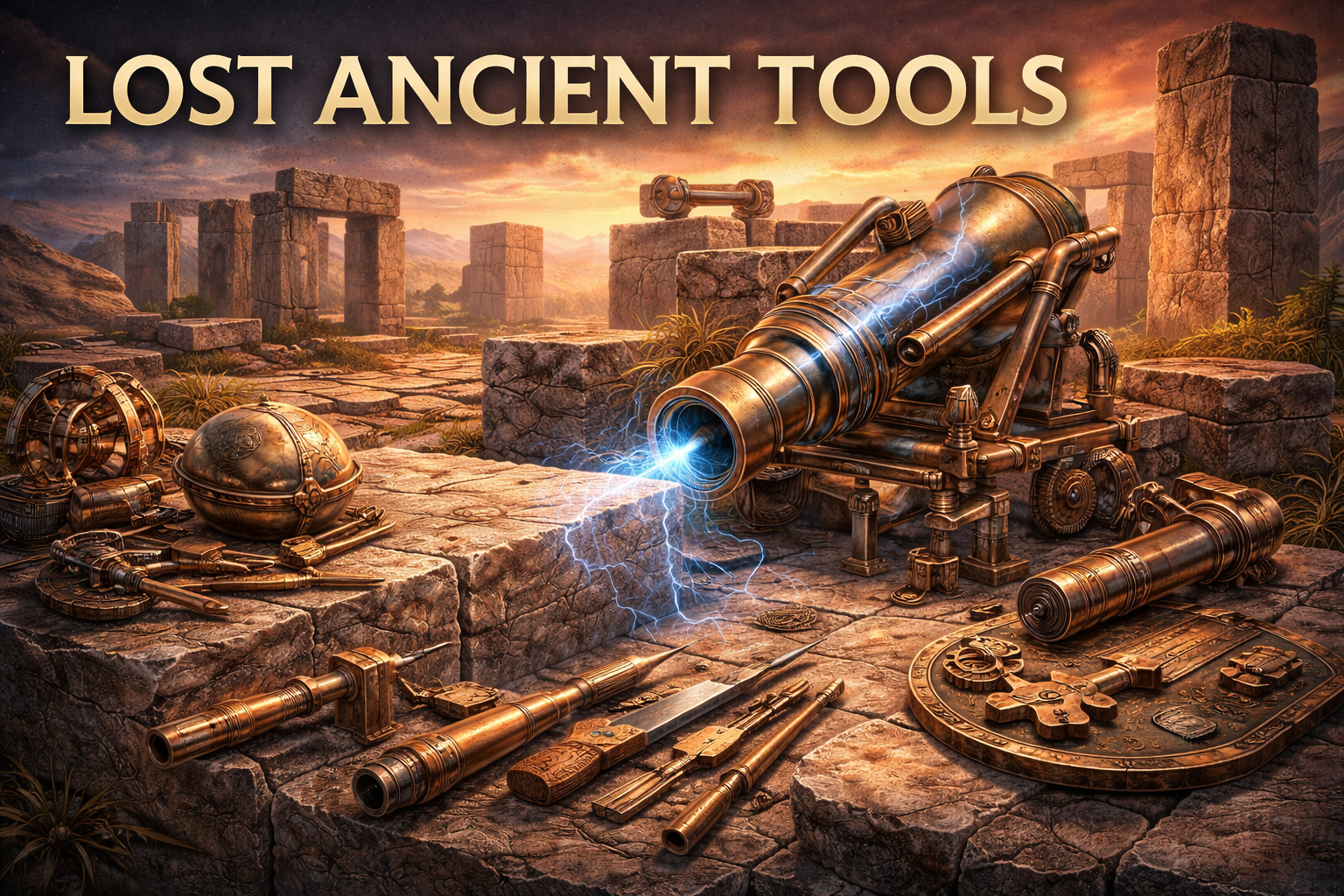
The question of lost ancient tools emerges from a persistent tension between what has been discovered and what can be directly observed in ancient construction. Across continents and time periods, stone structures exhibit precision, durability, and consistency that suggest not only skill, but systems—systems that appear more refined than what surviving tools alone can explain (Megalith Cutting Precision: Ancient Stones Techniques link). This does not require the assumption of advanced machines or anachronistic technologies, but it does demand a more nuanced interpretation of how ancient societies approached material transformation.
When examined through a broader lens, the concept of lost ancient tools becomes less about missing objects and more about incomplete frameworks of understanding. The archaeological record, while extensive, is inherently selective, shaped by preservation, material survival, and the passage of time. What remains in stone may represent only a fraction of the processes that once existed, inviting a deeper investigation into how knowledge, technique, and environmental awareness combined to produce results that continue to challenge modern assumptions (Ancient Energy Systems: Myth or Reality? link).
The Archaeological Record: Presence and Absence
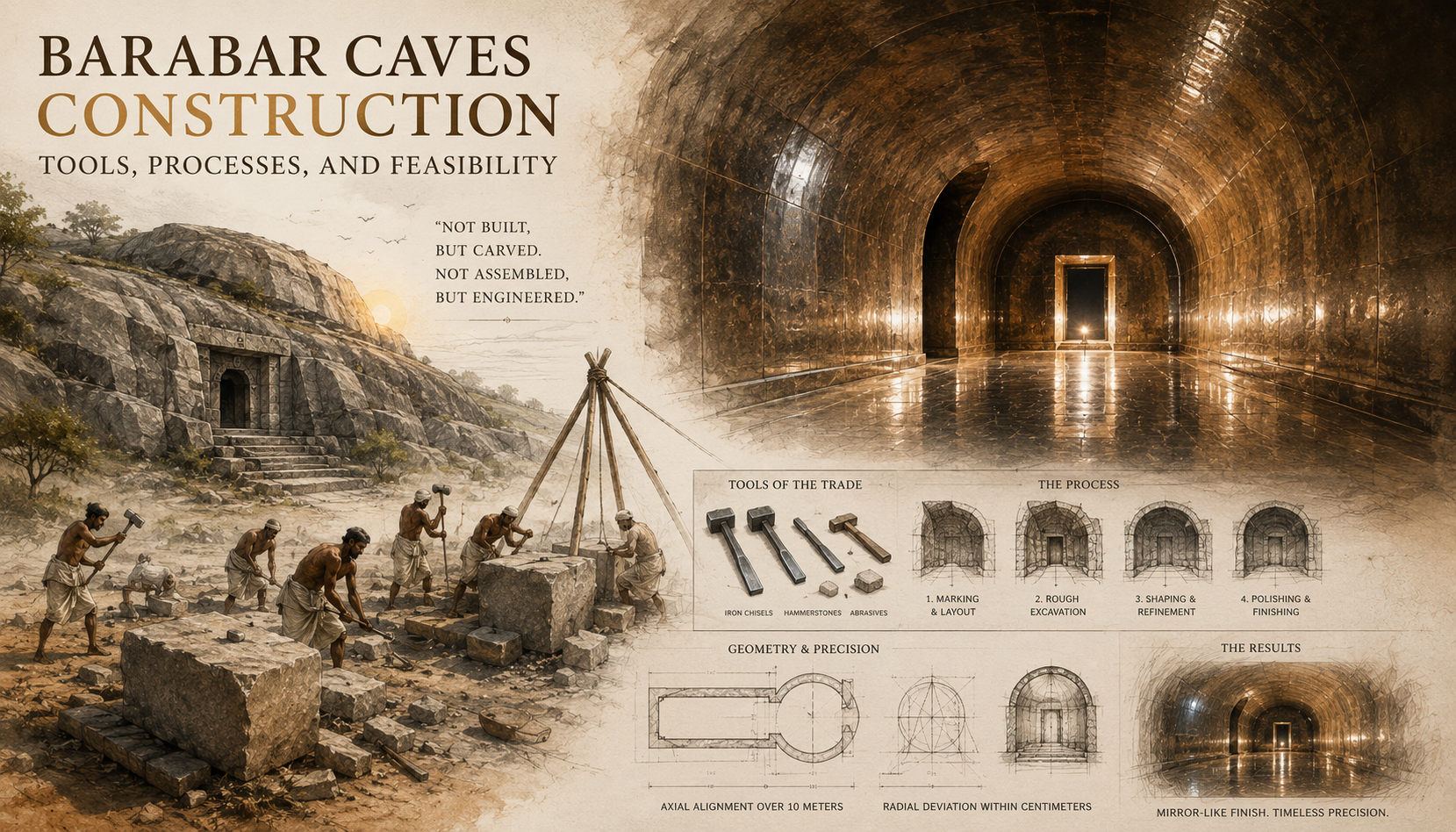
The tools commonly associated with ancient construction—chisels, hammerstones, and abrasives—provide a foundation for understanding early technological capability. These instruments are consistent with known materials and have been used in controlled experiments to replicate certain aspects of stone shaping. However, when these tools are compared with the outcomes observed in megalithic construction, a subtle but important discrepancy appears (Ancient Construction Systems Engineering link).
Surfaces are often remarkably flat across large areas, joints align with minimal tolerance, and geometric consistency is maintained across entire structures. These qualities suggest not only the use of tools, but the application of repeatable processes guided by measurement and verification. The question that follows is not whether ancient tools were effective, but whether the full range of tools and methods has been preserved or correctly interpreted (Ancient Consruction Systems Before Civilizations link).
This distinction is central to the study of lost ancient tools, as it shifts the focus from what has been found to what must have existed to produce the observed results.
Preservation and the Disappearance of Systems
Time does not preserve all materials equally. Organic components such as wood, fiber, and binding materials degrade over centuries, often leaving no trace. If ancient tool systems relied on such elements for stabilization, alignment, or control, their absence today would create an incomplete representation of technological capability (Ancient Construction Systems: Project Management link).
Metal tools, particularly those made from valuable materials, may have been reused or melted down, further reducing the likelihood of discovery. Temporary tools or construction-specific devices may never have been intended for long-term use, making their preservation even less likely. In this context, the absence of certain tools is not unexpected, but rather a predictable outcome of material and cultural cycles.
The concept of lost ancient tools therefore reflects a practical reality: the archaeological record captures fragments, not complete systems (Ancient Construction Materials: Lost Techniques link).
Precision as Process Rather Than Object
The precision observed in ancient construction suggests that tools alone were not responsible for the final result. Precision is not an inherent property of a tool, but the outcome of a controlled process. It requires measurement, repetition, and the ability to correct deviations over time. In modern engineering, these elements are integrated into workflows that ensure consistency across large-scale production (Ancient Construction Systems and Global Similarities link).
Ancient builders appear to have operated within similar frameworks, even if those frameworks were not formally documented. The shaping of stone, the alignment of structures, and the repetition of geometric patterns all point to processes that were refined through experience and applied systematically. In this sense, lost ancient tools may include not only physical instruments, but also procedural knowledge—methods that guided how tools were used rather than the tools themselves (Geometry of Ancient Structures Earth Scaling and Cosmic Code link).
Evidence Embedded in Stone
Even in the absence of complete toolsets, the stones themselves retain evidence of the processes that shaped them. Surface textures, grooves, and internal features act as records of interaction between tool and material. These features suggest controlled movement and consistent technique, indicating that ancient builders were not working randomly, but following structured approaches (Ancient Construction Geometry link).
Examples of such evidence include cylindrical holes with consistent diameters, smooth internal curves in hard stone, and linear patterns that imply guided motion. These characteristics do not necessarily point to unknown technologies, but they do indicate a level of control that requires explanation. They suggest that ancient tool systems may have included stabilizing mechanisms, guiding frameworks, or methods for maintaining consistent pressure and alignment (Ancient Construction Logistics link).
Experimental Reconstruction and Its Limits
Modern attempts to replicate ancient stoneworking techniques have provided valuable insights into what is possible with known tools. Using abrasives, controlled motion, and extended time, researchers have demonstrated that many features of ancient construction can be reproduced. However, these experiments also highlight the challenges involved in achieving consistency at scale.
Maintaining uniform precision across multiple elements requires not only skill, but coordination and process control. Small variations in technique can lead to noticeable differences in outcome, making large-scale replication difficult without standardized methods. This suggests that ancient builders may have developed systems that reduced variability and ensured repeatability, even if those systems are not directly visible today (Ancient Construction: Megalithic Engineering link).
The study of lost ancient tools therefore extends beyond replication, focusing instead on understanding how processes were organized and maintained.
Expanding Perspectives Through Independent Research
While mainstream archaeology provides a solid foundation for understanding ancient tools, independent research has explored additional possibilities that may contribute to a more complete picture. Investigations associated with The Land of Chem consider how materials, geometry, and environmental conditions might have interacted in ways that are not yet fully explained.
These perspectives do not replace established interpretations, but they encourage further examination of areas where current models may be incomplete. By integrating measurable observations with cautious exploration, the study of lost ancient tools remains both grounded and open to refinement.
Knowledge Transmission and Loss
Tools are only one part of technological systems; knowledge is the other. Many ancient techniques were likely transmitted through direct instruction and practice rather than written records. This makes them particularly vulnerable to disruption. When cultural continuity is broken, the methods that sustain precision and efficiency can be lost, even if the physical structures remain. In this context, it is plausible that ancient civilizations achieved high levels of accuracy through accumulated empirical knowledge, refined across generations in ways that are not immediately visible to us today. What may appear simple on the surface could reflect deeply sophisticated practices that we struggle to reconstruct because we no longer share the same frameworks of learning and observation (Geometry of the Pyramids and Earth Scaling link).
Historical examples demonstrate that complex skills can disappear within relatively short periods when conditions change. This suggests that some aspects of ancient construction may no longer be accessible, not because they were impossible to preserve, but because the systems that maintained them no longer exist. The precision seen in surviving structures hints at methods that combined careful measurement, environmental awareness, and disciplined craftsmanship, rather than relying on unknown or futuristic tools. It is also possible that we underestimate these systems because we expect technological advancement to follow a linear, modern trajectory (Ancient Units of Measurement: Hidden Sacred Ratios link). The concept of lost ancient tools therefore includes both material absence and the loss of procedural knowledge, as well as the gradual erosion of intellectual traditions that once supported remarkable feats of accuracy (Ancient Meter: Earth Measurement in Lost Civilization link).
Modern Technology and Ongoing Inquiry
Advances in modern analytical techniques are helping to bridge the gap between observation and explanation. High-resolution scanning, material analysis, and digital modeling allow researchers to examine ancient structures with increasing precision. These tools make it possible to identify subtle patterns, compare different sites, and test hypotheses about how certain features were created. As our own technological capabilities expand, we are beginning to detect levels of precision that were previously overlooked, revealing just how carefully many ancient structures were planned and executed. This growing awareness can give the impression that ancient builders possessed tools or methods far beyond what we typically attribute to them (Sacred Number Measurement Systems link).
While these technologies do not provide direct evidence of unknown advanced devices, they highlight the sophistication of ancient practices and encourage deeper investigation into how such accuracy was achieved. For example, the near-perfect alignment of monuments like the Great Pyramid of Giza with cardinal directions demonstrates a refined understanding of astronomy and measurement, achieved without modern instruments such as lasers. Rather than pointing to lost high-tech devices, these findings suggest that ancient builders used systematic observation, geometry, and repeated calibration to reach remarkable precision. At the same time, modern tools allow us to ask new questions about whether there were additional techniques—optical aids, advanced sighting methods, or calculation systems—that have not been fully identified. This evolving dialogue between past and present continues to push the boundaries of both archaeology and engineering.
Conclusion: Reconstructing What Cannot Be Seen
The study of lost ancient tools is not an attempt to replace established knowledge, but to expand it. The evidence preserved in stone suggests that ancient builders operated within systems that integrated tools, materials, and processes in ways that are not fully captured by the surviving record. Their achievements point to a level of precision and coordination that reflects both practical skill and accumulated knowledge, rather than unexplained or speculative technology. At the same time, the accuracy observed in many ancient structures invites ongoing curiosity about the full extent of their methods and capabilities.
This perspective acknowledges the limits of current understanding while recognizing the value of continued investigation. As modern science advances, we are increasingly able to measure and appreciate the exactness embedded in ancient works, which can reshape how we interpret their construction. While it is tempting to attribute this precision to unknown or highly advanced tools, the available evidence more strongly supports the idea of sophisticated but accessible techniques refined over time. Even so, the possibility that certain methods remain unidentified encourages further research and open-minded inquiry. In doing so, the concept of lost tools becomes not a mystery to resolve, but a framework for exploring the depth and complexity of ancient human capability, grounded in evidence yet responsive to new discoveries.
References and Further Reading
Giza Power — Engineering analysis of the Great Pyramid (link)
The Land of Chem — Independent research on energy-based interpretations (link)
The Land of Chem — Independent analysis of ancient technologies
John A. Burke and Andrija Puharich — Seed of Knowledge, Stone of Plenty (link)
John A. Burke — Experimental research on megalithic sites
ResearchGate — Study on ancient irrigation and environmental systems
ResearchGate — Academic studies on ancient engineering and materials
Encyclopaedia Britannica — Ancient Engineering and Architecture
JSTOR — Archaeological and Engineering Studies
JSTOR — Archaeological Studies on Stoneworking Techniques (link)
Ancient Maps and Star Charts — Lost Knowledge Traditions (link)
Ancient Construction Materials — Lost Techniques (link)
Sacred Geometry as Universal Language (link)