Ancient Resonant Chambers: Acoustic Engineering in Megalithic Architecture
The Mystery of Ancient Resonant Chambers
Ancient resonant chambers represent one of the most intriguing and understudied features of early monumental architecture, revealing how ancient civilizations may have intentionally designed enclosed spaces to manipulate sound, vibration, and human perception. From subterranean stone rooms and temple corridors to megalithic passageways and ceremonial halls, researchers increasingly recognize that acoustic effects were not accidental byproducts of construction but potentially deliberate engineering choices embedded within sacred architecture.
The concept of ancient resonant chambers challenges conventional assumptions about early technological capability. Rather than viewing prehistoric and ancient builders as relying solely on structural or aesthetic considerations, emerging interdisciplinary research in archaeology, physics, and acoustics suggests that these societies possessed sophisticated empirical knowledge of sound behavior. Through careful shaping of chambers, selection of materials, and precise geometric proportions, ancient architects appear to have created environments capable of amplifying frequencies, sustaining vibrations, and influencing human sensory experience.
Understanding ancient resonant chambers requires moving beyond purely symbolic interpretations of monuments toward a more integrated model that includes acoustic functionality, ritual psychology, and environmental interaction. These spaces may have enhanced ceremonial practices, altered states of consciousness, communication systems, and even architectural symbolism associated with cosmology and spirituality.
What Are Ancient Resonant Chambers?
Ancient resonant chambers are enclosed architectural spaces designed or configured in ways that enhance specific acoustic properties such as reverberation, resonance amplification, standing wave formation, and frequency reinforcement. These chambers often exhibit distinctive structural features including curved walls, domed ceilings, elongated corridors, or carefully proportioned volumes that influence how sound behaves within them.
From a physical perspective, resonance occurs when a system vibrates at particular frequencies that match its natural oscillation modes. In enclosed spaces, geometry determines these resonant frequencies. When sound waves interact with boundaries, they reflect, interfere, and sometimes reinforce one another, producing standing waves that can dramatically amplify certain tones while suppressing others.
Ancient builders did not necessarily require mathematical models to exploit resonance. Through repeated observation and experimentation, they could have learned that particular shapes, dimensions, and materials produced powerful acoustic effects. This practical knowledge may have been transmitted across generations as part of architectural tradition.
Key acoustic characteristics commonly associated with ancient resonant chambers include:
- Long reverberation times that sustain sound after its source stops.
- Amplification of low-frequency vibrations.
- Standing wave formation within enclosed spaces.
- Sound focusing effects caused by curved surfaces.
- Sensory immersion produced by confined acoustics.
These features suggest intentional design rather than accidental occurrence in many archaeological contexts.
The Science of Resonance in Enclosed Spaces
Acoustic Physics and Resonant Frequencies
Resonance in architectural environments depends on the interaction between sound wavelength and spatial dimensions. When a room’s size corresponds to multiples of a sound wave’s wavelength, constructive interference occurs, increasing amplitude and energy concentration at specific points. The resulting standing waves create zones of amplification and attenuation throughout the chamber.
Low-frequency resonance is particularly significant in stone structures due to the density and reflectivity of rock surfaces. Massive stone walls absorb relatively little acoustic energy, allowing sound waves to persist and interact over extended periods. Even subtle vocalizations or percussive sounds can generate complex acoustic patterns in such environments.
Material Properties and Vibration Transmission
Material composition plays a critical role in shaping acoustic behavior. Dense materials such as granite, limestone, and basalt reflect sound efficiently, while their internal crystalline structures can transmit mechanical vibration through the structure itself. This transmission allows entire architectural complexes to respond dynamically to sound energy.
The tactile dimension of resonance may have been especially important. Vibrations transmitted through stone surfaces can be physically felt by individuals in contact with walls or floors, creating a multisensory experience that integrates auditory and bodily perception.
Geometry and Acoustic Control
Geometric form strongly influences sound distribution. Domes concentrate sound toward central points, narrow passages guide wave propagation, and circular chambers promote uniform reverberation. Even minor variations in shape can significantly alter acoustic outcomes.
Ancient resonant chambers frequently exhibit consistent proportions and repeated design patterns, suggesting systematic experimentation with spatial ratios and structural arrangements.
Archaeological Evidence of Ancient Resonant Chambers
Subterranean Stone Chambers
Many prehistoric sites include underground rooms with unusual acoustic properties. These spaces often produce strong reverberation, low-frequency amplification, and sensory isolation from external noise. Their enclosed nature intensifies acoustic effects while also contributing to ritual or ceremonial atmosphere.
The construction of subterranean chambers requires considerable effort, implying functional importance beyond simple storage or shelter. Their acoustic characteristics suggest intentional design for controlled sonic environments.
Temple Sanctuaries and Inner Chambers
In numerous ancient temple complexes, inner sanctuaries are separated from exterior spaces by narrow corridors and thick walls. This architectural arrangement creates acoustic transitions between public and restricted zones, potentially enhancing ceremonial performance and spiritual experience. These inner chambers frequently demonstrate pronounced echo effects, resonance amplification, and sound focusing that could enhance chanting, music, or spoken ritual.
The Global Pattern of Ancient Resonant Chambers
A striking pattern emerges when examining archaeological sites worldwide. Similar acoustic features appear in geographically distant cultures with no known direct contact. This raises the possibility of shared knowledge traditions or parallel discovery of acoustic principles. From Egypt to Malta, from Ireland to Peru, ancient resonant chambers appear repeatedly, suggesting that sound may have formed a universal component of early architectural design.
Megalithic Passage Structures
Megalithic monuments often include elongated passages leading to central chambers. Such layouts naturally generate standing wave patterns and frequency amplification along the passage axis. The consistent orientation and proportions of these structures suggest deliberate acoustic considerations.
The Great Pyramid of Giza
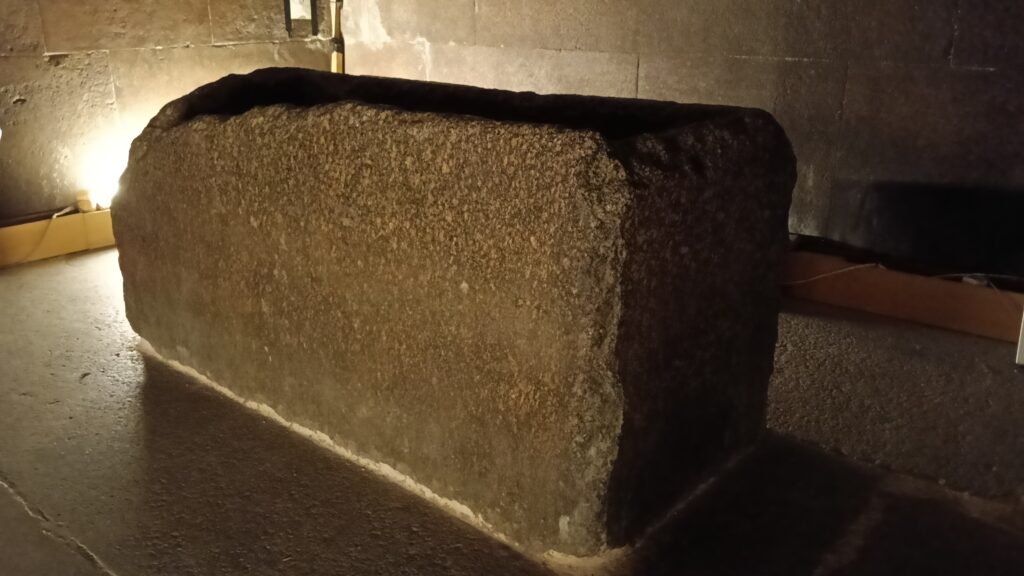
The granite-lined King’s Chamber within the pyramid exhibits remarkable acoustic properties. Studies indicate that the chamber resonates at frequencies that correspond to natural human vocal ranges. Additionally, the material composition of granite, rich in quartz crystals, enhances vibrational response.
Newgrange Passage Tomb
The chamber of Newgrange demonstrates powerful echo behavior. Sounds generated within the space reverberate intensely, producing prolonged resonance that transforms human speech into immersive vibration.
The Hypogeum of Malta
Perhaps the most famous example of acoustic engineering, the Hypogeum contains a “Oracle Chamber” that amplifies sound dramatically. A single voice can resonate throughout the entire structure, producing physiological effects on listeners.
Chavín de Huántar
Underground galleries at Chavín reveal complex acoustic manipulation using labyrinthine passages and resonant stone corridors. Researchers suggest these environments shaped ritual experiences through controlled sound propagation.
Archaeoacoustics: The Study of Ancient Sound Environments
Archaeoacoustics is an emerging interdisciplinary field that investigates how sound functioned within ancient environments. Combining archaeological investigation with acoustic measurement, researchers analyze resonance frequencies, reverberation patterns, and sound propagation within historical sites.
This field employs tools such as impulse response testing, digital modeling, and vibration analysis to reconstruct the acoustic conditions experienced by ancient users. Findings increasingly indicate that many structures exhibit acoustic properties unlikely to result from random construction.
Archaeoacoustic research emphasizes experiential archaeology, recognizing that sound influences cognition, emotion, and social interaction. By recreating ancient sonic environments, scholars attempt to understand how acoustic design contributed to ritual, communication, and symbolic meaning.
Possible Functions of Ancient Resonant Chambers
Ritual and Spiritual Experience
One widely proposed function of ancient resonant chambers involves the enhancement of ritual performance. Amplified chanting, sustained tones, and reverberant soundscapes could intensify ceremonial atmosphere, fostering collective emotional engagement and perceived connection with transcendent forces.
Acoustic immersion can alter perception of space, time, and self-awareness. Resonant environments may have facilitated meditative or trance states through rhythmic sound and vibration.
Communication and Authority
Resonant architecture may also have served practical communication purposes. Amplified voice projection within enclosed spaces could enhance speech clarity, reinforce authority, or create dramatic effects during ceremonial events.
The ability to control sound within architectural settings may have reinforced social hierarchy by granting specific individuals privileged acoustic access.
Healing and Therapeutic Applications
Some researchers propose that low-frequency vibration within ancient resonant chambers could influence physiological responses, including relaxation and stress reduction. Although direct evidence remains limited, the therapeutic potential of sound and vibration is well documented in modern contexts.
Cosmological Symbolism
Ancient cosmologies frequently associated vibration with creation, order, and universal structure. Resonant chambers may have embodied symbolic representations of cosmic harmony, linking architectural form with metaphysical concepts.
Architectural Techniques for Creating Resonant Effects
Proportional Design
Carefully controlled spatial ratios influence resonance frequencies. Repeated dimensional patterns across multiple sites suggest shared design principles guiding acoustic outcomes.
Surface Treatment
Polished stone surfaces reflect sound more efficiently than rough textures, enhancing reverberation and clarity. Evidence of intentional surface finishing appears in many ancient interiors.
Chamber Placement
Strategic placement of chambers within larger complexes can isolate sound from external interference while guiding acoustic flow through architectural sequences.
Human Perception and the Psychology of Resonance
Ancient resonant chambers may also have influenced psychological and physiological states. Modern neuroscience demonstrates that sound frequencies affect brainwave activity, emotional response, and perception of space. Consequently, controlled resonance environments could alter consciousness, intensify ritual experience, and enhance social cohesion. While definitive conclusions remain elusive, experimental studies show that low-frequency vibration can influence human awareness and bodily sensation.
Thus, ancient builders may have understood resonance as a tool for shaping human experience. Acoustic environments strongly influence human cognition and emotion. Reverberant spaces can induce feelings of awe, disorientation, or transcendence. Low-frequency vibration affects bodily sensation, potentially enhancing ritual experience.
The integration of sound, architecture, and sensory perception suggests that ancient resonant chambers were designed not merely as physical structures but as experiential environments shaping human consciousness.
Cultural Transmission of Acoustic Knowledge
The widespread appearance of resonant architectural features across geographically distant cultures raises questions about knowledge transmission. Similar design principles may have emerged independently through empirical observation or through cultural exchange networks.
Architectural traditions often preserve practical knowledge in symbolic or ritual form, allowing technical insights to persist across generations without formal scientific frameworks.
Alternative Interpretations and Scholarly Debate
Despite growing interest in ancient resonant chambers, interpretations remain contested. Some scholars argue that acoustic effects result from structural necessity rather than intentional design. Others caution against projecting modern scientific concepts onto ancient practices.
Critical evaluation requires distinguishing between measurable acoustic properties and speculative functional claims. Continued research is necessary to clarify the extent of deliberate acoustic engineering in ancient architecture.
Technological Implications of Ancient Resonant Chambers
If intentional acoustic design is confirmed, ancient resonant chambers would demonstrate sophisticated empirical knowledge of wave behavior, material properties, and spatial engineering. Such knowledge would represent a form of technological understanding rooted in observation rather than formal theory.
This perspective reframes ancient architecture as an integrated technological system combining structural engineering, sensory design, and symbolic meaning.
Key Takeaways
- Ancient resonant chambers exhibit acoustic properties that may indicate deliberate design.
- Stone materials and geometric proportions strongly influence resonance behavior.
- Archaeoacoustic research provides new insights into ancient architectural function.
- Resonant environments likely shaped ritual experience, communication, and symbolism.
- Debate continues regarding intentionality and interpretation.
Conclusion: Rethinking Ancient Knowledge Systems
Ancient resonant chambers reveal a dimension of early architecture that extends beyond structural utility or visual symbolism. These spaces suggest that ancient builders possessed practical knowledge of sound, vibration, and sensory experience, integrating acoustic principles into monumental design. Whether developed through empirical experimentation, ritual tradition, or cultural transmission, this knowledge reflects a sophisticated understanding of the relationship between environment and perception.
As research advances, ancient resonant chambers continue to reshape our understanding of technological capability in early civilizations. They challenge linear narratives of progress and invite reconsideration of how knowledge was generated, preserved, and expressed in the ancient world. By exploring the acoustic dimension of ancient architecture, we gain insight into a forgotten technological tradition that shaped human experience through the invisible medium of sound. The question remains open: were ancient builders merely experimenting with sound — or did they inherit knowledge we are only beginning to rediscover?
References and Additional Reading
-
Ancient Knowledge Network Mapping Earth and Sky (link)
-
Harmonic of Stones — Resonance, Energy, Human Body (link)
-
Research Gates — Archeoacoustic Around the World (link)
-
Cosmic Alignments (link)
- Research Gates — Investigations of Chavín de Huántar (link)
-
Research Gates — Cavity Resonance of the Great Pyramid of Giza (link)
- Research Gates — Hypogeum of Malta acoustic effects (link)