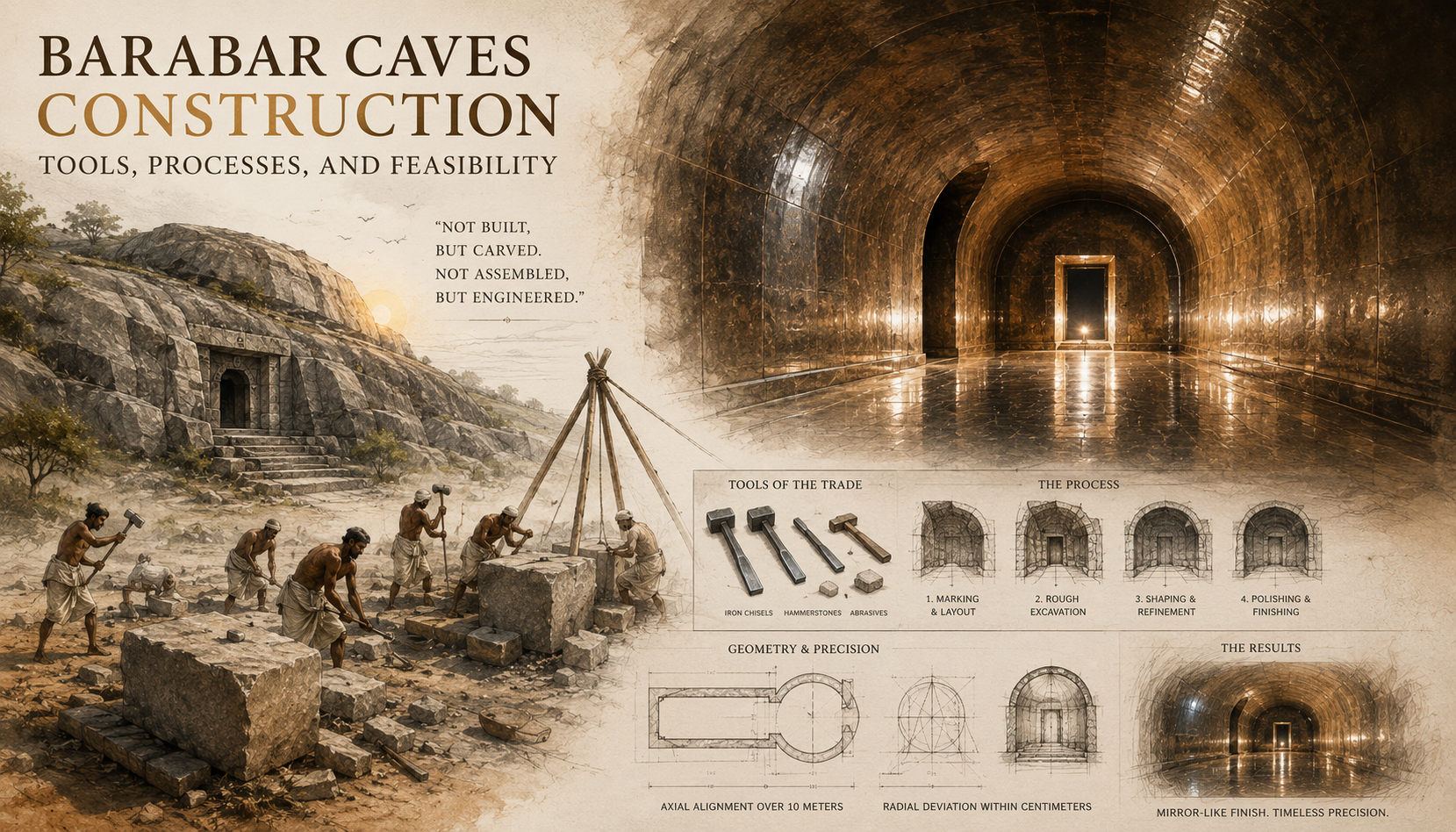
When Architecture Becomes Cosmology
Sacred geometry in ancient architecture reveals that many of humanity’s earliest monuments were conceived not merely as physical structures but as symbolic expressions of cosmic order, mathematical harmony, and universal proportion. Across continents and civilizations, ancient builders repeatedly embedded geometric relationships into temples, pyramids, ceremonial centers, and entire urban layouts, suggesting a profound understanding of spatial mathematics and its connection to celestial motion, terrestrial cycles, and metaphysical philosophy.
Rather than constructing buildings solely for shelter or ritual use, ancient societies often designed spaces that embodied the structure of the universe itself. Geometry became a language through which the cosmos could be translated into stone, aligning earthly structures with the rhythms of heaven. Consequently, architectural forms frequently reflect numerical ratios, directional orientation, and astronomical relationships that appear too consistent to be accidental.
Furthermore, when examined collectively, these monuments reveal recurring patterns of proportion and orientation that transcend geographic separation and cultural difference. From the precision of pyramidal slopes to the alignment of megalithic circles and the symmetry of temple complexes, the architectural record suggests a shared conceptual framework in which geometry functioned as a universal organizing principle.
This article explores how sacred geometry shaped ancient architecture across civilizations, investigating pyramids, megaliths, temples, and urban design while examining how these structures encode cosmic relationships, mathematical ratios, and astronomical knowledge.
Sacred Geometry in Ancient Architecture and the Mathematical Mind of Early Civilizations
Ancient architecture reflects a worldview in which mathematics was not abstract but experiential, not theoretical but embodied in physical space. Geometry provided a means of organizing reality itself, transforming landscapes into ordered expressions of cosmic structure.
Across early civilizations, numerical relationships governed proportion, symmetry, and spatial orientation. Builders worked with consistent ratios, recurring angles, and harmonic proportions that appear in natural growth patterns, planetary motion, and acoustic resonance. The built environment thus mirrored perceived universal laws.
Scholars of ancient mathematics note that early societies developed sophisticated systems of measurement long before formal scientific institutions emerged. Archaeological evidence demonstrates advanced knowledge of geometry in:
-
Egyptian surveying methods
-
Mesopotamian mathematical tablets
-
Greek harmonic theory
-
Mesoamerican calendrical architecture
These traditions suggest that architecture served as a repository of scientific knowledge, encoding mathematical principles in enduring physical form.
Key Insights
-
Geometry structured ancient conceptions of order
-
Mathematics linked architecture with cosmology
-
Monuments preserved technical knowledge across generations
Pyramids — Monumental Geometry and Cosmic Symbolism
Great Pyramid of Giza, Teotihuacan, and pyramids across multiple civilizations reveal strikingly consistent geometric design principles that suggest symbolic and mathematical intentions beyond structural necessity.
Geometric Precision and Proportion
The Great Pyramid demonstrates extraordinary precision in its proportions and orientation. Its base aligns almost perfectly with the cardinal directions, while its dimensions reflect ratios that closely approximate important mathematical constants such as π and the golden ratio. Whether intentional or emergent from design methods, these relationships indicate advanced geometric planning.
Similarly, Mesoamerican pyramids often encode calendrical cycles and astronomical observations within their stepped designs. Their ascending layers symbolically represent cosmological levels while maintaining strict geometric proportions.
Symbolic Form and Cosmic Meaning
The pyramid form itself reflects powerful symbolic geometry. Its four-sided base represents earthly stability, while its converging apex symbolizes unity, transcendence, and connection to the heavens. This geometric progression from square to point reflects a metaphysical journey from multiplicity toward singularity. Moreover, pyramid construction required highly organized knowledge of measurement, surveying, and labor coordination, indicating complex technical systems supporting geometric planning.
Key Insights
-
Pyramids encode numerical ratios and cardinal orientation
-
Pyramid geometry reflects symbolic cosmology
-
Monumental scale preserves mathematical knowledge
Megalithic Structures and Sacred Spatial Order
Stonehenge and other megalithic complexes demonstrate that sacred geometry in ancient architecture was not limited to monumental civilizations but also flourished among prehistoric cultures.
Circular Geometry and Solar Cycles
Stone circles frequently employ circular geometry representing cyclical time and celestial motion. The placement of stones at specific angles often aligns with solar and lunar events, marking solstices and equinoxes with remarkable accuracy. These structures function simultaneously as:
-
astronomical observatories
-
ceremonial spaces
-
symbolic representations of cosmic cycles
Landscape Integration
Megalithic builders often positioned monuments within broader landscapes that themselves reflect geometric relationships. Hills, rivers, and horizon points formed part of a larger spatial design, suggesting that geometry extended beyond individual structures to encompass entire territories.
Key Insights
-
Megaliths use circular geometry to represent cycles
-
Landscape itself becomes part of geometric design
-
Architecture integrates with celestial observation
Sacred Geometry in Temple Architecture
Angkor Wat and temple complexes worldwide demonstrate sophisticated geometric planning that integrates symbolism, proportion, and cosmology.
Mandala-Based Design
Many temples follow mandala-like layouts representing cosmic order. Concentric enclosures, axial pathways, and hierarchical spaces guide movement from outer realms toward sacred centers, reflecting metaphysical journeys.
Temple geometry often represents:
-
cosmic mountains
-
universal centers
-
celestial realms
Proportion and Harmonic Ratios
Temple dimensions frequently follow harmonic ratios found in musical theory and natural growth patterns. These proportions produce spatial harmony that may influence perception, acoustics, and ritual experience. The consistent use of proportion suggests that builders sought to create environments that resonate with natural patterns rather than oppose them.
Key Insights
-
Temple layouts mirror cosmic diagrams
-
Harmonic proportions shape ritual experience
-
Geometry organizes sacred movement through space
Urban Planning and Geometric Cities
Ancient cities often reflect large-scale applications of sacred geometry, demonstrating that entire civilizations organized their environments according to mathematical principles.
Grid Systems and Orientation
Many ancient urban centers employ orthogonal grids aligned with cardinal directions. This orientation reflects cosmological symbolism while providing practical spatial organization.
Symbolic Urban Centers
Cities frequently positioned temples or ceremonial spaces at geometric centers, reinforcing concepts of cosmic order and social hierarchy.
Urban geometry reveals that sacred design extended beyond monuments to shape daily life and civic identity.
Key Insights
-
Cities express geometry at planetary scale
-
Urban planning reflects cosmic symbolism
-
Spatial organization reinforces social order
Stellar Orientation and Celestial Alignment
Machu Picchu and numerous ancient sites demonstrate that architecture frequently aligns with celestial phenomena, integrating sacred geometry with astronomical observation.
Solar Alignments
Many structures mark sunrise and sunset positions at solstices and equinoxes. These alignments required long-term observation and precise geometric calculation.
Stellar Mapping
Some monuments appear oriented toward specific stars or constellations, suggesting symbolic relationships between architecture and celestial cycles.
Celestial alignment transforms buildings into instruments of cosmic measurement.
Key Insights
-
Architecture encodes astronomical knowledge
-
Structures track solar and stellar cycles
-
Geometry links Earth and sky
Recurring Ratios and Universal Patterns
Across civilizations, recurring numerical ratios appear repeatedly in architectural design.
These include:
-
the golden ratio
-
harmonic proportions
-
geometric symmetries
-
repeating spatial intervals
Such consistency suggests that ancient builders recognized universal patterns reflected in nature and sought to reproduce them in built form.
This repetition supports the idea that sacred geometry served as a universal language connecting diverse cultures.
Key Insights
-
Recurring ratios appear across civilizations
-
Geometry reflects natural growth patterns
-
Universal mathematical relationships guide design
Architecture as Encoded Knowledge
Sacred geometry in ancient architecture may represent a system for preserving knowledge across generations. Stone structures endure where written records perish, allowing mathematical principles to survive cultural transformation.
This possibility raises important questions:
-
Were monuments designed as knowledge repositories?
-
Did geometry function as a universal symbolic language?
-
Could architectural knowledge originate from earlier civilizations?
While definitive answers remain elusive, the consistency of geometric principles across time suggests deliberate transmission of knowledge.
Key Insights
-
Architecture may preserve scientific knowledge
-
Geometry provides durable symbolic communication
-
Monuments encode information across time
Continuity with Planetary Geometry
Earlier discussions of planetary grids and Earth as a geometric system suggest that architecture may reflect global spatial relationships. Some researchers propose that temple placement and monument orientation follow planetary-scale geometric patterns.
Whether symbolic or functional, this possibility expands sacred geometry from local design to global organization.
Conclusion — The Geometry of Civilization
Sacred geometry in ancient architecture reveals that early civilizations conceived space, structure, and cosmology as inseparable dimensions of reality. Through pyramids, temples, megaliths, and cities, ancient builders encoded mathematical relationships that mirror natural patterns and celestial cycles.
These structures demonstrate that architecture once served as a bridge between Earth and cosmos, translating universal order into physical form. Their enduring presence continues to invite investigation into humanity’s earliest scientific, symbolic, and philosophical traditions.
Future research may further illuminate whether these geometric traditions represent independent discoveries or fragments of a deeper, forgotten system of knowledge.
Additional Reading and Sources
Vitruvius — De Architectura
Krupp, E.C. — Echoes of the Ancient Skies
Magli, G. — Architecture, Astronomy and Sacred Landscape in Ancient Egypt
Ruggles, C.L.N. — Ancient Astronomy
Michell, J. — The Dimensions of Paradise
Hancock, G. — Fingerprints of the Gods (alternative perspective)
Ancient360 – Sacred Geometry Earth Cycles (link)
Ancient360 – Sacred Geometry Anciet Civilizations (link)
Ancient360 – Sacred Numbers of the Universe (link)
Peer-reviewed references:
Ruggles (2015) Handbook of Archaeoastronomy and Ethnoastronomy (link)
Magli (2013) Archaeoastronomy: Introduction to the Science of Stars and Stones (link)
Aveni (2001) Skywatchers (link)