Serapeum global resonance
The Serapeum global resonance hypothesis expands the investigation beyond Egypt and asks a critical question: Are the granite boxes beneath Saqqara an isolated anomaly, or part of a wider pattern of ancient structures engineered to interact with sound, vibration, and energy? When the Serapeum is compared to other ancient sites exhibiting measurable acoustic and resonant behavior, the burial narrative becomes increasingly difficult to defend.
This article examines global evidence suggesting that resonance was not incidental, symbolic, or accidental: but engineered.
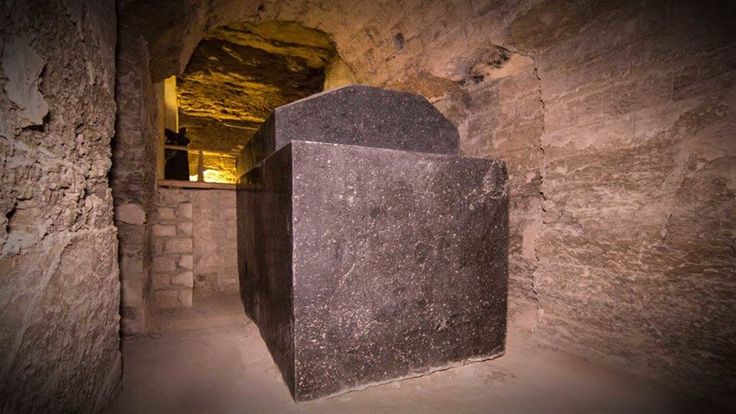
Precision stonework alone does not prove function. However, when precision is paired with acoustic behavior, material selection, and architectural context, patterns emerge. The granite boxes of the Serapeum possess characteristics consistent with controlled resonance: high mass, dense material, smooth internal surfaces, enclosed geometry, and underground isolation. These same variables appear repeatedly in ancient sites across continents.
The Serapeum global resonance model is therefore comparative, not speculative.
Sound is a physical force. It propagates, reflects, interferes, and amplifies according to known laws of physics. Structures that repeatedly demonstrate similar acoustic behaviors cannot be dismissed as coincidence. Engineers and acousticians evaluate such environments in terms of frequency response, reverberation time, nodal formation, and damping. When these metrics are applied to ancient architecture, the results are often surprising.
Across the world, subterranean or semi-subterranean stone structures display anomalous acoustic properties:
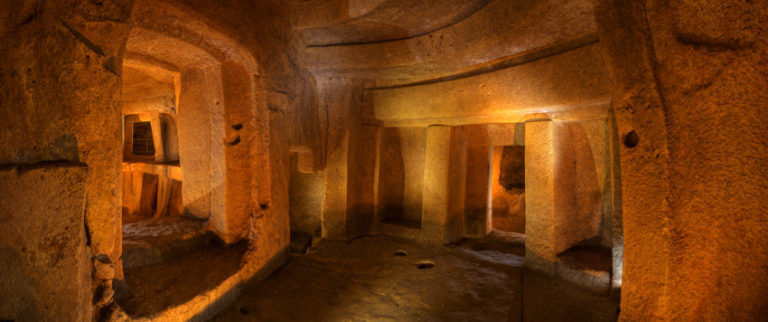
- In Malta’s Hypogeum, low-frequency sound produces intense bodily sensations and prolonged reverberation. The chambers are carved into limestone, yet their geometry creates amplification zones that cannot be explained by random excavation.
- At Chavín de Huántar in Peru, a labyrinth of stone corridors channels sound in highly specific ways. Researchers have documented how trumpet-like instruments interact with the architecture, creating directional sound illusions and resonance effects.
- Newgrange in Ireland, often described as a tomb, amplifies low tones within its central chamber. Acoustic tests reveal frequency reinforcement inconsistent with passive burial spaces.
- Göbekli Tepe, though not underground, contains massive stone enclosures whose geometry and internal cavities resonate within narrow frequency bands.
Each of these sites independently challenges simplistic ritual explanations. Together, they support the framework of the Serapeum global resonance.
What distinguishes the Serapeum is material choice. Granite is acoustically reflective and structurally stable. Its inclusion of quartz introduces piezoelectric behavior under vibration. Engineers immediately recognize granite as a material suited for controlled interaction with mechanical or vibrational forces.
Limestone is easier to carve. Sandstone is abundant. Yet granite was deliberately selected for the Serapeum boxes, despite immense logistical difficulty. This choice only makes sense if material properties mattered.
Burial does not require piezoelectric stone.
Another key factor is isolation. Resonant systems benefit from environmental stability. Underground placement reduces temperature fluctuation, air movement, and external noise. It also stabilizes humidity and structural vibration. These conditions are ideal for resonance and energy experiments—but unnecessary for funerary use.
The Serapeum galleries act as waveguides. The boxes act as resonant masses. Together, they form a system.
This is why the Serapeum global resonance argument is system-based, not artifact-based.
Mainstream archaeology tends to interpret acoustic effects as symbolic or ceremonial. Engineers interpret them as functional. This disciplinary gap explains much of the resistance to resonance hypotheses.
Consider who finds the burial explanation insufficient:
-
Mechanical engineers
-
Acousticians
-
Structural engineers
-
Materials scientists
-
Machinists
-
Physics students replicating resonance tests
These professionals are trained to identify function from form. They recognize when geometry and material selection exceed symbolic necessity.
The burial narrative survives largely because alternative interpretations require interdisciplinary analysis that archaeology has historically avoided.
Importantly, the Serapeum global resonance hypothesis does not require mysticism. Resonance is measurable. Acoustic behavior can be tested. Frequencies can be reproduced. This makes the theory falsifiable—something many symbolic interpretations are not.
Researchers have already demonstrated:
-
prolonged reverberation inside granite chambers
-
frequency amplification at specific nodes
-
directional sound propagation in stone corridors
These phenomena demand explanation.
If resonance played a role, what was the function?
Possible interpretations include:
-
sound-based ritual technologies
-
vibration-assisted material processes
-
energy modulation or storage
-
sensory alteration environments
-
experimental or scientific chambers
None of these require speculative mythology. All require precision, containment, and stability.
Crucially, these functions explain features burial cannot.
The Serapeum global resonance model also explains why similar design principles appear worldwide without cultural contact evidence. Physics does not require shared language. Independent civilizations interacting with sound and stone would converge on similar solutions.
This is not evidence of a single global culture—but of shared engagement with physical laws.
The implications are uncomfortable. If ancient builders understood resonance well enough to integrate it into architecture, then their technological framework was broader than currently acknowledged. This does not diminish ancient cultures—it elevates them.
Ignoring this possibility does not protect history. It impoverishes it.
Conclusion
The Serapeum global resonance investigation demonstrates that the Serapeum does not stand alone. Its granite boxes, underground isolation, and acoustic behavior align with a global pattern of ancient structures exhibiting resonant properties.
Burial is an interpretation. Resonance is a measurable phenomenon.
When engineering, acoustics, and material science are allowed into the discussion, the Serapeum begins to look less like a tomb complex and more like a functional installation whose purpose has been forgotten.
The next article will examine whether these resonant principles intersect with ancient measurement systems and planetary cycles, further expanding the technological context.