Flow, Control, and the Potential of Natural Forces
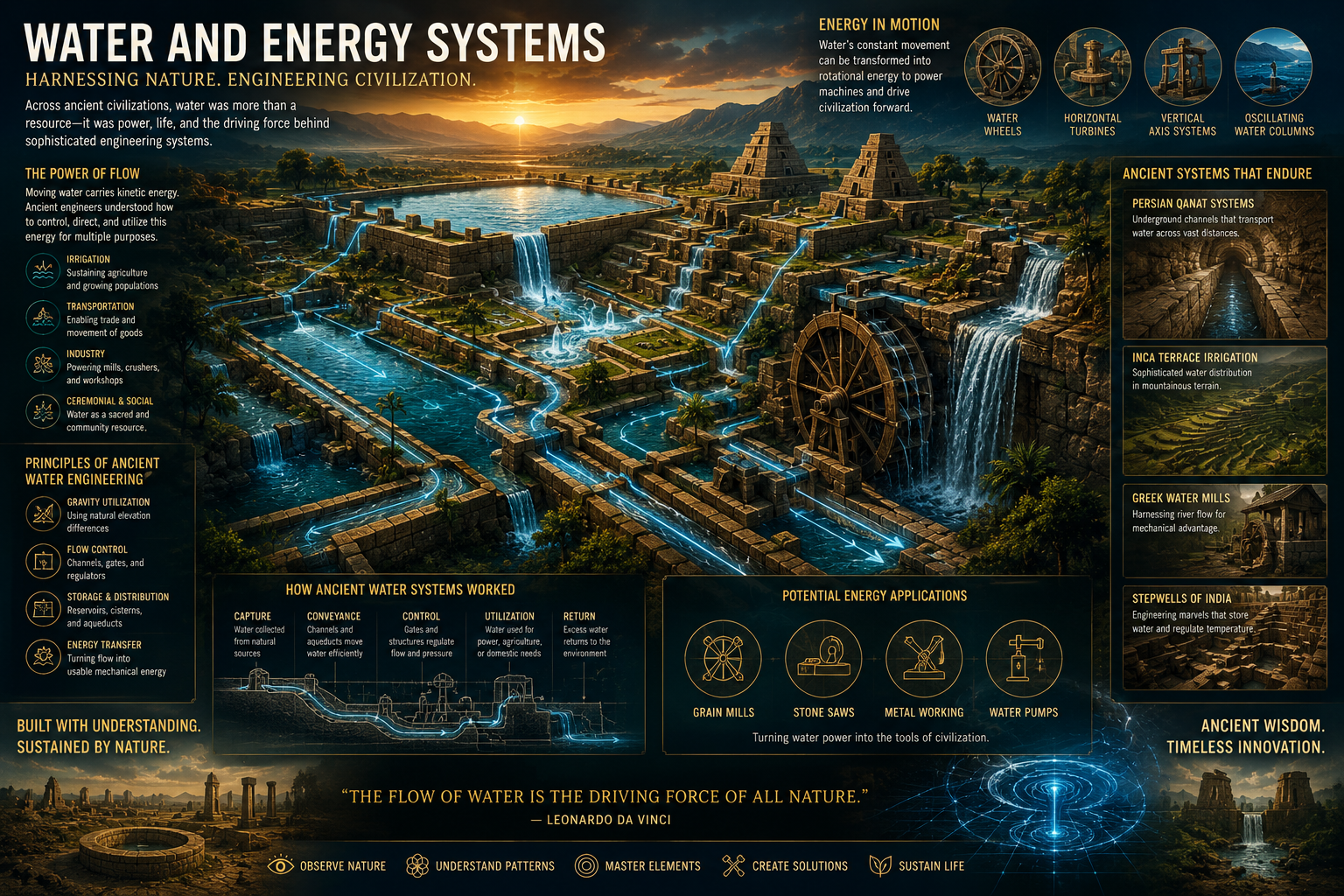
Archaeology and Hydrology intersect in fascinating ways when examining ancient water systems. These systems provide some of the clearest physical evidence that early civilizations were not merely surviving in hostile environments but actively shaping entire landscapes through engineering, planning, and long-term environmental observation. Across deserts, mountains, river valleys, and tropical regions, ancient societies developed channels, reservoirs, underground tunnels, drainage grids, and flood management systems that required mathematical precision, coordinated labor, and generational knowledge transfer (Prehistoric Construction Systems Engineering article).
What makes these systems particularly compelling is that they emerged independently across widely separated civilizations. From the qanats of Persia to the stepwells of India, from Roman aqueducts to the hydraulic networks of the Maya, similar principles repeatedly appear: gravity control, pressure management, water purification, seasonal storage, and environmental integration. This consistency suggests that ancient societies possessed a far deeper practical understanding of natural systems than modern culture often assumes.
The question becomes even more intriguing when viewed against the immense timeline of human existence. Modern humans, Homo sapiens evolution, have existed for approximately 300,000 years, yet recorded history spans only about 5,000 years. This means more than 98% of human experience remains largely undocumented. Entire chapters of innovation, migration, experimentation, and catastrophe may have disappeared beneath oceans, deserts, forests, and layers of geological change. Water systems surviving today could therefore represent fragments of a much older continuum of knowledge rather than isolated beginnings.
Natural disasters also complicate our understanding of the past. Rising sea levels after the last Ice Age submerged vast coastal regions where early civilizations may once have flourished. Earthquakes, volcanic eruptions, tsunamis, glacial shifts, and erosion can erase cities within centuries. The ancient stories of floods found in Mesopotamian, Indian, Greek, Indigenous American, and other traditions may preserve distant cultural memories of real environmental catastrophes that reshaped human civilization. In this context, myths and legends may not merely be fiction but compressed historical memory encoded in symbolic language.
Ancient water systems therefore deserve to be studied not only as engineering achievements but as windows into how early humans understood nature, energy, survival, and perhaps even consciousness itself. They reveal societies capable of sophisticated planning and environmental adaptation long before the modern industrial era.
Ancient Water Systems and Flow Control
Ancient water systems frequently demonstrate an extraordinary understanding of fluid behavior long before formal equations in Physics or engineering existed. Channels were often constructed with subtle gradients that regulated speed and volume with remarkable accuracy (Acoustic Engineering Ancient Structures article). Even minor deviations in slope can dramatically alter water behavior, yet many ancient systems maintained functional flow across long distances and difficult terrain. This indicates repeated experimentation, empirical observation, and accumulated technical tradition over centuries.
These features suggest awareness of:
- gravity-driven flow
- slope optimization
- water distribution across landscapes
- sediment control
- seasonal adaptation to rainfall and drought
The Romans, for example, built aqueducts with gradients sometimes averaging only a few centimeters per kilometer. Maintaining such precision without modern surveying equipment required advanced geometry, astronomical alignment, and coordinated labor organization. Similarly, the Nabataeans of Petra engineered channels and cisterns capable of harvesting flash floods in one of the driest regions on Earth. These systems transformed desert settlements into thriving urban centers.
In Peru, the Inca constructed terraced agricultural systems that controlled erosion while redistributing mountain water across multiple ecological zones. Modern hydrologists continue studying these systems because some remain more sustainable than contemporary irrigation models. In Cambodia, the hydraulic city surrounding Angkor integrated reservoirs, canals, and seasonal flood control over a vast urban region visible even today through satellite imaging (Ancient Energy Systems article).
Such achievements challenge simplistic assumptions about “primitive” societies. Ancient civilizations often operated with long-term environmental awareness that modern industrial systems sometimes lack. Their engineering was not separated from ecology; it was embedded within it.
Pressure and Containment in Ancient Water Systems
Beyond simple movement, many ancient water systems reveal sophisticated methods for managing hydraulic pressure. Reservoirs, enclosed conduits, stepped basins, and underground tunnels suggest that ancient engineers understood the dangers and opportunities associated with stored water energy. Even without modern terminology, they recognized how containment could amplify force and how controlled release could stabilize entire systems.
This implies knowledge of:
- containment principles
- pressure buildup and release
- structural reinforcement against water force
- material resistance to erosion
- long-term maintenance cycles
The underground qanat systems of ancient Persia are especially remarkable (Stone Functional Materilas article). These gently sloping tunnels transported groundwater across vast distances while minimizing evaporation in harsh desert climates. Some qanats functioned continuously for over a thousand years, demonstrating extraordinary durability and engineering foresight. Similar underground hydraulic systems appeared independently in North Africa, China, and parts of Central Asia.
Roman engineers also developed pressurized lead and ceramic piping capable of supplying baths, fountains, and private homes. Archaeological studies suggest they understood siphoning effects and pressure differentials well enough to move water across valleys and elevated terrain. In Mesoamerica, the Maya developed filtration systems using quartz and zeolite minerals centuries before modern water purification science formally recognized their effectiveness.
These examples illustrate a civilization-wide pattern: ancient societies learned to work with water not as a passive substance but as a force requiring balance, containment, and adaptation. Their methods emerged through observation and repetition, a process resembling early scientific experimentation even if it was framed culturally through religion or cosmology.
Ancient Water Systems and Energy Potential
One of the most intriguing aspects of ancient hydraulic systems is their potential relationship to energy transfer (Systems vs Tools: Lost Ancient Technologies article). Moving water inherently carries kinetic and gravitational energy, and ancient societies clearly understood how elevation, flow restriction, and channel geometry could alter water behavior. While definitive evidence for advanced energy extraction technologies remains limited, certain architectural patterns continue to provoke scholarly curiosity. Some recurring features include:
- cascading water through stepped channels
- controlled flow through narrow passages
- repeated elevation changes
- resonance chambers near flowing water
- integration of water with ritual or ceremonial architecture
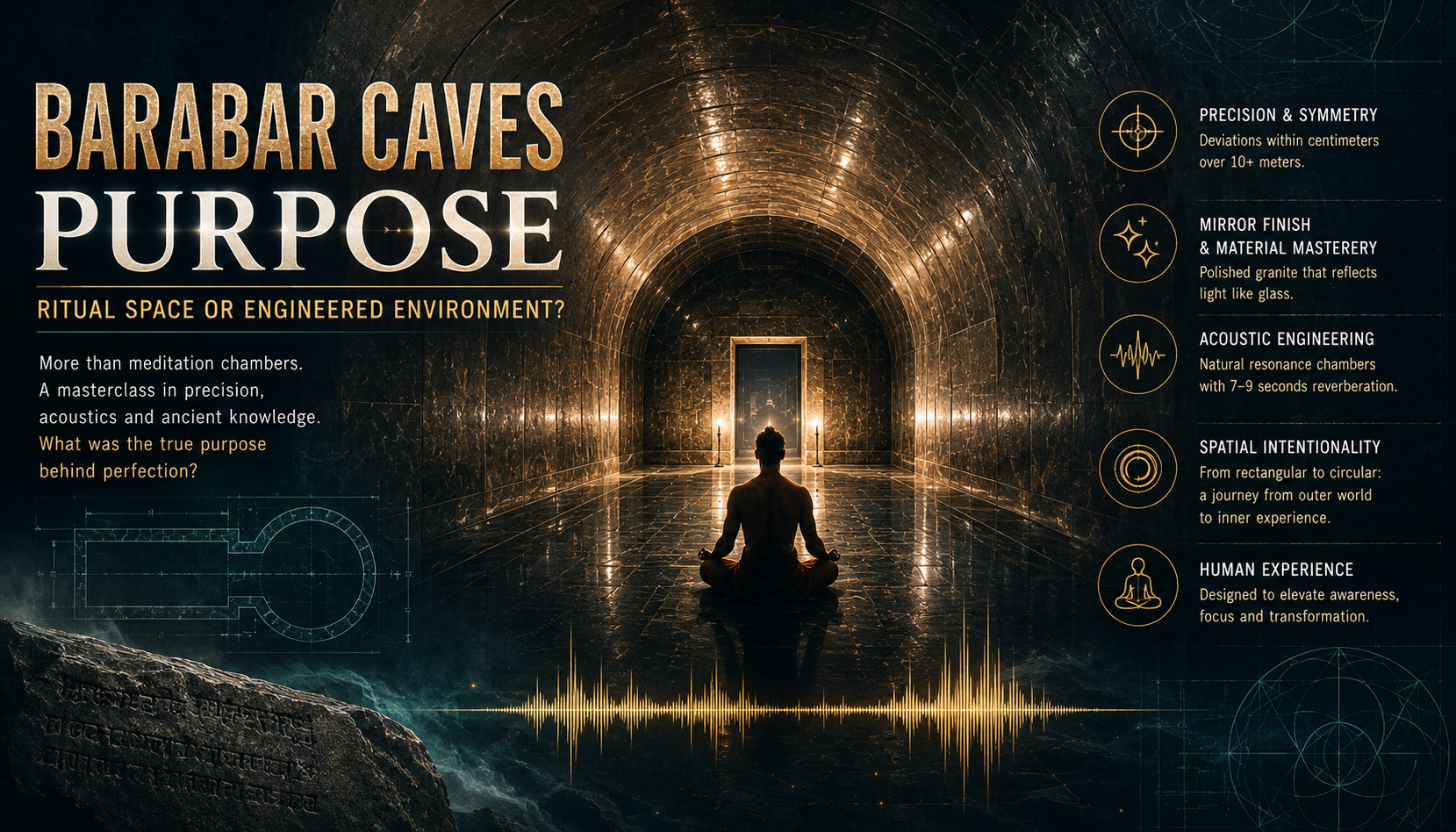
In many ancient sites, water appears intentionally directed through acoustically resonant spaces. Researchers studying sites such as Chavín de Huántar in Peru have suggested that underground waterways may have amplified sound frequencies during ceremonies, producing psychological and sensory effects on participants. Water and acoustics together may therefore have been used to influence perception, ritual states, or communal experiences.
Ancient Greek engineers used water clocks, automated temple doors, and hydraulic mechanisms described by Hero of Alexandria. These inventions demonstrate that ancient civilizations did experiment with water-powered mechanical systems. While this does not confirm lost high technology, it does reveal a level of experimentation more sophisticated than many conventional narratives acknowledge (Cultural Memory Cataclysms Flood Myths article).
Some alternative historical theories propose that certain ancient structures exploited resonance, pressure, or electromagnetic effects. Most of these claims remain speculative and unsupported by mainstream evidence. However, the broader idea that ancient societies explored the energetic properties of natural systems is not unreasonable. Water has always been central to power generation, from ancient mills to modern hydroelectric dams. The deeper question is not whether ancient people understood water’s force, but how extensively they explored its applications before knowledge was fragmented or lost through war, collapse, or environmental disaster.
Integration with Architecture and Landscape
Ancient water systems were rarely isolated constructions. Instead, they were deeply integrated into architecture, urban planning, agriculture, astronomy, and sacred geography. Water channels frequently align with temples, ceremonial plazas, terraces, and natural landforms, suggesting a worldview in which infrastructure and cosmology were inseparable. This integration indicates that:
- water management was part of broader planning
- structures and hydraulic systems were designed together
- environmental context shaped architectural choices
- urban life depended on ecological balance
- spiritual symbolism influenced engineering decisions
At Machu Picchu, hydraulic channels were integrated directly into the city’s terraces, foundations, and ceremonial areas. Engineers designed drainage systems so effectively that the site has survived centuries of intense rainfall with minimal structural collapse. At Angkor, massive reservoirs known as barays were connected to canals that regulated seasonal monsoon flooding while simultaneously reinforcing royal and religious authority.
In ancient Egypt, the Nile’s annual flooding shaped agriculture, calendars, taxation, and cosmology. The river was not simply a resource; it was understood as the lifeblood of civilization itself. Similarly, many Indigenous cultures worldwide viewed springs, rivers, and underground waters as sacred entities linked to ancestral memory and spiritual power.
Modern urban systems often separate engineering from cultural meaning. Ancient civilizations, by contrast, frequently fused practical function with symbolic significance. Their cities operated not only as settlements but as reflections of how humans believed they fit within the natural universe (Yuga Cycles and Mythological Time Systems article).
Symbolic and Functional Dimensions
Water has always occupied a dual role in human civilization: practical necessity and sacred symbol. Ancient water systems therefore cannot be understood solely through engineering analysis because they also existed within mythological, ritual, and philosophical frameworks. In many cultures, water represented purification, fertility, rebirth, memory, transformation, and the boundary between worlds. Ancient water systems may therefore have served:
- irrigation and agriculture
- flood management and sanitation
- ritual purification
- ceremonial procession routes
- symbolic representations of cosmic order
The sacred pools of India, the ritual baths of Rome, the cenotes of the Maya, and the purification fountains of Islamic architecture all demonstrate how hydraulic systems carried cultural meaning beyond utility. In some traditions, flowing water symbolized divine order, while stagnant water represented decay or spiritual imbalance.
Many myths describing underground rivers, world floods, or lost islands may preserve encoded memories of real geological events. The flood narratives found in the Epic of Gilgamesh, Biblical traditions, Greek mythology, and Indigenous oral histories share striking structural similarities despite geographical separation. Some researchers connect these stories to rapid sea-level rise following the last Ice Age approximately 12,000 years ago. Coastal settlements from that period would now lie underwater, potentially erasing archaeological evidence while preserving cultural memory through oral tradition.
This intersection of myth and history reminds us that ancient people often transmitted knowledge symbolically rather than scientifically. Their stories may contain observations about environmental cycles, astronomy, catastrophes, and social collapse encoded in metaphorical language.
Limits of Interpretation
Despite the remarkable sophistication of ancient hydraulic systems, interpretation requires caution. The temptation to project modern fantasies onto ancient structures can lead to unsupported conclusions. Extraordinary engineering does not automatically imply lost supercivilizations or impossible technologies. Genuine scholarship depends on balancing curiosity with evidence.
Several limitations complicate interpretation:
- erosion and structural alteration over time
- incomplete excavation of archaeological sites
- destruction through conquest and environmental change
- loss of written languages and records
- modern bias regarding technological progress
It is important to recognize how fragile civilization truly is. A sufficiently large volcanic eruption, asteroid impact, pandemic, or solar event today could destroy global infrastructure within decades. Over thousands of years, forests, oceans, and tectonic activity would erase much of modern civilization’s physical evidence. Future archaeologists might recover fragments without fully understanding their purpose (Older Dryas and Younger Dryas Climate Events and Climate History of the Last 40,000 Years article).
This perspective changes how we interpret the ancient world. Human history may not be a simple linear progression from primitive to advanced. Civilizations rise, collapse, migrate, and rebuild repeatedly. Knowledge can disappear when institutions fail or populations decline. The collapse of the Bronze Age around 1200 BCE demonstrates how interconnected systems can fragment rapidly, causing technological regression across entire regions.
Therefore, while caution is essential, openness is equally important. Ancient societies may have possessed forms of environmental, astronomical, or hydraulic knowledge that were later forgotten or rediscovered independently.
Ancient Water Systems in a System-Based Framework
When viewed alongside acoustics, stoneworking, astronomy, and urban planning, ancient water systems appear part of broader integrated frameworks rather than isolated engineering projects. Many civilizations approached nature holistically, treating water, architecture, agriculture, ritual, and celestial cycles as interconnected aspects of one living system. This framework suggests that:
- water, stone, and space were interconnected
- environmental observation guided construction
- systems may have operated holistically
- engineering and spirituality often overlapped
- knowledge was applied across multiple disciplines
At sites like Teotihuacan, Angkor, Machu Picchu, and the Egyptian plateau, spatial alignments frequently correspond with solar, lunar, or seasonal cycles. Water management systems often reinforced these alignments through reflection pools, ritual pathways, or agricultural timing. Ancient builders may have understood sustainability not as an isolated policy but as a cosmological principle connecting human survival to natural balance (Lost Civilization Beneath the Sands article).
Modern science increasingly validates the sophistication of ancient environmental adaptation. Studies in ecology, climatology, and resilience theory show that many traditional systems were remarkably sustainable because they evolved gradually in response to local conditions. Ancient agricultural terraces conserved soil, decentralized water storage reduced flood risk, and urban integration minimized environmental strain.
The more archaeology advances, the clearer it becomes that many ancient civilizations were not intellectually inferior to modern society. Their knowledge was different, context-driven, and deeply rooted in observation of natural systems over long timescales.
Conclusion
Ancient water systems reveal a consistent and highly structured approach to managing one of the most fundamental forces on Earth. Through channels, reservoirs, terraces, underground tunnels, and integrated urban planning, early civilizations demonstrated advanced understanding of gravity, pressure, environmental adaptation, and long-term sustainability. These achievements challenge simplistic assumptions that ancient societies were technologically naive or intellectually undeveloped (Ancient Solar and Lunar Calendars article).
When considered within the larger timeline of human existence, the implications become even more profound. Modern humans have existed for roughly 300,000 years, yet only a tiny fraction of that history is preserved in written records. Entire civilizations may have risen and disappeared long before surviving historical timelines began. Rising seas, tectonic shifts, volcanic eruptions, erosion, and climate transitions could have erased immense amounts of evidence, leaving behind only fragments, myths, and monumental structures.
This does not require belief in fantastical lost technologies to recognize that humanity’s forgotten past may be far richer than commonly assumed. Ancient people observed nature with extraordinary attention because survival depended on it. Over generations, this produced sophisticated systems integrating engineering, ecology, spirituality, and social organization. Water systems stand among the clearest surviving examples of this integrated intelligence.
Ultimately, ancient hydraulic systems invite humility. They remind us that civilization is fragile, knowledge is easily lost, and progress is not always linear. The ruins of the past are not merely remnants of obsolete cultures; they are messages from human beings who confronted the same forces of nature we face today and who, in many ways, understood their environment with remarkable depth.
References and Further Reading
The Dawn of Everything (link)
Fingerprints of the Gods (link)
The Origins of Consciousness in the Breakdown of the Bicameral Mind (link)
Seed of Knowledge, Stone of Plenty (link)
Ancient Water Technologies (link)
NASA studies on Earth systems and climate change
ResearchGate papers on ancient hydraulic engineering
Research on Göbekli Tepe, Angkor Wat, Petra, Machu Picchu, and ancient Persian qanat systems
Ancient Energy Systems: Myth or Technology? (link)
Ancient Hyper Forests and Giant Trees (link)
Pre Flood Civilization and Environmental Collapse (link)
Was the Ancient World Phisically Different? (link)
Giant Humans Before the Younger Dryas (link)
Ancient Construction Project Management (link)
Ice Age Civilization Lost Worlds Before Floods (link)
Lost Knowledge of Ice Age Rewritten History (link)
Ice Age Knowledge Science Before Younger Dryas (link)
Geometry and Earth Scaling (link)
How Ancient Builders Measured the Stars (link)